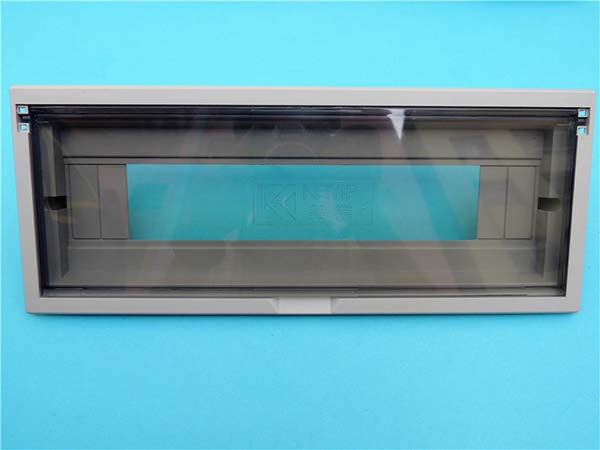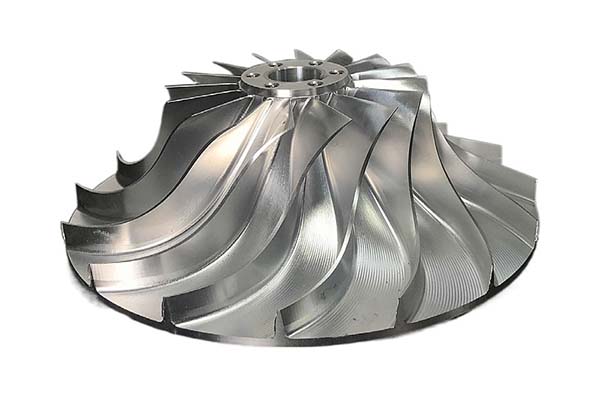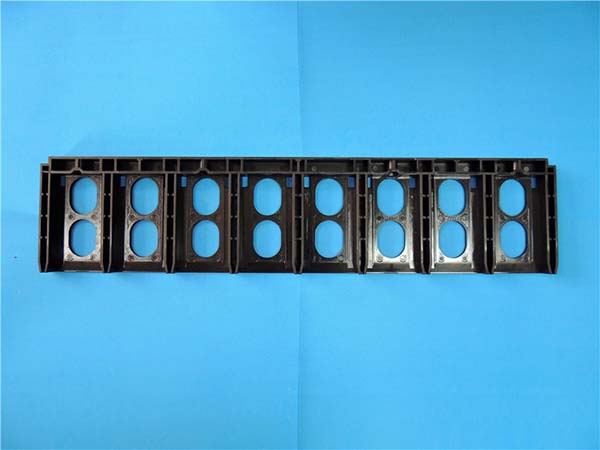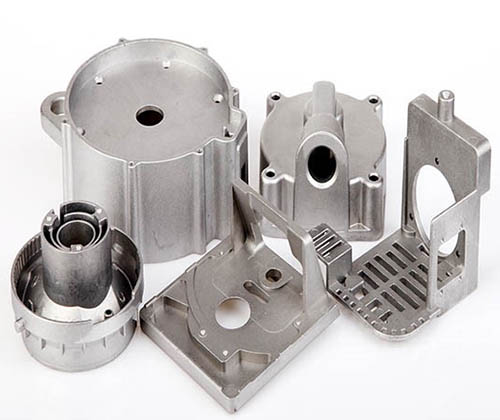
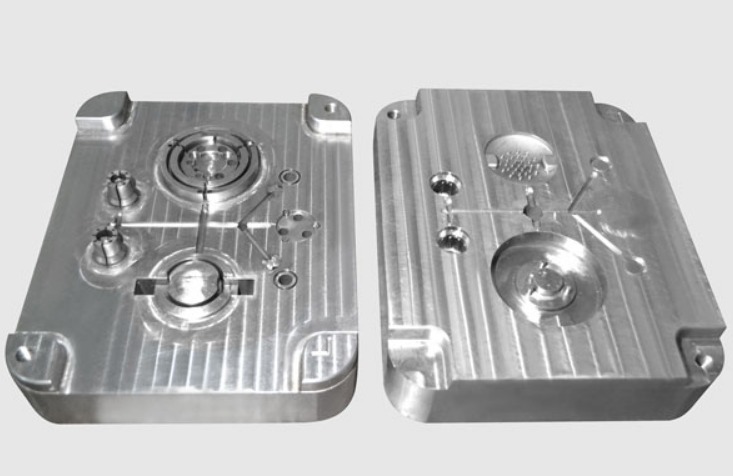
Rapid prototyping CNC machining is a subtractive manufacturing process that uses computer-controlled machine tools to quickly produce high-precision, functional prototypes from a wide range of engineering-grade materials, enabling accelerated design validation and testing.
When you need to transform a digital design into a tangible, testable prototype within days, rapid prototyping CNC machining is a critical solution. Unlike many prototyping methods, CNC machining creates parts from solid blocks of material, resulting in prototypes with mechanical properties, dimensional accuracy, and surface finishes nearly identical to final production parts. This guide explores why CNC is the preferred choice for functional prototypes, how it compares to 3D printing, and the strategies used to achieve the fastest possible turnaround without compromising quality. For engineers and product developers, mastering this process means shorter development cycles, reduced risk, and a faster path to market.
Introduction
In the race to bring innovative products to market, the prototyping phase is a critical battleground. Rapid prototyping CNC machining stands out by offering a unique combination of speed, material versatility, and precision. This subtractive process excels at creating prototypes that are not just visual models but functional components that can undergo real-world testing for form, fit, and function. From a simple aluminum bracket to a complex multi-axis medical device housing, CNC machining can produce it with tolerances tight enough for assembly validation. This article will dissect the entire workflow, from selecting the optimal material to implementing programming strategies that shave hours off production time. We'll compare it head-to-head with additive methods, provide actionable advice for minimizing costs, and illustrate its power through real-world industry case studies.
What Is Rapid Prototyping via CNC Machining?
Rapid prototyping CNC machining refers to the accelerated use of Computer Numerical Control (CNC) milling, turning, and multi-axis machining to produce physical prototypes directly from 3D CAD data. The term "rapid" signifies an optimized process prioritizing lead time over absolute lowest cost, often leveraging streamlined workflows, dedicated machine time, and expert prioritization.
The core value proposition lies in producing functional prototypes—parts that accurately represent the final product's geometry, material properties, and performance. For example, a drone motor mount prototype machined from 7075 aluminum can be stress-tested in the actual airframe, providing performance data that a 3D-printed plastic model cannot.
How Does CNC Compare to Additive Methods?
Choosing between CNC and additive manufacturing (AM, or 3D printing) is a fundamental decision. Each has distinct strengths suited to different prototyping goals.
| Criteria | Rapid Prototyping CNC Machining | Additive Manufacturing (e.g., SLS, SLA, FDM) |
|---|---|---|
| Primary Strength | Functional testing & precision. Real material properties, excellent accuracy. | Geometric complexity & speed for form. Complex internal lattices, no tooling constraints. |
| Material Fidelity | Identical to production. Uses the exact metals (aluminum, steel), plastics (PEEK, ABS), and composites. | Process-specific materials. Polymers and resins with properties often different from production materials. Limited true metals. |
| Surface Finish & Accuracy | Excellent. Can achieve smooth finishes and tight tolerances (±0.025 mm / ±0.001" typical) directly off the machine. | Layered appearance. Often requires post-processing for smoothness. Tolerances generally looser than CNC. |
| Speed for 1-10 Parts | Fast (Days). Programming and setup required, then fast machining. Ideal for 1-10 units. | Very Fast (Hours). Virtually no setup; build time depends on part size and printer queue. |
| Cost Driver | Material cost + Machine time. Higher per-part cost at very low volumes, but becomes economical quickly. | Machine time + Material volume. Cost-effective for single, highly complex parts; less scaling benefit. |
| Best For | Fit, Form, & FUNCTION (FFF) testing. Load-bearing parts, assemblies, aerodynamic surfaces, fluid testing. | Form & FIT testing. Visual models, complex housings for fit checks, conceptual prototypes. |
Rule of Thumb: Use CNC when you need strength, precise fit, or thermal/chemical resistance. Use AM when you need to iterate on organic shapes quickly or produce a single, highly complex part that would be prohibitively expensive to machine.
Which Materials Can Be Prototyped Quickly?
The breadth of available materials is a key advantage. A rapid prototyping machine shop will keep common stock on hand for immediate use.
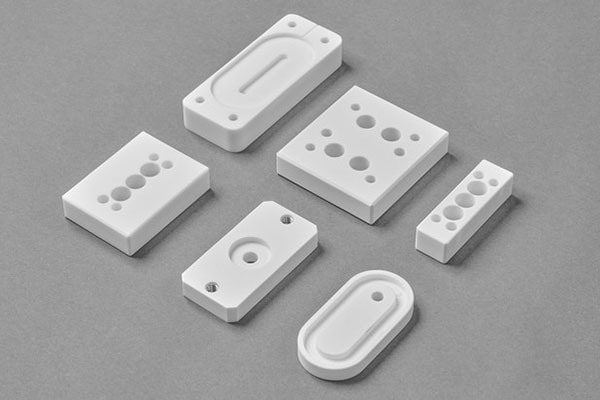
- Plastics: ABS, Acrylic (PMMA), Nylon (PA), Polycarbonate (PC), PEEK. These are machinable on standard CNC mills/routers and are ideal for enclosures, wear parts, and chemical-resistant components.
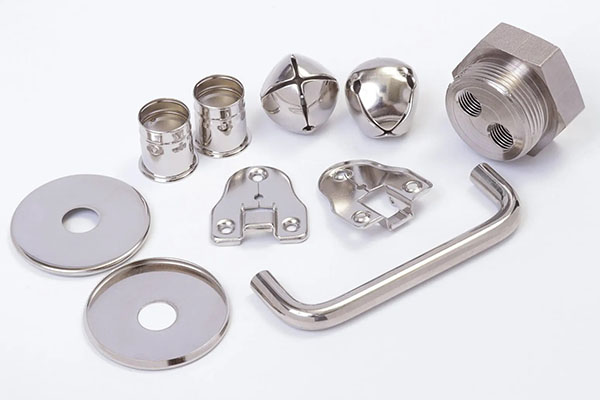
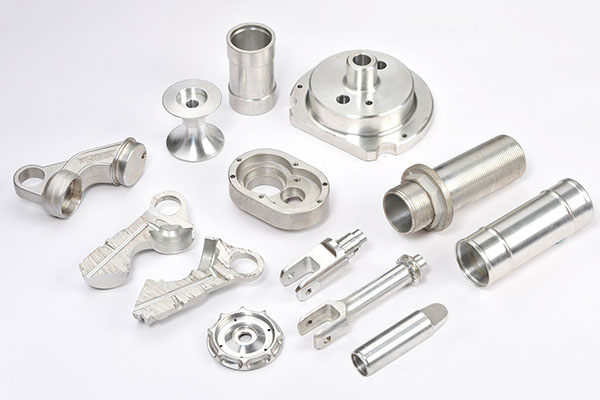
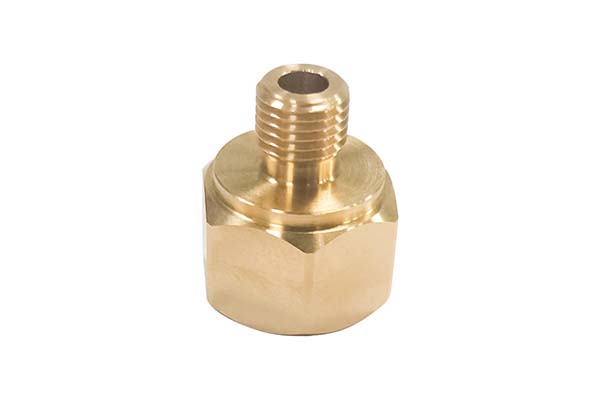
- Metals: Aluminum 6061-T6 (the most common), 7075, Brass, Mild Steel, Stainless Steel 304/316. These provide production-grade strength for mechanical prototypes.
- Advanced Materials: Pre-hardened tool steels, Titanium (Ti-6Al-4V), Inconel. Used for extreme-performance prototypes in aerospace, medical, and energy sectors.
The ability to prototype in the final production material eliminates uncertainty when scaling to manufacturing. Testing a fuel cell component in machined 316L stainless steel yields data that directly translates to the stamped or molded production version.
Programming Strategies for Fast Turnaround
Speed in CNC prototyping is won or lost in the digital preparation phase.
- Automated CAM with Proven Templates: Using CAM software with automated feature recognition and pre-configured "roughing" and "finishing" template toolpaths for common materials slashes programming time.
- Prioritize Speed Over Optimal Tool Life: For a one-off prototype, programmers may use more aggressive speeds, feeds, and depth of cuts to reduce cycle time, accepting slightly faster tool wear.
- "Good Enough" Finishing: Non-cosmetic surfaces may be left with a rougher finish to save a machining pass.
- Leverage 3+2 Axis Machining: Using a 5-axis machine in 3+2 mode (indexing the part to a fixed angle, then 3-axis machining) is often faster than programming full 5-axis simultaneous moves for a prototype and gives excellent access.
How to Minimize Setup Times?
Setup—the process of fixing the material to the machine and setting tool lengths—is a major time sink. Rapid prototyping shops excel at minimizing it.
- Standardized Fixturing: Using modular vises, tooling plates, and grid systems allows for quick mounting of various-sized stock without designing custom fixtures for every job.
- Machinable Wax or Soft Jaws: For complex, one-off parts, machining a custom nest directly into a block of soft aluminum or wax held in a standard vise is faster than building a dedicated fixture.
- Consolidated Operations: Designing the prototype to be machined in a single setup or with minimal re-fixturing is a critical Design for Manufacturability (DfM) consideration for speed.
- Dedicated Prototype Machines: Some shops have machines reserved for short-run work, with common tools pre-loaded, eliminating queue time behind large production jobs.
What Tolerances Can Be Achieved?
A primary reason for choosing CNC prototyping is its ability to hold production-ready tolerances.
- Standard Prototype Tolerances: For most machined prototypes, ±0.005 inches (0.127 mm) is readily achievable and often sufficient for functional testing.
- High-Precision Prototyping: With careful machining, ±0.001 inches (0.025 mm) is standard, and critical features can be held to ±0.0005 inches (0.0127 mm) or tighter if required.
- Managing Expectations: It's crucial to only specify tight tolerances where absolutely necessary for prototype function. Every additional decimal point adds cost and time for slower machining and verification.
Surface Finishing for Prototype Validation
The required surface finish depends on the prototype's purpose.
- As-Machined: Perfect for internal functional parts or where appearance is irrelevant. Shows visible tool marks.
- Sanding/Bead Blasting: Provides a uniform matte finish, good for aesthetic evaluation of housings and covers.
- Primer/Paint: Used for final appearance models or to simulate production coatings.
- Anodizing (Aluminum) or Passivation (Stainless): Adds corrosion resistance for prototypes that will be handled or exposed to environments, and provides a durable color option.
How to Optimize Costs and Lead Times?
Cost and speed are intrinsically linked in rapid prototyping. Key optimization strategies include:
| Strategy | How It Reduces Cost/Time | Example |
|---|---|---|
| Design Simplification | Reduces machining complexity and time. | Simplifying an internal pocket from a complex 3D contour to a series of straight drilled holes for a prototype. |
| Material Selection | Choosing a readily available, easy-to-machine stock. | Using 6061 Aluminum instead of harder 7075 for a non-critical structural test. |
| Tolerance Rationalization | Eliminates slow finishing passes and detailed inspection. | Specifying ±0.010" instead of ±0.001" on non-critical mounting holes. |
| Batch Prototyping | Amortizes setup and programming over multiple parts. | Machining three design iterations of a bracket in the same setup on one plate of aluminum. |
| Clear Communication | Prevents costly rework and delays. | Providing a clear 3D model, 2D drawing with critical dimensions, and a brief on the prototype's primary test goal. |
Case Studies from Automotive and Aerospace
Automotive: Electric Vehicle Battery Module Housing
An EV startup needed to test the thermal and sealing performance of a new battery module design. Using rapid prototyping CNC machining, they produced a full-scale housing from aluminum 6061 in 5 days. The prototype allowed them to validate coolant channel flow, test seal compression, and conduct thermal cycling, leading to two design tweaks before committing to a six-figure production mold. The material fidelity of CNC was critical for accurate thermal dissipation data.
Aerospace: UAV (Drone) Landing Gear Strut
A aerospace engineering firm designing a high-altitude UAV required a landing gear strut that was extremely lightweight yet strong. They prototyped the design in carbon fiber-reinforced PEEK via CNC machining. Within one week, they had a part that could be load-tested to failure. The process allowed them to iterate the laminate cut pattern and fiber orientation in the CAD model three times, producing three physically different prototypes for comparative testing, ultimately optimizing the design for a 40% higher strength-to-weight ratio.
Conclusion
Rapid prototyping CNC machining is an indispensable bridge between digital design and physical reality. Its unparalleled ability to deliver high-fidelity, functional prototypes in production-grade materials makes it the gold standard for engineers who need to test, validate, and de-risk their designs under real-world conditions. By strategically leveraging its strengths against additive methods, optimizing designs for manufacturability, and partnering with a shop skilled in rapid turnaround, product development teams can dramatically compress their iteration cycles. In a competitive landscape, the speed and certainty provided by CNC prototyping don't just save time and money—they fundamentally accelerate innovation and pave a clearer path to successful product launch.
Frequently Asked Questions (FAQ)
My prototype design isn't fully finalized. Can I still get a CNC quote?
Yes, and it's encouraged. Reputable rapid prototyping shops offer Design for Manufacturability (DfM) feedback as part of the quoting process. Sending your best current model allows engineers to suggest modifications that will significantly reduce machining time and cost, and flag any un-machinable features early.
What is the typical lead time for a rapid CNC machined prototype?
For a standard-complexity part made from a common material like aluminum or ABS, 3-5 business days from approved quote to shipment is typical. Highly complex parts or exotic materials may take 5-10 business days. Many shops offer expedited 1-2 day service for a premium.
How many prototype units should I order?
Ordering 2-3 units is highly recommended for the first iteration. This allows for one unit to be tested to destruction, one for functional assembly, and one as a backup. The incremental cost for additional units after the first is often relatively low, as setup and programming costs are already covered.
Can you machine a prototype from the same material as my injection-molded production part?
Absolutely. This is a key advantage. If your final part will be molded in ABS, Nylon, or Polycarbonate, you can prototype in the identical grade of plastic via CNC machining. This provides accurate data on stiffness, impact resistance, and environmental performance, unlike 3D printing with dissimilar materials.
Contact Yigu Technology for Custom Manufacturing.
At Yigu Technology, we specialize in rapid prototyping CNC machining that bridges the gap between your design and a test-ready, high-precision component. Our dedicated rapid-response team and optimized digital workflow are built to deliver not just speed, but functional integrity and valuable engineering feedback.
We partner with you from the first sketch, providing expert DfM analysis to ensure your prototype is optimized for manufacturability and cost. With a wide range of in-house materials and multi-axis machining capabilities, we can produce prototypes that truly represent your final product's performance.
Ready to accelerate your development cycle? Contact Yigu Technology today to discuss your prototyping needs and receive a fast, detailed quote. Let's turn your ideas into testable reality.