Introduction
Milling engineering is a core branch of mechanical manufacturing. It uses a rotating milling cutter to cut a workpiece, shaping it into the desired form, size, and surface quality. Think of it as “machining engraving”—through the relative movement of tool and workpiece, excess material is removed and the workpiece is precisely shaped. From automobile engine blocks to smartphone frames, milling engineering makes it possible.
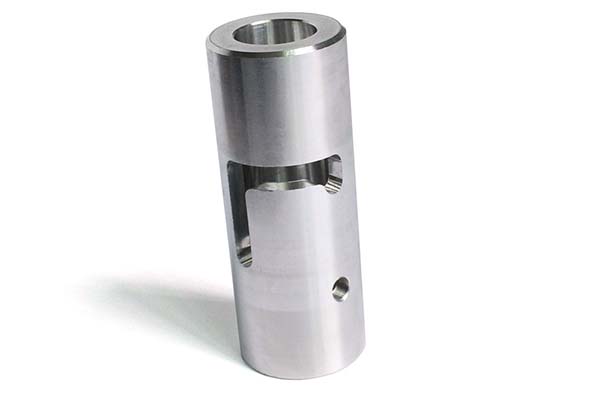
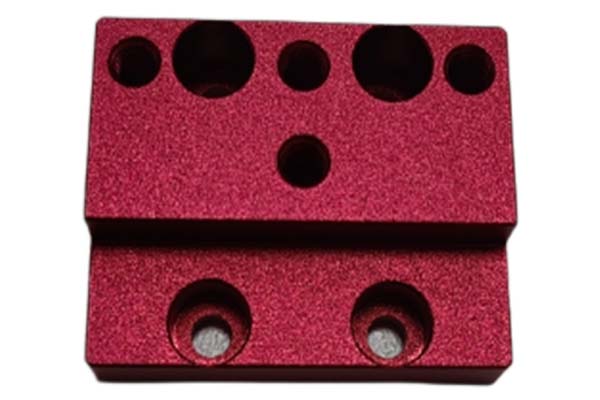
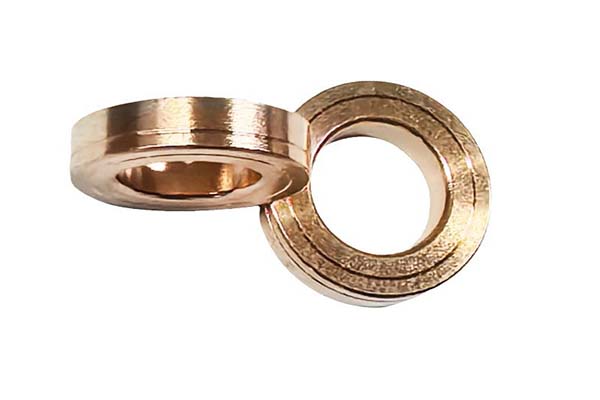
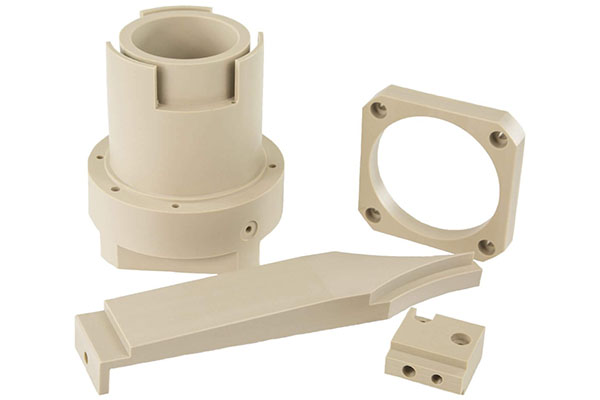
Milling occupies an indispensable position in manufacturing. Its importance spans three core dimensions. First, wide processing range—it handles steel, aluminum, copper, plastic, and more, covering aerospace, automotive, electronics, and mold industries. Second, high processing accuracy—modern milling achieves micron-level precision for high-end products. Third, excellent production efficiency—automation enables mass production at reduced unit costs. Industry data shows milling accounts for over 35% of the global machining industry, making it one of the most widely used cutting methods.
This guide systematically breaks down milling engineering—from basic concepts to practical steps to advanced techniques. Whether you are new to milling or an experienced technician looking to sharpen your skills, you will find practical methods and professional insights.
What Are the Fundamentals of Milling Engineering?
Definition and Principle
Milling is a cutting method that uses the rotational motion of the milling cutter as the main motion, with the linear or curved motion of the workpiece as the feed motion. Together, they remove material. The core principle is that multiple distributed cutting edges on the milling cutter cut alternately, reducing load on each edge while improving efficiency.
Unlike turning, which primarily produces cylindrical shapes, milling handles planes, grooves, gears, and curved surfaces. Its application scenarios are far more flexible.
Types of Milling Machines
Milling machines fall into several categories based on control method and structure.
| Machine Type | Core Features | Applicable Scenarios | Machining Accuracy |
|---|---|---|---|
| Manual Milling (Vertical/Horizontal) | Manual or semi-automatic control; low operating threshold; affordable | Simple parts; small batch production | ±0.02–0.05 mm |
| CNC Milling Machine | Computer program control; high automation; strong stability | Complex parts; medium to large series production | ±0.005–0.02 mm |
| Machining Center | Integrated milling, drilling, boring; automatic tool change | High-precision complex parts; mass production | ±0.001–0.005 mm |
Common Milling Tools and Materials
Milling tools are classified by purpose—face mills, end mills, ball end mills, keyway cutters. Tool material directly affects machining results.
High-speed steel (HSS) milling cutters offer good toughness and impact resistance. They work well for mild steel, cast iron, and similar materials. Low cost makes them suitable for manual milling machines.
Carbide milling cutters provide high hardness and temperature resistance. They handle high-strength steel, aluminum alloys, and more. Tool life is 5–10 times that of HSS, making them the mainstream choice for CNC milling.
PCD/PCBN milling cutters are superhard materials. They excel at non-ferrous metals and superhard materials, achieving high precision at higher cost. They are typically used for high-end precision machining.
What Are the Steps of the Milling Process?
Preparation and Material Selection
Preliminary preparation ensures milling quality. Core steps include:
First, clarify workpiece processing requirements—dimensional tolerance, surface roughness. Second, select appropriate materials based on requirements. For high-precision parts, quenched and tempered alloy structural steel is preferred. Finally, inspect material condition, removing surface impurities like oxide scale and burrs.
Case Study: An auto parts factory machining engine connecting rods failed to check material hardness in advance. Tool wear accelerated during milling, and scrap rates reached 15% . Proper material verification would have prevented this.
Machine Tool Setup and Debugging
Machine tool setup should follow this process:
- Install the fixture—ensure tight fit with worktable; positioning accuracy error within 0.01 mm
- Clamp the workpiece—avoid deformation from over-clamping or displacement from under-clamping
- Install the milling cutter—check tool runout; ensure within 0.005 mm
- Set machining parameters—determine cutting speed, feed rate, and depth of cut based on material and tool
During commissioning, trial cutting is required. Measure test pieces and fine-tune parameters until requirements are met.
Execution of Milling Operations
During formal milling, follow the principle of “empty operation first, then formal cutting.” First, start the machine and let the cutter idle, checking motion trajectory. During cutting, monitor machine status, tool wear, and workpiece surface quality in real time to prevent chatter and built-up edge.
For complex curved surfaces, layered cutting is required. Gradually remove material in layers to ensure machining accuracy.
Quality Control and Inspection
After processing, inspect with appropriate equipment. Use vernier calipers, micrometers, or coordinate measuring machines (CMMs) for dimensional inspection. Use roughness testers for surface finish.
Focus on tolerance ranges for critical dimensions. For example, a precision mold part may require flatness ≤ 0.003 mm—this requires CMM inspection from multiple angles. If non-conforming products are found, analyze the cause and adjust parameters or tools to prevent recurrence.
What Advanced Technologies Define Modern Milling?
CNC Milling Technology
CNC milling is the core advanced technology in modern milling engineering. By writing programs—G-code, M-code—machine tools achieve automated, high-precision machining. CNC handles complex, irregular parts with strong stability and consistency, making it ideal for mass production.
Mainstream CNC systems include Fanuc, Siemens, and Mitsubishi. Operating logic differs slightly between systems, but core principles are consistent. With Industry 4.0, CNC milling is moving toward intelligence—automatic tool wear monitoring, adaptive adjustment of machining parameters.
Tool Management and Optimization
Tool management is key to improving efficiency and reducing costs. Core optimization measures include:
- Tool life ledger—set reasonable replacement cycles based on material and conditions; avoid excessive wear affecting quality
- Tool presetting—use tool presetters to adjust length and radius compensation values in advance; reduce machine setup time
- Coated tools—TiN, TiAlN coatings improve hardness and lubricity; extend tool life by over 30%
Innovations in Milling Technology
Current innovation in milling focuses on three areas: high-speed milling, micro-milling, and green milling.
High-speed milling achieves cutting speeds of 1000–5000 m/min. It dramatically improves processing efficiency and surface quality.
Micro-milling handles miniature parts with micron-level material removal. It serves high-end fields like electronics and medical devices.
Green milling uses environmentally friendly cutting fluids and optimized parameters to reduce energy consumption and pollution—aligning with sustainable development goals.
What Common Problems Occur and How to Solve Them?
Chatter During Milling
Chatter is a common issue that degrades surface finish and can damage tools or machines. Solutions include:
- Reduce cutting speed or feed rate to lower cutting load
- Increase tool diameter or shorten tool extension length to improve rigidity
- Reinforce workpiece clamping to prevent loosening
- Check machine guide rail clearance; adjust tightness
Built-Up Edge (BUE)
Built-up edge occurs when material adheres to the cutting edge, altering geometry and degrading finish. Solutions:
- Increase cutting speed to reduce adhesion tendency
- Use sharp tools with positive rake angles
- Apply appropriate coolant to reduce friction and temperature
Poor Surface Finish
Surface finish issues often result from dull tools or incorrect parameters. Solutions:
- Replace or sharpen tools
- Reduce feed rate for finishing passes
- Maintain adequate coolant flow to flush chips
- Minimize vibration through rigid setups
Dimensional Drift
Dimensional drift over long production runs often results from tool wear or thermal expansion. Solutions:
- Implement tool wear monitoring
- Replace tools at predetermined intervals
- Control shop temperature (±1°C)
- Use thermal compensation features on CNC machines
How Do You Build Practical Milling Skills?
Start with Fundamentals
Master the basics before moving to advanced techniques. Understand machine controls, tool selection, and parameter relationships. Practice simple operations—face milling, slotting, drilling—on manual machines before progressing to CNC.
Develop Programming Skills
For CNC milling, programming is essential. Learn G-code fundamentals—linear interpolation (G01), circular interpolation (G02/G03), tool compensation (G40/G41/G42). Practice with simulation software before running actual machines.
Learn from Case Studies
Real-world cases reveal practical challenges and solutions. An automotive factory machining engine connecting rods discovered that preheating cast iron blanks reduced tool wear by 40% . A mold shop found that using variable-helix end mills eliminated chatter on deep cavities.
Embrace Continuous Improvement
Milling skills develop through continuous practice and reflection. Document successful parameters for different materials and operations. Analyze failures to prevent recurrence. Stay current with new tooling, coatings, and machine technologies.
Conclusion
Mastering milling engineering requires starting from basic concepts, gradually mastering core skills—machine operation, process setup, quality control—then advancing to CNC milling and beyond. The core principle is combining theoretical knowledge with practical experience, improving accuracy and efficiency through case analysis and parameter optimization.
As manufacturing moves toward intelligence, milling engineering will develop toward greater efficiency, precision, and environmental responsibility. Practitioners need to continuously learn new technologies to adapt to industry needs.
At Yigu Technology, we believe the future competitiveness of milling engineering lies in “intelligence + precision.” Companies need to strengthen integration of CNC systems with intelligent monitoring technologies while investing in talent development—ensuring technicians possess both theoretical depth and practical capability.
FAQ
What is the core difference between milling and turning?
The core difference lies in the main motion and processing range. Milling uses cutter rotation as the main motion and can process planes, grooves, curved surfaces, and complex features. Turning uses workpiece rotation as the main motion and is primarily used for shafts and disc-shaped parts—its processing range is more limited.
What core knowledge is needed to start CNC milling?
You need to master three areas: first, basic principles of CNC milling and machine tool structure; second, programming basics—G-code, M-code, coordinate systems; third, tool selection, parameter setting, and workholding techniques. Basic quality inspection capability is also required.
How can I troubleshoot chatter during milling?
Address chatter from four angles: (1) reduce cutting speed or feed to lower cutting load; (2) increase tool diameter or shorten tool extension length to improve rigidity; (3) reinforce workpiece clamping to prevent loosening; (4) check machine guide rail clearance and adjust tightness.
What types of cutting fluids are used in milling, and how do I choose?
Cutting fluids divide into two categories: oil-based and water-based. Oil-based fluids offer good lubricity and are suitable for high-strength steel, cast iron. Water-based fluids provide excellent cooling properties and are suitable for high-speed milling and aluminum alloys. Selection should consider workpiece material, tool material, and processing conditions.
How can I extend tool life in milling operations?
Extend tool life through: using coated tools (TiN, TiAlN) that increase hardness and lubricity; maintaining proper cutting parameters—avoid excessive speeds or feeds that accelerate wear; using tool presetters to ensure accurate tool geometry; implementing tool life management systems that track usage and schedule replacements before failure.
Contact Yigu Technology for Custom Manufacturing
Need precision milled components for your next project? Yigu Technology combines advanced CNC milling capabilities with deep material expertise to deliver high-quality parts across automotive, aerospace, electronics, and industrial sectors. Our engineers optimize tool selection, cutting parameters, and quality control to meet your specifications. Contact us today to discuss your requirements.