Selective Laser Sintering (SLS) 3D printing has revolutionized how we manufacture metal components, but how exactly does this technology transform loose powder into complex, durable metallic marvels? This article breaks down the process, materials, and real-world applications.
Introduction: Understanding SLS 3D Printing for Metals
SLS 3D printing, or Selective Laser Sintering, is an additive manufacturing technology that uses a high-power laser to fuse powdered materials into solid structures layer by layer. When applied to metals, this process opens up design possibilities that traditional manufacturing simply cannot match.
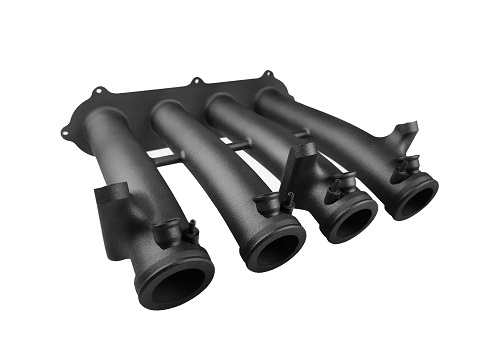
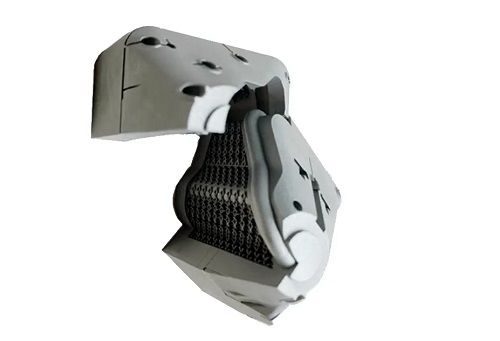
At Yigu technology, we've seen how SLS bridges the gap between design imagination and physical reality. Unlike cutting away material from a solid block (subtractive manufacturing), SLS builds parts from the ground up. This fundamental difference means you can create internal channels, lattice structures, and complex geometries that would be impossible—or prohibitively expensive—to produce any other way.
The basic principle is surprisingly straightforward: a thin layer of metal powder spreads across a build platform, a laser selectively sinters (fuses) the powder according to a digital 3D model, the platform drops slightly, and the process repeats. Each layer bonds to the one below it, gradually building a complete metal part.
How Does the SLS Process Work for Metal Parts?
What Happens Before the Laser Starts?
Powder preparation is the foundation of successful SLS printing. The quality of your final part depends heavily on the powder you start with.
Metal powders for SLS typically range from 10 to 100 micrometers in particle size. The ideal powder has:
- Spherical or near-spherical particles that flow smoothly during spreading
- Narrow particle size distribution for consistent packing density
- Clean, dry material free from moisture and contaminants
Before printing begins, most metal powders require two critical preparation steps:
Drying removes moisture that could vaporize during laser sintering, creating voids or cracks in your part. Depending on the material, drying happens at 80-150°C for several hours.
Sieving removes agglomerates and oversized particles that could disrupt powder spreading. A sieve with mesh slightly smaller than your maximum desired particle size ensures only properly sized material enters the printer.
Different applications call for different powders. For medical implants, we might use titanium alloy (Ti6Al4V) for its biocompatibility and strength-to-weight ratio. For food processing equipment, stainless steel (SS316L) offers excellent corrosion resistance. And for automotive components where weight matters, aluminum alloys (AlSi10Mg) provide the perfect balance.
What Happens During the Laser Sintering Operation?
Once your powder is ready, the laser takes over. But this isn't simply pointing a laser at powder and watching magic happen.
Critical laser parameters determine success or failure:
- Laser power typically ranges from 100-500 watts for metals
- Scan speed affects how completely the powder fuses
- Scan spacing determines how well adjacent laser passes bond
- Layer thickness impacts both resolution and build time
The laser doesn't melt the powder completely—that's a different process called DMLM (Direct Metal Laser Melting). Instead, it sinters particles together at temperatures just below their melting point. This creates a solid structure while leaving some porosity, which can actually be beneficial for certain applications.
During printing, the build chamber maintains an inert atmosphere (usually nitrogen or argon) to prevent oxidation. Oxygen levels must stay below 500 parts per million to ensure clean, strong bonds between particles.
What Metal Materials Work Best in SLS 3D Printing?
Common Metal Powders and Their Properties
The table below summarizes the key characteristics of popular SLS metal powders:
| Metal Powder | Density (g/cm³) | Tensile Strength (MPa) | Melting Point (°C) | Best Applications |
|---|---|---|---|---|
| SS316L | Around 8.04 | 485-620 | 1375-1400 | Medical instruments, food equipment |
| Ti6Al4V | Around 4.43 | 900-1100 | 1600-1650 | Aerospace parts, implants |
| AlSi10Mg | Around 2.65 | 200-300 | 570-630 | Auto parts, heat sinks |
Stainless steel (SS316L) remains the workhorse of metal SLS printing. It offers excellent corrosion resistance, good mechanical properties, and reasonable cost. We've used it to print surgical guides that must withstand sterilization without degrading.
Titanium alloys (Ti6Al4V) deliver exceptional strength at half the weight of steel. The aerospace industry loves them for brackets and housings, while medical applications benefit from titanium's biocompatibility. One challenge? Titanium powder costs significantly more than stainless steel.
Aluminum alloys (AlSi10Mg) shine when weight and thermal management matter. Their high thermal conductivity makes them ideal for heat exchangers and electronic enclosures. Automotive manufacturers use them to create lightweight components that improve fuel efficiency.
Can You Print with Metal-Matrix Composites?
Yes, and this is where SLS gets really interesting. Metal-matrix composites (MMCs) combine metal powders with reinforcing materials like ceramics or carbon fibers.
The advantages are compelling:
- 30-50% higher tensile strength when adding carbon fibers to aluminum
- Tailored thermal expansion by adding silicon carbide particles
- Improved wear resistance with ceramic reinforcement
The challenges keep it interesting:
- Powder homogeneity becomes critical—reinforcement must disperse evenly
- Processing complexity increases because different materials respond differently to laser energy
- Post-processing requires careful planning as composites behave differently than pure metals
For example, adding silicon carbide to aluminum creates a material with excellent stiffness and wear resistance, perfect for automotive brake components. But getting the silicon carbide particles to distribute evenly through the aluminum matrix requires specialized mixing techniques and careful parameter adjustment during printing.
How Does SLS Compare to Other Metal Manufacturing Methods?
SLS vs. Traditional Casting: Which Wins?
| Aspect | SLS 3D Printing | Traditional Casting |
|---|---|---|
| Small-batch cost | 30-50% lower (no molds needed) | Higher (mold costs spread over fewer parts) |
| Large-batch cost | 10-20% higher per unit | Lower per unit (economies of scale) |
| Production cycle | 2-3 days for complex parts | 1-2 weeks (mold making + cooling) |
| Precision | ±0.1-0.2 mm | ±0.5-1.0 mm |
| Design freedom | Extremely high (internal channels, lattices) | Limited (mold constraints) |
When a medical device company needed just 50 custom surgical guides, SLS delivered them in three days at half the cost of casting. The internal cooling channels in each guide—impossible to cast—improved surgical outcomes by keeping instruments at optimal temperatures.
SLS vs. CNC Machining: Different Tools for Different Jobs
Material utilization tells a dramatic story. SLS achieves 90-95% material utilization because unsintered powder gets recycled. CNC machining, cutting away material from solid blocks, often achieves only 10-30% utilization for complex parts.
Geometric complexity favors SLS every time. That turbine blade with internal cooling passages? Printed in one piece. The same part would require multiple CNC setups, specialized tooling, and assembly steps.
Small-batch efficiency belongs to SLS. For 1-100 parts, digital workflow means production starts immediately. CNC requires programming, fixturing, and tool changes before the first chip flies.
The sweet spot for SLS is complex parts, small batches, and designs that evolve. CNC excels at simple geometries, large volumes, and materials that don't work well in powder form.
What Makes SLS-Printed Metal Parts So Special? Real-World Examples
How Is Aerospace Using SLS Metal Parts?
A leading aerospace company needed turbine blades with internal cooling channels. Traditional investment casting required multiple steps, had high failure rates, and took weeks.
SLS changed everything. The entire blade prints in one piece directly from the digital model. The internal structure became more uniform, improving heat dissipation. Engine tests showed:
- 15-20°C lower operating temperature compared to traditionally manufactured blades
- 30-40% longer lifespan based on long-term testing
- 20-30% lower cost for 50-blade production runs
- 90% material utilization versus less than 50% with traditional methods
The blade's internal channels now follow optimized paths that simply couldn't be cast. Every blade performs identically because the digital process eliminates variation between units.
What's Happening in Automotive SLS Applications?
A high-performance automotive manufacturer used SLS to produce an aluminum alloy (AlSi10Mg) engine cylinder block that traditional casting couldn't match.
The results were impressive:
- 10-15°C lower operating temperature from optimized coolant channels
- 10-15% weight reduction compared to cast iron
- 5-8% fuel efficiency improvement in vehicle tests
- Complex internal oil passages designed for optimal flow
Another manufacturer tackled suspension arms with titanium alloy and lattice structures. The SLS-printed arms weighed 20-25% less than steel versions, reducing unsprung mass. Handling tests showed 10-15% faster cornering speeds and more stable high-speed performance.
Customization capabilities add another dimension. Luxury car makers now offer personalized interior components—door handles, gear shifters—in stainless steel or gold-plated alloys. Customers choose unique shapes and engravings without paying for custom tooling.
What Post-Processing Do SLS Metal Parts Need?
Raw SLS parts rarely go straight into service. Post-processing transforms them from "printed" to "production-ready."
| Post-Processing Step | Main Effect | Typical Parameters |
|---|---|---|
| Heat treatment (annealing) | Relieves stress, improves ductility | 600-1000°C for steel, slow cooling |
| Heat treatment (solution + aging) | Increases strength | Alloy-specific temperatures |
| Sandblasting | Removes powder, smooths surface | High-speed abrasive stream |
| Polishing | Achieves high-gloss finish | Progressive grit sizes |
| Machining | Adds features, tight tolerances | Standard machining operations |
Heat treatment often makes the biggest difference. Annealing relieves internal stresses built up during rapid heating and cooling cycles. For aluminum alloys, solution treatment followed by quenching and aging can dramatically increase strength.
Surface finishing ranges from functional to cosmetic. Sandblasting quickly removes partially sintered powder and improves fatigue strength. Mechanical polishing creates smooth surfaces for aesthetic applications. Chemical-mechanical polishing achieves mirror finishes when needed.
Machining adds precision features that SLS can't achieve—threaded holes, bearing surfaces, tight tolerance mating features. The combination of SLS complexity with machined precision often produces the best results.
FAQs About SLS 3D Printing for Metal Parts
What metals can you use in SLS 3D printing?
Common options include stainless steel (SS316L), titanium alloys (Ti6Al4V), and aluminum alloys (AlSi10Mg). Each offers different properties for specific applications. Metal-matrix composites expand the possibilities further.
How strong are SLS-printed metal parts compared to traditionally manufactured ones?
With proper post-processing, SLS parts can achieve 90-100% of wrought material strength. Heat treatment and hot isostatic pressing (HIP) can eliminate porosity and improve mechanical properties significantly.
Is SLS 3D printing expensive for metal parts?
For small batches and complex designs, SLS often costs less than traditional methods because it eliminates tooling. For simple parts in large volumes, traditional manufacturing typically wins on cost.
How accurate are SLS-printed metal parts?
Typical dimensional accuracy ranges from ±0.1-0.2 mm for well-calibrated machines. Factors like powder characteristics, laser parameters, and part geometry all influence final precision.
Can you reuse metal powder in SLS printing?
Yes, unsintered powder can be recycled, but it must be sieved and mixed with fresh powder at controlled ratios. Over time, powder degrades and must be replaced.
Contact Yigu Technology for Custom Metal SLS Manufacturing
Ready to turn your metal part ideas into reality? At Yigu technology, we combine deep engineering expertise with state-of-the-art SLS capabilities to deliver exceptional results. Whether you need prototypes, small production runs, or complex custom components, our team helps you navigate material selection, design optimization, and post-processing requirements.
Contact us today to discuss your project. We'll help you determine whether SLS 3D printing makes sense for your application and guide you through every step from digital model to finished metal part.