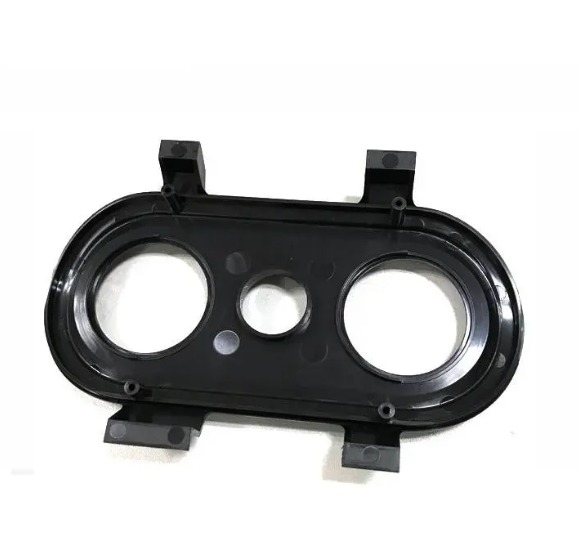
Stainless steel CNC machining represents the intersection of material science and precision engineering. Renowned for its corrosion resistance, strength, and hygiene, stainless steel is indispensable across critical industries from medical devices to aerospace. However, its unique properties—including low thermal conductivity and a strong tendency to work-harden—present distinct challenges in achieving high precision and surface quality. Successfully machining stainless steel requires more than just a standard CNC program; it demands a strategic approach to material selection, tooling, process parameters, and thermal management. This guide is designed for engineers, procurement specialists, and manufacturers who need to navigate the complexities of stainless steel CNC machining. We will explore actionable strategies to overcome its machining difficulties, optimize costs for production runs, and consistently achieve the tight tolerances required for high-performance applications.
What are the advantages of stainless steel for CNC machining?
Choosing stainless steel for CNC-machined components offers a compelling set of benefits that justify its machining complexity and cost:
- Superior Corrosion Resistance: The primary advantage. The chromium content forms a passive oxide layer, making parts ideal for medical implants, marine hardware, food processing equipment, and chemical applications where longevity is critical.
- High Strength and Durability: Offers excellent mechanical properties and retains strength across a wide range of temperatures, suitable for structural components, valves, and high-stress assemblies.
- Hygienic and Cleanable Surface: The non-porous, smooth finish achievable through precision machining is perfect for applications requiring strict sterility or cleanability, such as surgical tools and food-contact surfaces.
- Aesthetic and Functional Versatility: Can be finished to a high polish, satin brush, or bead blast, offering both visual appeal and functional performance for consumer, architectural, and industrial components.
- Long-Term Value: Despite higher initial material and machining costs, its exceptional durability and minimal maintenance often result in a lower total cost of ownership over the component's lifecycle.
Which stainless steel grades are most machinable?
Machinability varies significantly across stainless steel families due to differences in microstructure and composition. Understanding this hierarchy is crucial for balancing performance needs with production efficiency and cost.
| Grade Series | Common Examples | Key Characteristics | Machinability (Relative to Carbon Steel) | Typical Applications |
|---|---|---|---|---|
| Martensitic (400 Series) | 416, 420, 440C | Magnetic, heat-treatable to high hardness. Free-machining grades (e.g., 416) include sulfur for improved chip breaking. | Fair to Good (416 is optimized for machining) | Surgical instruments, cutlery, valves, shafts. |
| Ferritic (400 Series) | 430, 434 | Magnetic, moderate corrosion resistance, generally good formability. | Moderate | Automotive trim, appliances, non-structural parts. |
| Austenitic (300 Series) | 304, 316, 316L | Non-magnetic, excellent corrosion resistance, tough, and prone to work hardening. Most common but most challenging to machine. | Poor (40-55% of carbon steel's machinability) | Chemical tanks, marine fittings, food equipment, medical implants. |
| Precipitation-Hardening | 17-4 PH (630) | Can be machined in a softer condition then aged to very high strength. | Moderate (in solution-treated condition) | Aerospace fittings, high-performance shafts, nuclear components. |
Key Insight: For general-purpose parts requiring good machinability and moderate corrosion resistance, 416 stainless steel is an excellent choice. For superior corrosion resistance in demanding environments, 304 or 316/L are the standards but require expert machining strategies to overcome their poor machinability.
How does tool selection impact surface finish?
Tool choice is the single greatest factor influencing surface finish, tool life, and overall process stability when machining stainless steel.
- Tool Material: Micro-grain or sub-micron grain carbide is the standard base material. For austenitic stainless steels (304, 316), PVD-coated carbide inserts (e.g., TiAlN, TiAlSiN) are highly recommended. These coatings provide high hardness, thermal stability, and a smooth surface that reduces chip adhesion.
- Critical Geometry:
- Sharp Cutting Edges & Positive Rake Angles: Essential for clean shearing with minimal cutting force, reducing the pressure and heat that cause work hardening.
- Specialized Chipbreaker Designs: Modern inserts feature engineered chipbreakers that reliably control the long, ductile chips typical of stainless steel, preventing re-cutting and surface damage.
- Tool Path Strategy: Climb milling is generally preferred as it engages the material with a decreasing chip thickness, leading to a better surface finish, reduced cutting force, and less tendency to work-harden the surface.
Coolant strategies for work-hardening prevention
Work hardening is the most significant challenge in stainless steel CNC machining, where the material becomes harder and more abrasive due to plastic deformation during cutting. An effective coolant strategy is a primary defense.
- High-Pressure Flood Coolant: This is the most effective and recommended method. It serves three critical functions:
- Lubricates to reduce friction and cutting forces.
- Cools the cutting zone to carry away the intense heat (stainless steel's cutting temperature can be 200°C higher than carbon steel), preventing thermal distortion of both the part and the tool.
- Evacuates Chips immediately to prevent them from being re-cut into the workpiece, which is a direct cause of work hardening and poor surface finish.
- Optimized Coolant Parameters: Research indicates that parameters like coolant pressure and jet angle significantly affect outcomes. For example, one study on machining 316L found an optimal coolant gauge pressure of 0.6 bar at a 25° jet angle to improve surface finish and manage spindle load.
- Through-Tool Coolant: For deep drilling or pocketing, coolant delivered directly through the tool is invaluable for reaching the cutting edge, managing heat, and ensuring chip evacuation from deep cavities.
Tolerance capabilities for precision parts
A proficient stainless steel CNC machining service can achieve high precision, but expectations must be grounded in the material's behavior and process capabilities.
- Standard Machining Tolerances: ±0.005 inches (±0.127 mm) is readily and economically achievable for most non-critical features.
- Precision Tolerances: With careful process design, optimized tooling, and rigid machine tools, ±0.001 inches (±0.025 mm) is consistently attainable for critical diameters, bore sizes, and locating surfaces.
- High-Precision / Fine Tolerances: Achievable in a controlled environment for critical features. This requires exceptional machine rigidity, temperature-stabilized workflow, and often secondary finishing operations. A master craftsman documented achieving such precision, reducing scrap rates from 20% to 0.1% through systematic optimization of tools, parameters, and paths.
- Critical Consideration: The thermal expansion coefficient of stainless steel is about 1.5 times that of carbon steel. For ultra-high-precision work, part temperature must be meticulously controlled and measured to compensate for thermal growth during machining.
Cost optimization techniques for production runs
While stainless steel is inherently more expensive to machine than aluminum or mild steel, strategic planning can significantly optimize production costs.
- Design for Manufacturability (DFM):
- Simplify Geometries: Avoid deep pockets with small corner radii and extremely thin walls. This reduces tool wear, machining time, and the need for specialized tooling.
- Standardize Features: Use standard drill sizes and thread forms to minimize tool changes.
- Specify Realistic Tolerances: Apply tight tolerances only where functionally critical, as they exponentially increase machining time and inspection cost.
- Optimize Cutting Parameters: Using scientifically determined parameters is not just about quality—it's about cost. For instance, research on 316L found that optimizing speed, depth of cut, and coolant parameters simultaneously improved material removal rate and surface finish, directly lowering cost per part.
- Leverage Production Volume: CNC machining benefits from economies of scale. The high fixed costs of programming and setup are amortized over the production run. For example, the unit cost for a batch of 100 parts can be 40-50% lower than for a single prototype.
- Strategic Material & Tooling Investment: For long production runs, investing in premium-grade, wear-resistant tooling (like specialized PVD-coated inserts) can lower total cost by drastically increasing tool life and reducing changeover downtime, despite a higher upfront price.
Common applications across industries
The properties of precision-machined stainless steel make it indispensable in demanding, high-value sectors:
- Medical & Surgical: ISO 13485 compliant machining of surgical implants, instrument handles, and sterilization trays. 316L is preferred for its biocompatibility and cleanability.
- Aerospace & Defense: High-strength fittings, hydraulic manifolds, and sensor housings from grades like 17-4 PH, requiring AS9100 certification and often ITAR compliance.
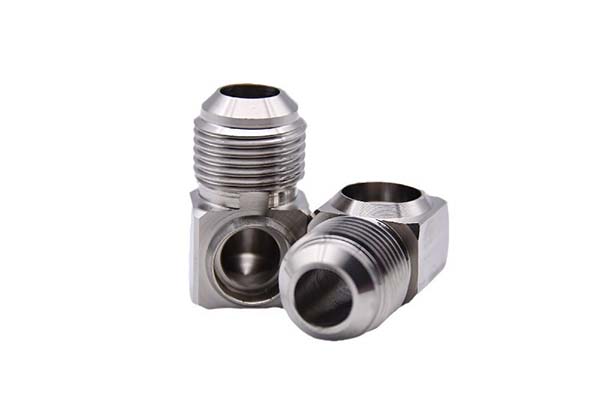
- Food & Beverage & Chemical Processing: Valves, pump housings, and pipe fittings from 304 or 316/L, requiring smooth, crevice-free finishes to prevent bacterial growth and withstand corrosive media.
- Semiconductor & Precision Engineering: Ultra-clean, high-tolerance gas and fluid handling components for wafer fabrication equipment.
- Marine & Offshore: Shafts, fittings, and hardware exposed to saltwater, typically machined from 316 for superior pitting resistance.
Conclusion
Mastering stainless steel CNC machining is a disciplined exercise in managing trade-offs. It requires selecting the appropriate grade—sacrificing some machinability for corrosion resistance when necessary—and then applying a meticulously optimized process to control work hardening, heat, and tool wear. Success is achieved through the synergy of sharp, geometry-specific tooling, high-pressure coolant applied with strategy, and cutting parameters derived from both empirical data and practitioner experience. By integrating these technical considerations with smart design for manufacturability and volume planning, manufacturers can transform the challenges of stainless steel into reliable, high-precision, and cost-effective components that meet the rigorous demands of the world's most critical industries. The journey from a challenging material to a flawless finished part is a testament to precision engineering at its finest.
FAQ on Stainless Steel CNC Machining
What is the single biggest mistake when starting to machine stainless steel?
Using tools and parameters meant for mild steel or aluminum. This leads directly to rapid work hardening, excessive tool wear, poor surface finish, and potential part scrapping. Stainless requires sharper tools, more aggressive feeds to cut under the hardened layer, and robust cooling.
Can you achieve a mirror polish on CNC machined stainless parts?
Yes, it is a standard but multi-step post-processing operation. After machining to a fine surface finish, the part undergoes progressive abrasive polishing using increasingly fine grits, often ending with a buffing stage using fine-grain compounds. This is common for architectural features, high-end consumer products, and sanitary fittings.
How does the cost compare to machining aluminum?
Stainless steel machining is significantly more expensive per part. Reasons include: much slower cutting speeds (increasing machine time), higher tool wear (increasing tooling cost), more expensive raw material, and the necessity for specialized expertise and often more rigid equipment. Expect a 2x to 5x cost multiplier versus aluminum for a similar part.
What post-processing treatments are commonly used?
- Passivation: A chemical process to remove free iron and enhance the natural chromium oxide layer, maximizing corrosion resistance. This is standard for medical and food-grade parts.
- Electropolishing: An electrochemical process that removes a microscopic layer, smoothing the surface, improving cleanability, and providing a bright finish.
- Bead/Sand Blasting: For a uniform matte or satin aesthetic finish.
- Heat Treatment (e.g., for 17-4 PH): To achieve the specified high strength and hardness after machining.
How do I ensure my parts are made from certified material?
A reputable machine shop will provide material certifications (Mill Test Certificates) with each shipment, traceable to the heat/lot number of the raw stock. This is a non-negotiable requirement for regulated industries (medical, aerospace, nuclear) and a key indicator of a professional, quality-focused supplier.
Contact Yigu technology for custom manufacturing.
At Yigu Technology, we specialize in high-precision stainless steel CNC machining for the most demanding applications. Our expertise lies in selecting the optimal grade and executing a machining strategy that balances superior corrosion resistance, strength, and manufacturability. Equipped with rigid CNC machining centers, high-pressure coolant systems, and a deep understanding of advanced tooling dynamics, we deliver components that meet stringent tolerances and finish requirements, from prototypes to production runs.
Partner with us to navigate the complexities of stainless steel and obtain durable, reliable, and precision-engineered parts.
Contact Yigu Technology today for a detailed consultation and quote on your project.