Selecting a Custom Plastic Injection Molding manufacturer is one of the most critical decisions you'll make in bringing a product to life. This choice impacts not only the quality and cost of your components but also your time-to-market, supply chain resilience, and brand reputation. A manufacturer is more than a vendor; they are a strategic partner in engineering and production. This guide provides a structured, due-diligence framework for engineers, product managers, and procurement specialists. We move beyond basic checklists to explore how to evaluate a manufacturer's true capabilities, from mandatory certifications and technical expertise to their culture of quality and transparency in pricing. By the end, you'll know exactly how to identify a partner capable of transforming your design into a flawless, commercially viable product.
What Certifications Should You Look For?
Certifications are the foundation of a manufacturer's quality system, providing audited proof of their processes. The required certification depends on your industry.
- ISO 9001: The baseline Quality Management System certification. It demonstrates a commitment to standardized processes and continuous improvement. Consider it a minimum requirement for any serious manufacturer.
- IATF 16949: The non-negotiable global standard for automotive suppliers. It builds on ISO 9001 with stringent requirements for risk management, defect prevention, and product safety.
- ISO 13485: Essential for medical device manufacturing. It focuses on a risk-based approach to quality management, traceability, and validation—critical for patient safety and regulatory approval.
- Others: AS9100 for aerospace and ISO 14001 for environmental management.
- Pro Tip: Always verify that the certificate scope explicitly includes plastic injection molding and mold manufacturing.
Evaluating Industry Experience and Track Record
Experience in your specific field is invaluable. A medical device molder thinks differently than an automotive supplier.
- Ask for Case Studies: Request detailed examples of projects similar to yours in complexity, material, or volume. Look for challenges faced and solutions implemented.
- Request Client References: Speaking directly to past or current clients provides unfiltered insight into reliability, communication, and problem-solving.
- Review Their Portfolio: A diverse portfolio is good, but look for depth in your niche. A manufacturer with 20 years of producing consumer electronics housings may not be the best fit for a tight-tolerance optical lens.
How to Assess Manufacturing Capabilities?
Technical capability must align with your part's requirements, both now and in the future.
- Machine Press Range: Do they have the appropriate clamp tonnage (from 50 to 3000+ tons) and platen size for your parts? A diverse fleet offers flexibility.
- Specialized Technologies: Does your part require:
- Multi-Material/Overmolding or 2-Shot Molding?
- Micro-molding for tiny, high-precision components?
- Gas-Assist or MuCell for large, rigid parts?
- Vertical Presses for insert molding?
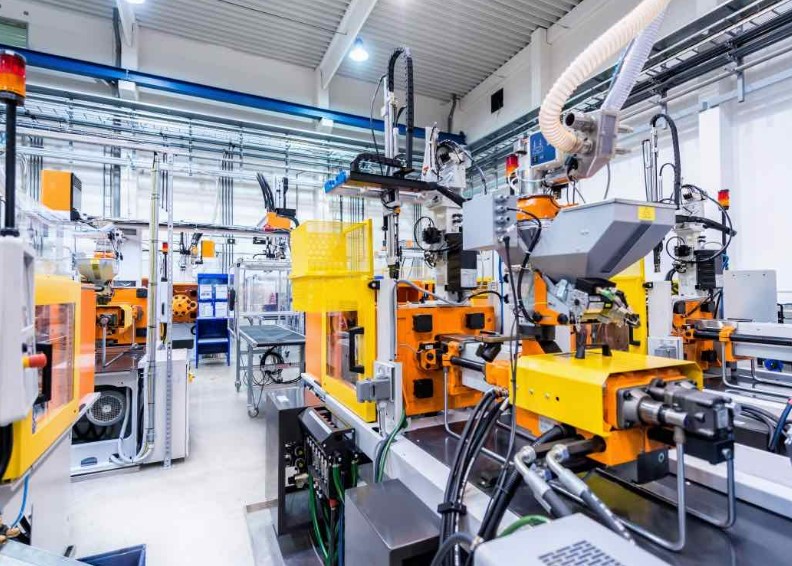
- Automation Integration: Look for evidence of robotic part handling, automated vision inspection, and conveyor systems. This is critical for consistency, labor cost control, and enabling lights-out production.
Material Selection and Processing Expertise
A true partner guides you to the optimal material, not just the one on your spec sheet.
- Beyond the Datasheet: They should advise on long-term performance, environmental stress crack resistance, creep behavior, and regulatory compliance (UL94, FDA, USP Class VI).
- Material Science Support: Can they provide mold flow analysis to predict filling patterns, weld lines, and potential sink marks? This proactive engineering prevents costly mold rework.
- Supply Chain Knowledge: They should have relationships with major resin distributors, ensuring material availability and advising on alternatives during shortages. For instance, they might recommend a less hygroscopic nylon grade to reduce drying time and improve process stability.
What Quality Control Processes Are Essential?
Quality must be built into the process, not inspected in at the end.
- Design for Manufacturability (DFM): A comprehensive DFM report before tooling begins is the first and most important quality step, identifying potential issues in wall thickness, draft, and gating.
- First Article Inspection (FAI) & PPAP: A rigorous Production Part Approval Process (PPAP) package, including a full-dimensional FAI report (AS9102 format for aerospace), is standard for production launch.
- In-Process Monitoring: Do they use scientific molding principles with cavity pressure sensors and real-time Statistical Process Control (SPC)? This data-driven approach ensures shot-to-shot consistency and predicts deviations before they create scrap.
- Full Traceability: Systems must provide lot traceability from resin batch to shipped part.
Understanding Pricing and Cost Structures
The lowest quote can be the most expensive in the long run. Seek transparency.
- Detailed Quotation: A professional quote clearly separates tooling (NRE) costs, piece-part price, and any setup charges. It should state assumptions about annual volumes, material, and packaging.
- "Should-Cost" Analysis: Understand the drivers. Is the piece-part price high due to a long cycle time (a design issue) or an inflated machine hour rate?
- Terms for Changes: What is the cost structure for Engineering Change Orders (ECOs) after the mold is built? What are the policies for mold maintenance and repair costs?
- Value-Added Services: Does the quote include assembly, packaging, or inventory management? Sometimes a higher piece-part price with these services included offers better total value.
What Lead Times Are Realistic?
Unrealistic promises are a major red flag. A professional provides a phased, detailed schedule.
- Tooling Lead Time: This is the largest variable. A simple single-cavity aluminum prototype mold: 4-6 weeks. A complex, multi-cavity production steel mold: 12-20+ weeks.
- Sample Approval Timeline: Factor in 2-4 weeks for T1 samples, your evaluation, and potential minor mold revisions.
- Production Ramp-Up: Ask about their capacity planning. Can they meet your required production rate immediately, or is there a ramp-up period?
- Ask for a Gantt Chart: A detailed project schedule shows professionalism and allows you to track milestones.
Conclusion
Choosing the right Custom Plastic Injection Molding manufacturer is a strategic investment. The ideal partner is not defined by the cheapest price but by a demonstrable synergy of certified quality systems, deep technical expertise in your domain, proactive engineering support, and transparent communication. They act as an extension of your team, dedicated to manufacturability, quality, and your product's success in the market. By applying this rigorous evaluation framework—scrutinizing certifications, capabilities, and culture—you secure more than a supplier; you gain a foundational partner for innovation and growth. The upfront effort in selection pays dividends throughout your product's lifecycle in reliability, cost savings, and peace of mind.
FAQ on Choosing a Plastic Injection Molding Manufacturer
What is the most important question to ask a potential manufacturer?
"Can you walk me through your complete process from receiving our CAD file to shipping production parts, including your DFM, validation, and quality control steps?" Their answer will reveal their systematic approach, technical depth, and transparency.
Is it better to choose a large or a mid-sized manufacturer?
It depends on your project's scale and needs. Large manufacturers offer broad resources and global footprint. Mid-sized, specialized manufacturers often provide more personalized attention, faster decision-making, and greater flexibility for niche or evolving projects. The key is capability and cultural fit.
How important is geographic location?
For products requiring frequent design collaboration, just-in-time (JIT) delivery, or lower shipping costs, proximity is a significant advantage. For stable, high-volume products shipped in containers, a capable distant manufacturer with strong logistics can be equally effective.
What are red flags during a factory audit?
A disorganized shop floor (poor 5S), absence of real-time process monitoring (SPC charts), uncalibrated inspection equipment, and an inability to clearly explain their escalation process for quality issues.
Should the manufacturer have in-house mold design and build capability?
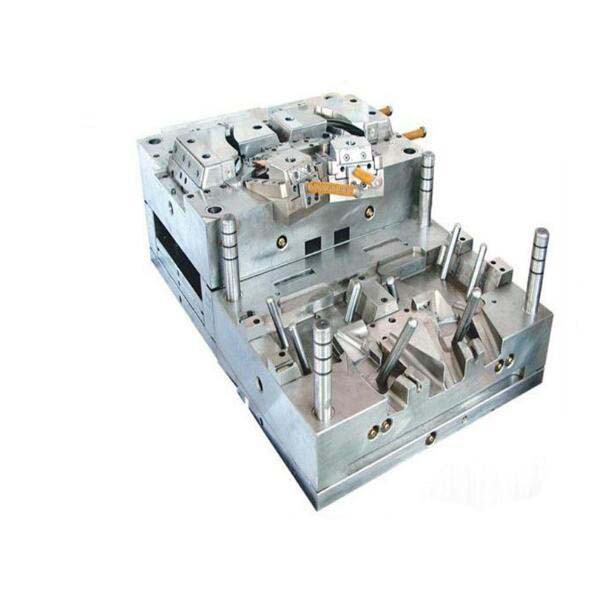
It is a substantial advantage. In-house tooling ensures seamless communication between mold designers and process engineers, leading to better molds, faster troubleshooting, and single-point accountability. Outsourcing this core competency introduces communication gaps and potential delays.
Contact Yigu technology for custom manufacturing.
At Yigu Technology, we are built to be the Custom Plastic Injection Molding partner you can rely on. Our integrated approach combines IATF 16949 and ISO 13485 certified systems, full in-house mold design and manufacturing, and a scientific molding production floor managed by experienced engineers. We provide proactive DFM, transparent project management, and a commitment to quality that ensures your product is manufactured to the highest standards.
From concept to production, we partner with you to ensure success. Let's discuss how we can bring your product to life.
Contact Yigu technology today for a detailed capabilities presentation and project consultation.