Introduction
Additive manufacturing—better known as 3D printing—is transforming healthcare in ways that seemed like science fiction just a decade ago.
Surgeons practice on 3D-printed models of their patients' organs before stepping into the operating room. Patients receive custom implants designed to match their anatomy exactly. Children with limb differences get affordable prosthetics that grow with them.
The numbers tell the story. The global medical additive manufacturing market is projected to reach $4.2 billion by 2030 (Grand View Research, 2025). This growth is driven by one thing: the ability to create patient-specific solutions at speeds and costs traditional methods can't match.
At Yigu technology, we've seen this revolution firsthand. This guide explores how additive manufacturing is changing medical devices—from implants to surgical tools to drug delivery systems.
What Are the Technical Foundations of Medical Additive Manufacturing?
Core Processes
Two main AM processes dominate medical applications:
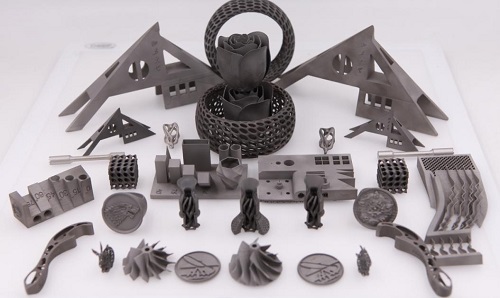
Selective Laser Sintering (SLS) : A high-power laser sinters powdered material—metal or plastic—into solid layers. The unsintered powder supports the part, enabling complex geometries like porous bone implants.
Fused Deposition Modeling (FDM) : Heats and extrudes thermoplastic filament. More accessible, lower cost, ideal for prototypes and less complex devices.
Other important processes include:
- Stereolithography (SLA) : UV laser cures liquid resin—excellent for detailed anatomical models
- Electron Beam Melting (EBM) : Electron beam melts metal powder in vacuum—ideal for titanium implants
- Multi Jet Fusion (MJF) : Inkjet technology fuses nylon powder—fast production of durable parts
Critical Materials
Medical devices must meet strict requirements for biocompatibility, strength, and durability.
| Material | Applications | Key Properties |
|---|---|---|
| Titanium alloys (Ti-6Al-4V) | Orthopedic implants, spinal cages, dental implants | Biocompatible, high strength-to-weight, corrosion-resistant |
| PEEK (Polyether-ether-ketone) | Spinal implants, cranial plates, orthopedic | Radiolucent (X-ray visible), durable, biocompatible |
| Stainless steel (316L) | Surgical instruments, temporary implants | Strong, corrosion-resistant, cost-effective |
| Cobalt-chrome | Dental frameworks, wear-resistant implants | Excellent wear resistance, biocompatible |
| Biocompatible resins | Surgical guides, anatomical models | Precise, sterilizable |
| Carbon-fiber composites | External prosthetics, orthotics | Lightweight, strong |
Precision Metrics
How does AM compare to traditional manufacturing for medical devices?
| Parameter | AM-Manufactured | Traditional Methods |
|---|---|---|
| Tolerance | ±0.1 mm | ±0.5 mm |
| Surface finish (Ra) | 10–20 μm | 20–50 μm |
| Customization | Full personalization | Limited standard sizes |
| Lead time | 1–3 days | 2–6 weeks |
Tolerance: ±0.1 mm precision ensures implants fit perfectly. In dental applications, this means better osseointegration and long-term success.
Surface finish: Smoother surfaces (Ra 10–20 μm) reduce bacterial adhesion and stress concentrations. For implants, this matters.
Customization: Each device can match patient anatomy exactly. Traditional methods produce standard sizes that may not fit everyone.
Lead time: From scan to implant in days, not weeks. For trauma patients, this speed changes outcomes.
How Is Additive Manufacturing Used in Medical Devices?
Custom Implants and Prosthetics
Patient-specific implants are perhaps the most dramatic application of AM in healthcare.
Orthopedic implants: Hip stems, knee components, and bone plates printed from titanium or cobalt-chrome. Based on CT or MRI scans, each implant matches the patient's anatomy exactly. Studies show 20% lower complication rates compared to standard implants.
Cranial implants: For patients with skull defects from trauma or surgery, 3D-printed implants restore both protection and appearance. Printed in PEEK or titanium, they fit precisely.
Spinal cages: PEEK cages with porous structures promote bone fusion. Radiolucency means surgeons can see through them on X-rays—critical for monitoring healing.
Dental implants: Custom abutments and frameworks printed in titanium or cobalt-chrome. Perfect fit, better outcomes.
Prosthetics: Custom sockets for limb prosthetics improve comfort and function. For children who outgrow devices quickly, affordable replacements change lives.
Real example: A patient needing a custom hip implant traditionally waited weeks for a standard size that might not fit perfectly. With AM, the implant is designed from their CT scan, printed in days, and fits exactly. Surgery is faster, recovery is smoother.
Surgical Planning and Guides
Anatomical models: From patient scan data, surgeons can print exact replicas of organs, bones, and blood vessels. They study the model, plan the approach, and practice before ever touching the patient.
Studies show this reduces surgery time by 20-30% for complex procedures. Less time under anesthesia, better outcomes.
Surgical guides: Custom guides position cuts exactly where planned. For tumor resections, joint replacements, and spinal procedures, this precision matters. Guides are sterilizable and single-use.
Surgical Instruments
Custom instruments for specific procedures. A tool designed for one patient, one surgery. Printed in stainless steel or titanium, then sterilized.
Benefits:
- Perfect fit for the procedure
- Lightweight designs
- Complex features impossible to machine
- On-demand production—no inventory
Drug Delivery Systems
3D printing enables precise control over drug release:
Patient-specific dosages: Pills printed with exactly the right amount of medication. No more splitting tablets or guessing.
Complex release profiles: Multi-layer pills that release different drugs at different times. A single pill that delivers morning and evening doses.
Personalized shapes: Easier to swallow for patients with difficulty.
Bioprinting and Tissue Engineering
The frontier: printing living tissues.
Researchers print scaffolds with living cells. These structures guide tissue regeneration—bone, cartilage, even organs. While still experimental, the potential is enormous.
Examples:
- Skin grafts for burn patients
- Cartilage for joint repair
- Vascular grafts for bypass surgery
- Organoids for drug testing
What Are the Advantages Over Traditional Manufacturing?
Cost and Efficiency
Material waste reduction: Traditional subtractive manufacturing can waste 80-90% of material. AM reduces waste by up to 90%. For expensive materials like titanium, this is transformative.
Prototyping costs: Cut by approximately 70%. No tooling, no molds—just a digital file and a printer. Iterate designs overnight, not over weeks.
Production cycle time: A 2023 Volkswagen case study showed 35% cycle time reduction for conformal-cooled molds using AM. For medical devices, similar efficiencies apply. Complex implants that took weeks now print in days.
Scrap rate: Reduced by 60% due to precision and consistency.
| Aspect | AM-Enabled | Traditional |
|---|---|---|
| Material waste | Up to 90% less | High (subtractive) |
| Prototyping cost | ~70% lower | High (tooling) |
| Cycle time | 35% faster (VW study) | Longer |
| Scrap rate | 60% lower | Higher |
Design Flexibility
Complex geometries: Internal channels, lattice structures, porous surfaces—features impossible to machine become routine. Dental crowns with internal channels reduce adjustment time by 25%.
Patient-specific designs: Each device matched to individual anatomy. No more "one size fits most." Perfect fit means better function, faster recovery, fewer complications.
Integration: Multiple components become one printed assembly. Fewer failure points, less assembly time.
What Are the Safety and Regulatory Considerations?
Material Safety
Medical devices must meet strict standards. Materials used in AM undergo rigorous testing:
ISO 10993: Series of standards for biological evaluation of medical devices. Tests for cytotoxicity, sensitization, irritation, acute toxicity, and more.
FDA clearance: Devices must receive FDA approval before market. Clinical trials show 99.7% success rates for FDA-approved 3D-printed devices.
Biocompatibility: Materials like titanium and PEEK have decades of proven safe use in the body.
Process Validation
AM introduces new variables. Quality systems must ensure:
- Consistent material properties across prints
- No contamination during processing
- Reproducible results from machine to machine
- Traceability from powder to patient
Sterilization
Printed devices must be sterilizable. Common methods:
- Gamma radiation (for many plastics and metals)
- Ethylene oxide gas (for heat-sensitive materials)
- Autoclave (steam sterilization for metals)
- Electron beam (for some applications)
Materials and processes must withstand sterilization without degradation.
What Are the Current Challenges?
Training Clinicians
Surgeons and medical staff need training to use AM effectively:
- Understanding what's possible
- Interpreting scan data
- Designing patient-specific solutions
- Validating printed devices
Initiatives aim to certify 100,000 professionals in medical 3D printing by 2026.
Cost of Equipment
Industrial AM systems for medical applications are expensive—$500,000 to $1.5 million. For many hospitals, using service bureaus makes more sense than buying.
Material Limitations
While expanding, material options still lag traditional manufacturing. Not all alloys or polymers are available in printable form.
Regulatory Hurdles
Each new device may need individual clearance. The path from concept to approved product takes time and investment.
Quality Assurance
Ensuring every printed part meets specifications requires:
- In-process monitoring
- Post-print inspection
- Mechanical testing
- Documentation and traceability
For critical implants, this adds cost and complexity.
Yigu Technology's Perspective
At Yigu technology, we've helped medical device companies, hospitals, and researchers navigate additive manufacturing for years. Here's what we've learned:
Start with the patient. The power of AM is customization. Use it where it matters—complex anatomy, unique requirements, better outcomes.
Quality is non-negotiable. Medical devices demand rigorous validation. We maintain strict process controls, material traceability, and inspection protocols.
Collaboration accelerates innovation. Surgeons, engineers, and manufacturers working together solve problems faster. We've seen it happen.
Cost-effectiveness requires scale. For one-off implants, AM is often the only option. For larger runs, economics improve dramatically.
Applications we serve:
- Custom implants from patient scan data
- Surgical guides for precise procedures
- Anatomical models for planning and education
- Instrument prototypes for device companies
- Research projects pushing the boundaries
Medical AM isn't just about making things. It's about making things better for patients.
Conclusion
Additive manufacturing is revolutionizing medical devices by enabling:
- Patient-specific customization: Implants, guides, and prosthetics matched to individual anatomy
- Complex geometries: Porous structures, internal channels, and lattice designs impossible to machine
- Faster production: From scan to device in days, not weeks
- Cost-effectiveness: 90% less waste, 70% lower prototyping costs
- Better outcomes: 20% lower complication rates, faster recovery
Applications span:
- Orthopedic and cranial implants
- Surgical guides and instruments
- Dental restorations
- Prosthetics and orthotics
- Drug delivery systems
- Tissue engineering research
Challenges remain—training, cost, regulation, quality assurance. But progress continues. Materials expand. Processes improve. Standards evolve.
For patients, this means better care. For surgeons, better tools. For manufacturers, better economics.
Additive manufacturing isn't just another way to make medical devices. It's a fundamentally better way.
FAQ
Are 3D-printed medical devices safe?
Yes. Materials undergo rigorous testing to ISO 10993 standards for biocompatibility. FDA-approved 3D-printed devices have shown 99.7% success rates in clinical trials. Each device must meet the same safety requirements as traditionally manufactured devices—often exceeding them due to customization.
Are additive-manufactured medical devices cost-effective?
Absolutely. Customized prosthetics cost $500–2,000 compared to $10,000–50,000 for traditional models. Material waste drops by up to 90%. Prototyping costs fall by 70%. Production cycles shorten. For complex, customized devices, AM is often the most economical—sometimes the only—option.
What are the current challenges in implementing AM in healthcare?
Key challenges include:
- Training clinicians to use 3D design tools effectively (initiatives aim to certify 100,000 professionals by 2026)
- Equipment cost—industrial systems remain expensive
- Material limitations—not all medical-grade materials are printable
- Regulatory pathways—each new device may need individual clearance
- Quality assurance—ensuring consistency across prints
What materials are used in medical 3D printing?
Common materials include:
- Titanium alloys for orthopedic and dental implants
- PEEK for spinal cages and cranial plates
- Stainless steel for surgical instruments
- Cobalt-chrome for wear-resistant applications
- Biocompatible resins for surgical guides
- Carbon-fiber composites for external prosthetics
Each is chosen for specific properties—strength, biocompatibility, radiolucency, wear resistance.
How accurate are 3D-printed medical devices?
Typical tolerance is ±0.1 mm—significantly better than traditional methods (±0.5 mm). Surface finish ranges 10–20 μm Ra, smoother than conventionally manufactured devices. This precision ensures implants fit exactly, guides position cuts accurately, and devices function as intended.
Can 3D printing be used for emergency medical applications?
Yes. AM's speed makes it ideal for emergencies. A custom implant can be designed from a patient's scan and printed in 1–3 days—compared to weeks for traditional manufacturing. For trauma patients, this speed can be life-changing. Hospitals increasingly keep printers for on-demand production of surgical guides and models.
Contact Yigu Technology for Custom Manufacturing
Ready to explore additive manufacturing for medical devices? Yigu technology specializes in custom manufacturing with all major 3D printing technologies.
We offer:
- Free quotes within 24 hours—just send your CAD file or scan data
- Design for medical AM—optimizing devices for performance and printability
- Material selection—biocompatible metals, polymers, and composites
- Printing—on industrial equipment with strict process control
- Post-processing—cleaning, sterilization validation, finishing
- Quality assurance—traceability, inspection, certification support
Contact us to discuss your project. Tell us what you're making and what it needs to do. We'll help bring your medical innovation to life.