1. What is shoulder milling? Basic concepts and core cognition
For machining practitioners, shoulder milling is a high-frequency machining method used in daily production, but many people still confuse it with other milling processes. In simple terms, shoulder milling is defined as a milling method in which the plane (top surface) and side (vertical surface) of the workpiece are machined simultaneously to form a "shoulder" structure, the core feature of which is that the cutting edge of the tool touches two vertical surfaces at the same time.
From the perspective of shoulder milling principle, it is responsible for side cutting through the circumferential edge of the tool, and the end face edge is responsible for plane cutting. Here is a practical case: When an auto parts factory uses the shoulder milling process, the processing time of a single piece is shortened from 120 seconds to 85 seconds, and the machining accuracy is also improved from ±0.03mm to ±0.015mm.
Many people will struggle with the difference between shoulder milling and face milling, in fact, the key lies in the processing goal: face milling only focuses on the flatness and roughness of the plane, while shoulder milling needs to ensure the verticality and dimensional accuracy of the plane and the side at the same time. Use the table for more visual comparison:
| Contrast dimensions | Shoulder milling | Face milling |
| Machined surface | Plane + vertical side | Single plane |
| Core precision requirements | Verticality, dimensional tolerance | Flatness, roughness |
| Tool features: | The perpendicularity of the end face and the circumferential edge should be guaranteed | Focus on the sharpness of the end face |
| Typical applications: | Steps, groove walls, flange end faces | Flat roughing and finishing |
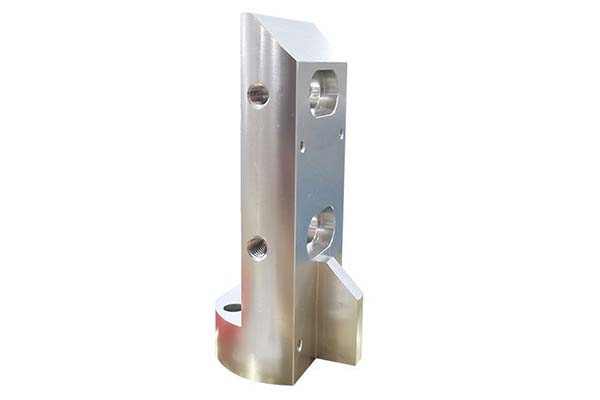
Shoulder milling has a wide range of application scenarios, and has core applications in aerospace (aircraft structural parts step processing), automobile manufacturing (gearbox housing groove milling), mold processing (cavity sidewall finishing), general machinery (gear shaft step surface processing) and other industries, especially suitable for workpiece processing that requires high-precision step structure.
2. Shoulder milling tool technology: Choosing the right "sharp edge" is the key to success
Tools are the heart of shoulder milling, and the right tool can directly solve 80% of machining problems. Common shoulder milling cutter types are mainly divided into three categories, each with its own applicable scenarios:
1. Mainstream tool types and characteristics
- Indexable shoulder mill: the most widely used in industrial production, the insert is replaceable, cost-effective, suitable for batch processing of medium and large workpieces. When a machine processing plant processes 45# steel box steps, it uses indexable square shoulder milling cutters with a single-edged life of up to 800 pieces, which is 60% lower than the overall tool cost.
- Square shoulder milling cutter: The vertical degree of the cutting edge and the tool bar is extremely high (usually ≤ 0.01mm), and it can produce a perfect shoulder of 90°, which is the first choice for precision machining, especially suitable for the step processing of mold cavities and precision parts.
- Solid carbide shoulder mill: strong rigidity and high precision, suitable for shoulder milling with small diameters, deep cavities or complex curved surfaces, but higher cost, more suitable for small-batch precision parts production.
2. Selection of key parameters of tools
The geometric angle of the tool directly affects the cutting performance: the recommended rake angle range is -5°~15°, and the negative rake angle is selected for processing hard materials such as steel parts (to enhance the strength of the cutting edge), and the positive rake angle is selected for soft materials such as aluminum alloy (to reduce sticking tools); The rurality angle is recommended to be 8°~12° to ensure smooth chip removal and avoid friction between the tool and the workpiece.
The selection of the number of cutting edges needs to be combined with the processing material and efficiency requirements: the 2-edge tool has a large chip removal space, suitable for aluminum alloy, stainless steel and other easy-to-stick tool materials; 3~4 flute tools have good rigidity and high processing efficiency, suitable for conventional materials such as steel parts and cast iron; The 5~6 flute tool is suitable for finishing and can improve the surface roughness (up to Ra0.8μm or less).
Coating technology is the key to improving tool life: TiAlN coating (high temperature resistance, hardness up to 3200HV) is recommended for machining steel parts, which can increase the service life by 3~5 times; AlCrN coating is recommended for processing stainless steel and superalloys (strong oxidation resistance); Diamond (PCD) coating is recommended for processing aluminum alloys (reducing knife sticking and improving surface quality).
3. Shoulder milling process: parameter optimization and practical skills
The reasonable setting of process parameters is the core of achieving efficient precision shoulder milling, especially paying attention to the matching of shoulder milling cutting parameters to avoid problems such as vibrating tools and poor surface quality.
1. Core cutting parameter selection
- Axial Depth of Cut (Ap): Refers to the depth of cut of the tool in the axial direction, typically no more than 50% of the tool's diameter. When processing steel parts, AP is recommended to be 0.5~3mm; When processing aluminum alloy, it can be appropriately increased to 1~5mm, which needs to be combined with tool rigidity and machine tool power.
- Radial Depth of Cut (Ae): That is, the cutting width of the tool in the radial direction, Ae is usually equal to 10%~100% of the tool diameter in shoulder milling, and it is recommended to control it at 20%~50% during finishing to ensure the verticality of the side.
- Cutting speed (Vc): Adjusted based on material properties, here are the recommended values for commonly used materials (based on carbide tools):
- Steel parts (HRC20~30): 100~150m/min
- Aluminum alloy: 300~600m/min
- Stainless steel (304): 80~120m/min
- Superalloy (Inconel 718): 30~60m/min
- Feed speed (Fz): Feed rate per tooth, recommended range 0.1~0.3mm / tooth, small value (0.1~0.15mm / tooth) for finishing to ensure surface quality, large value (0.2~0.3mm / tooth) for rough machining to improve efficiency.
2. Typical processing methods and operation points
- Step milling: First, determine the height (axial cutting depth) and width (radial cutting depth), and it is recommended to use layered cutting, with an axial cutting depth of no more than 2mm per layer to avoid excessive tool load. When a mold factory processes Cr12MoV steel steps, through layered milling (1.5mm per layer), the tool life is increased by 2 times, and the verticality of the step reaches 0.008mm.
- Channel milling: It belongs to deep shoulder milling, it is necessary to pay attention to chip evacuation and tool rigidity, it is recommended to use spiral edge tools, the feed rate is reduced by 30%, and high-pressure coolant is used to assist chip evacuation.
- Sidewall finishing: Focusing on ensuring verticality and surface roughness, it is recommended to use the crank milling method, increasing the cutting speed by 10%~20%, and controlling the radial cutting depth at 0.2~0.5mm.
- Vibrating tool control: Vibrating cutter is a common problem in shoulder milling, and the solutions include: increasing tool rigidity (short tool bar is optional), reducing feed speed or cutting speed, using unequal pitch tools, improving clamping rigidity, and damping tool holders if necessary.
4. Shoulder milling machine tool and clamping: hardware support determines the upper limit of processing
No matter how good the tool and process, without the right machine tool and clamping method can not play an effect, shoulder milling for the machine tool requirements mainly focus on three aspects: spindle speed stability (speed fluctuation ≤±5rpm), spindle rigidity (radial runout ≤0.005mm), feed system accuracy (positioning accuracy≤0.003mm/300mm).
1. Machine tool type selection
- Vertical machining center shoulder milling: convenient operation, low cost, suitable for small and medium-sized workpieces, vertical shoulder milling, is currently the most widely used model, accounting for more than 70%.
- Horizontal machining center shoulder milling: stronger rigidity, wider processing range, suitable for large workpieces, multi-sided step processing, especially suitable for mass production, but the equipment cost is higher and the maintenance is more difficult.
2. Clamping and auxiliary systems
Tool holder selection prioritizes rigidity and precision, and it is recommended to use heat shrink tool holders (radial runout ≤0.002mm) or hydraulic tool holders, avoiding the use of elastic chucks (insufficient rigidity can easily lead to vibrating tools). A precision parts factory reduced the verticality error of shoulder milling from 0.02mm to 0.006mm by replacing the elastic chuck with a heat shrink tool holder.
Rigid clamping is the key to ensuring machining accuracy: the workpiece clamping should avoid hanging, and use multi-point support or special fixtures; the tool clamping length should be shortened as much as possible, and the protruding length should not exceed 3 times the diameter of the tool.
The application of coolant cannot be ignored: when processing steel parts and stainless steel, use emulsion (concentration 5%~10%) to reduce the cutting temperature; when machining aluminum alloys, use cutting oil (or kerosene) to reduce sticking knives; for deep cavity machining, use high-pressure internal cooling (pressure ≥ 10MPa) to ensure that the coolant reaches the cutting area directly.
5. Application of shoulder milling materials: processing strategies for different materials
The physical properties of different materials vary greatly, and the shoulder milling process needs to be adjusted accordingly, the following are the processing points of common materials:
| Material type | Processing difficulties | Tool selection | Optimization of cutting parameters |
| Steel parts (45#, Q235) | High cutting force and fast tool wear | Indexable shoulder mill, TiAlN coated | Vc=120~150m/min, Fz=0.2~0.25mm / tooth |
| Aluminum alloy (6061, 7075) | Easy to stick knives and difficult chip removal | Solid carbide shoulder mill, PCD coated | Vc=400~500m/min, Fz=0.15~0.2mm / tooth, increase the chip flute |
| Stainless steel (304, 316) | Strong toughness and high cutting temperature | Indexable shoulder mill, AlCrN coated, negative rake angle | Vc=90~110m/min, Fz=0.1~0.15mm / tooth, high-pressure coolant |
| Superalloy (Inconel 718) | High hardness and strong wear resistance | Solid carbide shoulder mill, SiAlON coated | Vc=40~50m/min, Fz=0.08~0.1mm / tooth, layered cutting |
| Cast iron (HT200, QT500) | Brittleness is large and dusty | Indexable shoulder mill without coating or TiN coating | Vc=180~220m/min, Fz=0.25~0.3mm / tooth, dry cutting or micro lubrication |
The core principles of shoulder milling for difficult-to-machine materials are: reducing cutting speed, reducing feed, enhancing tool rigidity, and optimizing cooling. For example, when machining Inconel 718 superalloy, an aerospace parts factory used SiAlON coated tools with a layered axial cutting depth of 0.8mm and a cutting speed of 45m/min, successfully increasing the tool life from 20 pieces to 80 pieces.
6. Yigu Technology's views
The core value of shoulder milling technology lies in "one-time forming, double accuracy", and its efficiency and precision make it one of the core processes of modern machining. From the perspective of practical application, most of the machining problems do not stem from equipment or materials, but from the unreasonable tool selection, parameter matching and clamping methods. It is recommended that when applying shoulder milling technology, enterprises should give priority to the adaptation and optimization of "tool-process-clamping", formulate targeted solutions based on material characteristics, and pay attention to details such as coolant and vibrating tool control. In the future, with the improvement of tool coating technology, machine tool accuracy and intelligence level, shoulder milling will develop in the direction of higher efficiency, higher precision, and wider material adaptability, injecting stronger impetus into the precision manufacturing industry.
7. FAQ
- What should I do if there is an over-deviation of side verticality in shoulder milling?
Answer: First, check the verticality of the tool (replace the shoulder mill or re-clamp the tool), then improve the clamping rigidity (avoid the suspension of the workpiece), and finally adjust the cutting parameters (reduce the feed rate, reduce the radial depth of cut).
- When machining aluminum alloys, shoulder milling cutters are easy to stick to the knife, how to solve it?
Answer: Use PCD coating tools with positive rake angle and large chip discharge groove to increase the cutting speed (300~600m/min), use kerosene or special aluminum alloy cutting oil, and increase the feed rate to reduce the material residence time.
- What is the difference between shoulder milling and end milling?
Answer: End milling is mainly processed by the end face of the tool, and the side accuracy is not required; Shoulder milling processes both planes and sides, and the core requires the verticality of both, and the tool and process accuracy are required.
- How does deep cavity shoulder milling avoid vibrating tool and chip evacuation problems?
Answer: It uses short-edged, rigid tools, layered cutting (axial cutting depth ≤ 1mm), uses high-pressure internal cooling coolant, reduces the feed rate by 30%, and selects tools with unequal tooth pitch to suppress vibration.
- How to choose between indexable shoulder mills and solid carbide shoulder mills?
Answer: for batch processing of medium and large conventional workpieces, choose indexable shoulder milling cutter (cost-effective); For small diameter, deep cavity, precision parts or complex curved surface processing, choose an integral carbide shoulder milling cutter (high precision and strong rigidity).