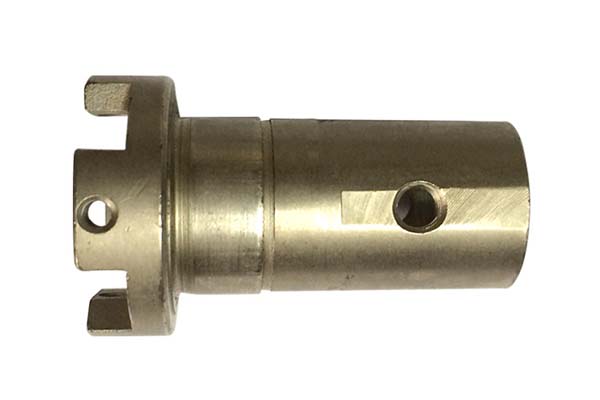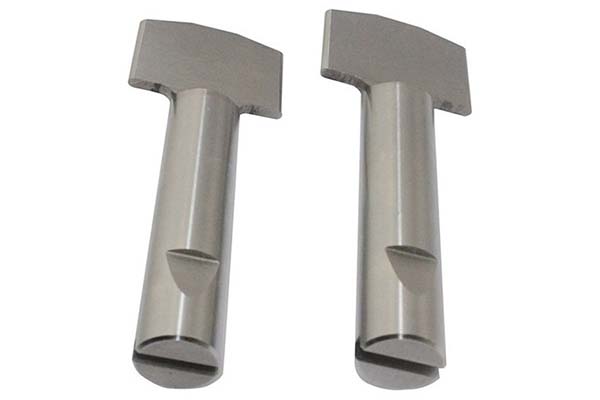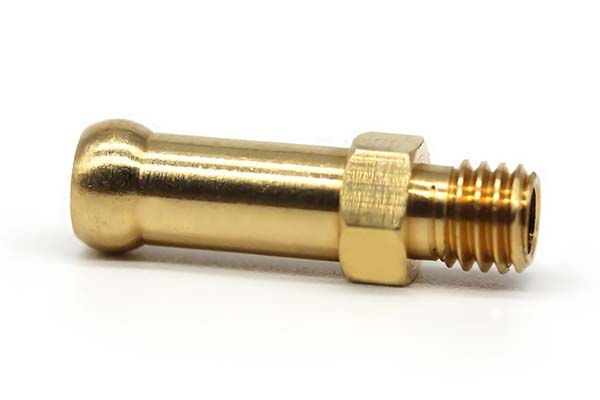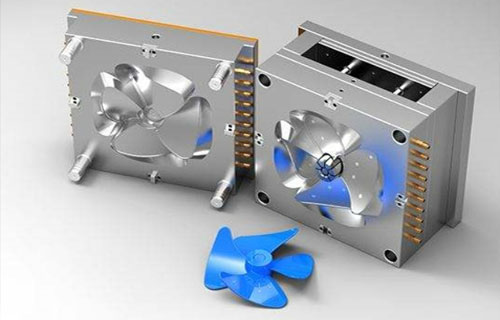
Machined ABS offers an excellent balance of strength, impact resistance, and machinability, making it ideal for functional prototypes, custom enclosures, and durable components, but requires specific techniques to prevent melting and internal stresses.
ABS (Acrylonitrile Butadiene Styrene) is one of the most versatile and widely used engineering plastics in the world. When it comes to creating custom parts through CNC machining, machined ABS provides a unique set of advantages that bridge the gap between prototyping and production. Unlike metals or other plastics, ABS requires a nuanced approach to tooling, speed, and cooling to achieve clean, dimensionally stable results. This guide provides a comprehensive, practical roadmap for engineers, machinists, and product designers. We'll delve beyond basic material data sheets to explain the "why" behind successful machining strategies, explore how to prevent common defects, and compare ABS to alternatives. By understanding its key properties and optimal processing parameters, you can unlock the full potential of this workhorse material for your projects.
Introduction
Machined ABS refers to components that are fabricated from solid ABS plastic stock (rods, plates, or blocks) using subtractive manufacturing processes like CNC milling, turning, or drilling. While ABS is famously used in injection molding for mass-produced items, its excellent machinability makes it a top choice for low-volume production, functional prototypes, and one-off custom parts where mold costs are prohibitive. However, successfully machining ABS isn't as simple as applying metal-cutting parameters. Its thermoplastic nature means it softens with heat, and its layered structure from extruded stock can introduce challenges. This article will equip you with the knowledge to navigate these specifics. We will cover the fundamental properties that make ABS desirable, provide actionable data on tool selection and cutting parameters, and outline solutions for common issues like warping. Whether you're designing a proof-of-concept model or a final-use component, this guide will help you achieve professional, reliable results with machined ABS.
What Is Machined ABS?
ABS is a terpolymer—a plastic composed of three monomers: Acrylonitrile (provides chemical resistance and rigidity), Butadiene (contributes toughness and impact strength), and Styrene (gives a glossy finish and ease of processing). Machined ABS specifically involves starting with a solid, homogeneous billet of this material and using cutting tools to shape it into a final part.
The process is distinctly different from injection molding:
- Starting Form: Machining begins with extruded or cast ABS stock, which has consistent mechanical properties throughout.
- Process: Material is removed via cutting, generating chips. This allows for extreme geometric freedom and tight tolerances without the need for expensive tooling.
- Outcome: The result is a part with excellent dimensional accuracy and surface finish, suitable for applications where the low upfront cost and speed of machining outweigh the per-part efficiency of molding for the given volume.
Why Choose ABS for Machining?
Several compelling reasons make ABS a preferred material for machined components:
- Excellent Machinability: ABS cuts cleanly with sharp tools, producing small, manageable chips rather than long, stringy ones or powder. It is less brittle than acrylic and less gummy than polycarbonate, striking a balance that is forgiving for machinists.
- High Impact Strength and Toughness: ABS can withstand significant physical shock and repeated loading without cracking, making it ideal for enclosures, handles, and functional prototypes that will be handled or tested.
- Good Dimensional Stability: It has a low coefficient of thermal expansion and low moisture absorption compared to other plastics like nylon, meaning machined parts are less likely to warp or change size with environmental fluctuations.
- Ease of Post-Processing: Machined ABS can be easily sanded, glued (with acetone-based adhesives), painted, and plated, offering tremendous flexibility for finishing.
Key Properties of ABS Material
Understanding these core properties is essential for design and process planning.
| Property | Typical Value / Description | Implication for Machining & Design |
|---|---|---|
| Tensile Strength | 40 - 50 MPa | Provides good structural integrity; parts can withstand reasonable loads. |
| Impact Strength (Izod Notched) | 20 - 25 kJ/m² | High toughness; parts are resistant to chipping and cracking during machining and in use. |
| Heat Deflection Temperature (HDT) @ 1.8 MPa | 95 - 105°C | Critical for machining: The material softens near this range. Cutting heat must be managed to stay below this to avoid melting. |
| Coefficient of Thermal Expansion | 70 - 90 x 10⁻⁶ /°C | Relatively low for a plastic. However, internal heat from machining can still cause localized expansion and stress. |
| Density | 1.05 - 1.07 g/cm³ | Lightweight, about half the density of aluminum. |
Case in Point: A robotics team needed a custom sensor housing that was lightweight, could withstand minor collisions, and allowed for last-minute design tweaks. They chose machined ABS over aluminum (too heavy/expensive to prototype) and 3D-printed PLA (too brittle). The ABS part was milled in a day, proved durable during testing, and was easily modified with a hand file before the final version was produced.
Common Applications
The properties of machined ABS make it suitable for a wide array of uses:
- Functional Prototypes: For fit, form, and function testing of consumer products, electronics housings, and automotive interiors.
- Enclosures & Cabinets: Custom instrument housings, jukebox panels, and machine guards that require cutouts for switches, displays, or ventilation.
- Automotive Components: Interior trim prototypes, dashboard elements, and custom ductwork.
- Consumer Goods: Durable toys, cosmetic packaging masters, and high-wear items like keyboard keycaps.
- Fixtures & Jigs: Custom workholding fixtures, assembly guides, and alignment tools used on the production floor.
How to Optimize Tool Selection?
Using the correct tools is the first step to clean cuts and avoiding melted plastic.
- Tool Material: Sharp, uncoated carbide end mills are ideal. They stay sharper longer than HSS (High-Speed Steel) and dissipate heat better. Avoid coatings like TiAlN, which can increase friction with plastics.
- Tool Geometry: Use tools with high helix angles (45° or more) and sharp cutting edges. This design shears the material cleanly and efficiently lifts chips out of the cut, preventing re-welting. 2 or 3-flute end mills are standard, providing good chip clearance.
- Tool Condition: Absolute sharpness is non-negotiable. A dull tool will rub instead of cut, generating excessive heat and creating a poor surface finish. Have dedicated tooling for plastics if possible.
What Cutting Parameters Work Best?
The goal is to achieve a shearing cut that produces small, clean chips, not a rubbing cut that generates heat and molten plastic.
| Parameter | Recommended Setting | Reasoning |
|---|---|---|
| Spindle Speed | High (12,000 - 18,000 RPM for a 6mm tool). | A high surface speed ensures a clean, shearing cut before heat can build up in the material. |
| Feed Rate | Moderate to High. Maintain a chipload of 0.05-0.15 mm per tooth. | A sufficient feed rate prevents the tool from dwelling and rubbing the material, which is a primary cause of heat buildup. |
| Depth of Cut (Axial) | Moderate. Up to 1x the tool diameter for finishing, 2x for roughing. | Allows for efficient material removal while minimizing tool deflection and heat concentration. |
| Depth of Cut (Radial) | Light. 10-50% of tool diameter (stepover). | A light stepover reduces the load per tooth and helps with chip evacuation and cooling. |
| Coolant | Compressed Air or Mist. Never use flood coolant. | Air blast effectively clears chips (which carry away most of the heat) and provides some cooling without soaking the hygroscopic ABS, which could cause dimensional issues later. |
Pro-Tip: Climb milling (where the cutter rotates in the same direction as the feed) is generally preferred for ABS as it produces a cleaner finish and helps pull the part into the cutter, reducing chatter.
How to Prevent Warping and Defects?
ABS is susceptible to specific machining defects if parameters are incorrect.
- Melting/Gumming: The most common issue, caused by excessive heat.
- Solution: Increase spindle speed, increase feed rate, use sharp tools, and ensure effective chip evacuation with air blast.
- Warping/Internal Stress Relief: The extruded stock can have internal stresses. Removing material unevenly can cause the part to warp as these stresses rebalance.
- Solution: Use a symmetrical machining strategy. Remove material evenly from both sides of a plate, and avoid leaving thick walls attached to thin ones. Sometimes, annealing the stock material before machining (heating it to just below its HDT and letting it cool slowly) can relieve these initial stresses.
- Poor Edge Quality (Burrs or Chipping): Dull tools or incorrect feed rates can cause this.
- Solution: Ensure tool sharpness. A slightly higher feed rate often produces a cleaner edge than a very slow one. Deburr with fine sandpaper or a specialized plastic deburring tool.
Surface Finishing Options
A machined ABS part can be finished in several ways to enhance its appearance or function:
- As-Machined: A clean milled finish can be perfectly acceptable for prototypes. Tool marks will be visible.
- Sanding: Progressively finer grits of sandpaper (e.g., 220 -> 400 -> 600 grit) can produce a smooth, matte finish.
- Vapor Polishing: Using acetone vapor, this process slightly melts the surface, giving it a smooth, glossy, transparent-like finish. It is excellent for aesthetic parts but requires careful control to avoid dimensional changes.
- Painting: ABS paints very well. A light sanding and a compatible primer (often a flexible plastic primer) are key for adhesion.
- Texture: A light bead blast can give a uniform matte texture.
How Does ABS Compare to Other Plastics?
Choosing the right plastic is critical. Here’s how ABS stacks up against common alternatives.
| Plastic | Key Advantages vs. ABS | Key Limitations vs. ABS | Best For |
|---|---|---|---|
| Polycarbonate (PC) | Higher impact strength, better transparency. | More expensive, gummier and harder to machine, higher moisture absorption. | Clear parts requiring extreme impact resistance (e.g., bullet-resistant windows). |
| Acetal (POM/Delrin) | Superior stiffness, lower friction, excellent fatigue resistance. | More expensive, can produce long, stringy chips when machined. | Precision gears, bearings, high-wear mechanical parts. |
| Nylon (PA 6/66) | Higher strength, better wear resistance, good chemical resistance. | High moisture absorption causes dimensional change, often requires drying before machining. | Gears, bushings, parts requiring lubrication-free operation. |
| Acrylic (PMMA) | Superior optical clarity and UV resistance. | Much more brittle, prone to cracking during machining, lower impact strength. | Lenses, light guides, decorative displays where clarity is key. |
| HDPE | Excellent chemical resistance, very low cost. | Softer, lower strength, poor stiffness, can be waxy to machine. | Chemical tanks, cutting boards, low-stress applications. |
Conclusion
Machined ABS is a cornerstone material for prototyping and custom part manufacturing, offering an unrivaled blend of toughness, aesthetics, and workability. Success hinges on respecting its thermoplastic nature: employing sharp, correctly shaped tools, optimizing cutting parameters for a cool, shearing cut, and using strategic techniques to manage internal stress and prevent warping. By applying the guidelines outlined for tool selection, speeds and feeds, and defect prevention, you can consistently produce high-quality, durable parts. Furthermore, understanding where ABS fits against materials like polycarbonate or acetal allows for intelligent material selection at the project's outset. Whether you're machining in-house or sourcing from a specialist, this knowledge ensures that machined ABS components meet their full potential as reliable, cost-effective solutions for your engineering challenges.
Frequently Asked Questions (FAQ)
Can machined ABS parts be as strong as injection-molded ABS parts?
In terms of basic material properties, yes—they come from the same type of plastic. However, injection-molded parts can have molecular alignment and fiber orientation (if filled) that enhances strength in specific directions. Machined parts are isotropic (same strength in all directions) as they are cut from uniform stock. For most applications, the strength of machined ABS is more than sufficient and often preferable for its uniformity.
How should I hold (fixture) ABS for machining?
ABS is relatively soft, so distributed clamping force is essential to avoid marking or distorting the part. Use soft jaws (aluminum or plastic) on vises, and ensure the clamping force is just enough to hold the part securely. For thin-walled parts, vacuum fixtures are excellent as they apply uniform pressure over a large area without point stresses.
Is it necessary to dry ABS before machining?
While ABS is not as hygroscopic as nylon, extruded stock can absorb a small amount of moisture from the air. For the very best surface finish and dimensional stability, especially in humid environments, drying ABS at 70-80°C for 2-4 hours before machining is a recommended best practice. For most general-purpose work, machining straight from the warehouse is acceptable.
What is the best way to add threads to a machined ABS part?
For the strongest and cleanest threads, thread milling is superior to tapping. A thread mill produces precise threads with less risk of breaking taps or generating excessive heat. If tapping is necessary, use sharp, high-speed steel taps designed for plastics, a slightly oversized tap drill, and a slow, steady feed with a lubricant like isopropyl alcohol to clear chips.
Contact Yigu Technology for Custom Manufacturing.
At Yigu Technology, we have deep expertise in the precision machining of engineering plastics, including machined ABS. Our team understands the specific requirements for cutting thermoplastics—from selecting the optimal tooling and parameters to implementing fixturing strategies that prevent distortion.
We are more than a machine shop; we are a manufacturing partner. We offer Design for Manufacturability (DfM) feedback specific to plastics, helping you optimize your ABS part designs for performance, aesthetics, and cost-effective production. From prototyping to low-volume runs, we ensure your machined ABS components are delivered with the precision and quality your project demands.
Ready to create durable, precision-machined ABS parts? Contact Yigu Technology today to discuss your project and receive an expert consultation and quote.