Introduction
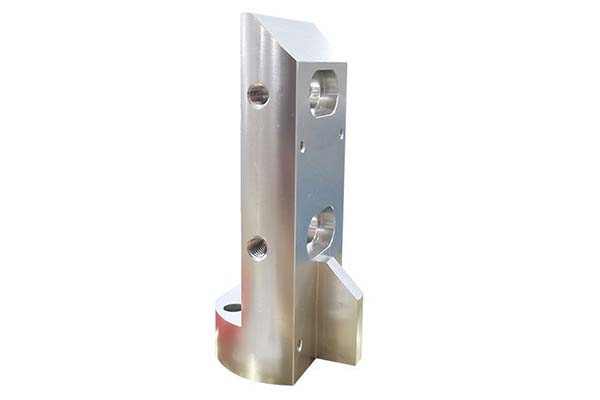
Aerospace CNC machining is a highly specialized manufacturing process that harnesses computer-controlled tools to fabricate essential components for aircraft and spacecraft. Emerging in the 1940s, this technology has revolutionized aerospace manufacturing, representing a harmonious blend of advanced digital technology and precision engineering. The process begins with digital design: engineers use CAD (Computer-Aided Design) software to create intricate 3D models of components. These models are translated into G-codes that CNC machines understand. Equipped with high-precision cutting tools, the machine follows instructions to carve, mill, drill, and shape raw materials into desired components. In aerospace, precision and reliability are non-negotiable—components often have tolerances in the micrometer range (e.g., ±0.001 inches for critical engine parts). Aerospace CNC machining plays a pivotal role in meeting these stringent requirements, producing complex geometries like curved airfoils and internal passages with multi-axis machines (5-axis or 7-axis). This guide explores the key benefits of aerospace CNC machining for precision parts —accuracy, efficiency, complex geometry capability, material versatility, and advanced processes.
How Does Aerospace CNC Machining Deliver Improved Accuracy and Precision?
One of the most significant advantages is exceptional accuracy and precision. CNC machines achieve tolerances in the micrometer range—commonly ±0.001 mm , far beyond traditional machining capabilities.
| Machining Method | Typical Tolerance Range |
|---|---|
| Traditional machining | ±0.1 – 0.5 mm |
| Aerospace CNC machining | ±0.001 – 0.01 mm |
Example: Engine blades have complex airfoil shapes; slight dimensional deviations significantly affect engine performance. CNC machining ensures each blade has identical shape and dimensions within tightest tolerances—improving engine efficiency, reliability, and safety. High precision reduces post-machining adjustments and rework, saving time and resources.
How Does Aerospace CNC Machining Increase Efficiency and Productivity?
Automation is a game-changer. Once programmed, CNC machines operate continuously with minimal human intervention—reducing human error common in manual processes.
| Metric | Impact |
|---|---|
| Continuous operation | Machines run for hours producing identical high-quality parts repeatedly |
| Quick switching | Fast transitions between operations and tooling |
| Case study | Aerospace parts manufacturer: production time reduced by 40% after implementing CNC machining |
Benefits: Faster delivery; reduced overall production costs; quick reprogramming enables rapid response to design changes or production requirements—enhancing competitiveness.
How Does Aerospace CNC Machining Enable Complex Geometries?
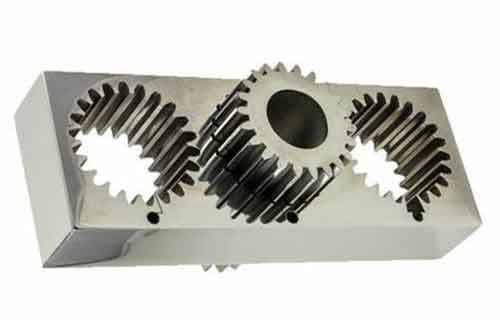
Aerospace components often have complex geometries challenging or impossible with traditional methods. Multi-axis CNC machines (5-axis, 6-axis, or higher) excel at creating intricate designs.
| Machine Type | Capability |
|---|---|
| 5-axis CNC milling | Moves cutting tool in three linear axes (X, Y, Z) and two rotational axes (A, B, or C)—accesses all workpiece areas |
Example: Aircraft engine combustion chamber internal passages—highly irregular shape with sharp turns, varying cross-sectional areas—created with precision using 5-axis machining.
Design flexibility: Engineers can design more innovative, efficient shapes (advanced airfoil designs for wings) knowing CNC machines can bring these designs to life—driving development of more advanced, efficient aircraft and spacecraft.
What Materials Are Used in Aerospace CNC Machining?
Materials must withstand extreme conditions and meet strict performance requirements.
Aluminum Alloys
| Property | Value | Applications |
|---|---|---|
| Density | ~2.7 g/cm³ | Aircraft wings—weight reduction improves fuel efficiency, performance |
| Thermal conductivity | Excellent | Dissipates heat quickly during machining—reduces thermal damage risk |
| Corrosion resistance | Good (forms protective oxide layer) | Components exposed to environmental conditions during flight |
Common alloys: 2024 (high strength-to-weight, fatigue resistance—wing spars, fuselage frames); 6061 (good machinability, corrosion resistance, medium strength—engine components, fittings); 7075 (high strength, toughness—landing gear parts).
Titanium Alloys
| Property | Value | Applications |
|---|---|---|
| Density | ~4.5 g/cm³ | Higher than aluminum, much lighter than steel; strength comparable to high-strength steel |
| High-temperature strength | Maintains integrity under extreme heat | Turbine blades, compressor disks in jet engines |
Common alloys: Ti-6Al-4V (6% aluminum, 4% vanadium—structural components, engine parts, landing gear); Ti-5Al-2.5Sn (creep resistance, high-temperature performance—engine hot sections).
Nickel Alloys and Superalloys
| Material | Properties | Applications |
|---|---|---|
| Inconel | High nickel content; good corrosion resistance; high-temperature strength up to 1000°C+ | Turbine blades, vanes, combustion chamber liners—withstand high-temperature, high-pressure, corrosive engine environment |
| Hastelloy | Remarkable corrosion resistance in harsh chemical environments | Aerospace fuel systems—resistance to fuel and additives corrosion |
Composites and Advanced Materials
| Material | Properties | Applications |
|---|---|---|
| Carbon fiber-reinforced polymers (CFRPs) | High strength-to-weight ratio; excellent fatigue resistance; up to 50% lighter than equivalent aluminum alloy | Boeing 787 Dreamliner: ~50% of airframe structure (wings, fuselage, tail sections)—significant weight savings, improved fuel efficiency |
| Ceramic-matrix composites (CMCs) | High-temperature resistance; low density; good mechanical properties | Engine hot-section parts—improve engine performance, efficiency |
What Processes and Techniques Are Used in Aerospace CNC Machining?
Tool Selection and Programming
| Factor | Consideration |
|---|---|
| Tool selection | Aluminum alloys: HSS (cost-effective, general-purpose) or carbide-coated (better wear resistance, higher speeds) |
| Programming | CAM software generates detailed tool paths—analyzes 3D model, generates G-codes controlling speed, feed rate, depth of cut; accounts for tool changes, coolant application, workpiece setup |
Fixture Design and Workholding
| Requirement | Implementation |
|---|---|
| Secure fixture design | Holds workpiece firmly—prevents vibrations, misalignment, inaccurate machining |
| Custom fixtures | High-strength materials (steel, aluminum); adjustable clamps/supports accommodate different workpiece sizes, shapes |
| Workholding devices | Vises, chucks, magnetic fixtures; vacuum chucks/magnetic fixtures for small, precision parts (secure, no surface marks); mechanical vises/hydraulic chucks for larger, heavier workpieces |
Multi-Axis Machining and 5-Axis Milling
| Advantage | Impact |
|---|---|
| Single setup | Reduces multiple setups and secondary operations—improves efficiency, accuracy; turbine blade: creates airfoil shape, root, internal cooling passages in one continuous operation |
| Shorter cutting tools | More rigid; withstand higher cutting forces—better surface finish, longer tool life |
| Access to difficult areas | Creates complex internal cavities, passages with high precision—contributes to engine efficiency, reliability |
Conclusion
Aerospace CNC machining delivers essential benefits for precision parts. Improved accuracy and precision : tolerances ±0.001 mm vs. traditional ±0.1–0.5 mm—critical for safety and performance. Increased efficiency and productivity : automation reduces production time by 40% in case studies; faster delivery, reduced costs. Ability to machine complex geometries : 5-axis milling enables single-setup production of intricate designs—turbine blades, combustion chamber internal passages. Material versatility : aluminum alloys (2024, 6061, 7075—weight reduction), titanium alloys (Ti-6Al-4V—high strength, high-temperature performance), nickel superalloys (Inconel, Hastelloy—up to 1000°C+), composites (CFRPs—50% lighter than aluminum, Boeing 787 uses ~50% CFRP airframe). Advanced processes : custom fixtures, CAM programming, multi-axis machining. As aerospace explores new frontiers—space tourism, deep-space exploration—demand for high-quality, precision-made components will increase. Aerospace CNC machining is not only essential for current manufacturing but also a key enabler for future innovation and development.
FAQs
What are the typical tolerances achievable with aerospace CNC machining?
Aerospace CNC machining commonly achieves tolerances of ±0.001 to ±0.01 mm , compared to traditional machining’s ±0.1–0.5 mm. This high precision is critical for engine components where deviations can affect performance, efficiency, and safety.
What materials are commonly used in aerospace CNC machining?
Common materials include aluminum alloys (2024, 6061, 7075—lightweight, good machinability), titanium alloys (Ti-6Al-4V—high strength-to-weight, high-temperature performance), nickel superalloys (Inconel, Hastelloy—up to 1000°C+), and composites (CFRPs—up to 50% lighter than aluminum). Selection depends on application requirements for strength, weight, temperature resistance, and corrosion resistance.
How does multi-axis machining benefit aerospace component production?
Multi-axis machining (5-axis and higher) enables single-setup production of complex geometries—reducing multiple setups, alignment errors, and secondary operations. It allows shorter, more rigid cutting tools (better surface finish, longer tool life) and access to difficult areas (internal cavities, passages)—essential for turbine blades, engine casings, and other intricate aerospace components.
Contact Yigu Technology for Custom Manufacturing
At Yigu Technology , we specialize in aerospace CNC machining for precision components. Our 5-axis CNC machines achieve ±0.001 mm tolerances —critical for engine blades and structural parts. We work with aluminum alloys (2024, 6061, 7075), titanium alloys (Ti-6Al-4V), nickel superalloys (Inconel, Hastelloy), and composites (CFRP). From turbine blades to wing spars, we provide DFM feedback to optimize your designs for manufacturability.
Ready to elevate your aerospace components with precision CNC machining? Contact Yigu Technology today for a free consultation and quote. Let us help you achieve the accuracy, efficiency, and reliability your aerospace projects demand.