Introduction
Modern vehicles are marvels of engineering. Under the hood, inside the transmission, and throughout the chassis, hundreds of precisely crafted components work together seamlessly. Each of these parts must fit perfectly, withstand extreme conditions, and perform reliably for years. This level of precision does not happen by accident. It is the result of automotive machining—a specialized manufacturing discipline dedicated to producing the high-accuracy components that make modern vehicles possible.
Whether you are an engineer sourcing parts, a business owner in the automotive supply chain, or simply curious about how vehicles are made, understanding automotive machining is essential. This guide walks you through the tools, processes, and importance of this critical industry. You will learn what makes automotive machining unique, how it ensures quality and safety, and why it remains a cornerstone of modern manufacturing.
What Makes Automotive Machining Different?
Automotive machining is not the same as general machining. It focuses specifically on the unique demands of the automotive industry, where components must meet tight tolerances, withstand extreme temperatures and stresses, and perform reliably over hundreds of thousands of miles.
Key Differentiators
| Aspect | Automotive Machining | General Machining |
|---|---|---|
| Volume | High-volume production (thousands to millions of units) | Often low to medium volume |
| Materials | Lightweight alloys, high-strength steel, composites | Wide variety, less specialized |
| Tolerances | Extremely tight (±0.005 mm common) | Varies by application |
| Quality Standards | Stringent (ISO/TS 16949, IATF 16949) | General ISO 9001 often sufficient |
| Automation | Highly automated for consistency | Varies widely |
The Stakes Are High
A single defective component can lead to engine failure, brake malfunction, or safety system breakdown. According to industry data, automotive recalls cost manufacturers an average of $10–30 million per incident, with some exceeding $1 billion. This is why precision is not just a goal—it is a requirement.
What Tools and Machinery Drive Automotive Machining?
The complexity of automotive components demands specialized equipment. These machines must handle diverse materials while maintaining tight tolerances and high repeatability across massive production volumes.
CNC Machines: The Backbone of Modern Production
CNC (Computer Numerical Control) machines are the foundation of automotive machining. These computer-controlled systems guide cutting tools with exceptional precision. Common types include:
- CNC lathes: For cylindrical parts like shafts and axles
- CNC milling machines: For complex shapes like engine blocks and cylinder heads
- Machining centers: Multi-function machines that combine milling, drilling, and tapping
CNC machines offer consistent accuracy and minimal human intervention. A single CNC machining center can produce thousands of identical parts with variations measured in microns.
Cutting Tools: Where Precision Begins
Cutting tools remove material to achieve final shapes and dimensions. In automotive machining, these tools must withstand high speeds and tough materials.
| Tool Type | Common Applications |
|---|---|
| End mills | Creating slots, pockets, and contours |
| Drills | Producing holes for fasteners and fluid passages |
| Reamers | Finishing holes to precise diameters |
| Taps | Cutting internal threads |
| Inserts | Replaceable cutting edges for turning and milling |
Most automotive cutting tools are made from carbide, chosen for its hardness and heat resistance. Coated tools (with TiAlN, TiCN, or diamond coatings) extend tool life by 30–50% in high-volume applications.
Measurement and Inspection Equipment
Precision machining requires precision verification. Automotive machining relies on advanced inspection tools:
- Coordinate Measuring Machines (CMMs): Provide detailed 3D measurements of complex parts
- Micrometers and calipers: For quick dimensional checks
- Optical comparators: For inspecting contours and angles
- Surface roughness testers: Ensuring finishes meet specifications
Modern inspection systems integrate with production lines, providing real-time feedback that allows immediate adjustments.
Coolant and Lubrication Systems
Machining generates significant heat and friction. Without proper cooling, tools wear rapidly and parts can distort. Coolant systems:
- Reduce cutting temperatures by 200–400°C
- Flush away chips that could damage surfaces
- Extend tool life by 20–40%
High-pressure coolant systems (up to 1000 psi) are common in automotive machining, especially for deep-hole drilling and hard-to-machine materials.
What Are the Key Automotive Machining Processes?
Different components require different processes. Here are the fundamental machining techniques used throughout automotive manufacturing.
Milling: Creating Complex Shapes
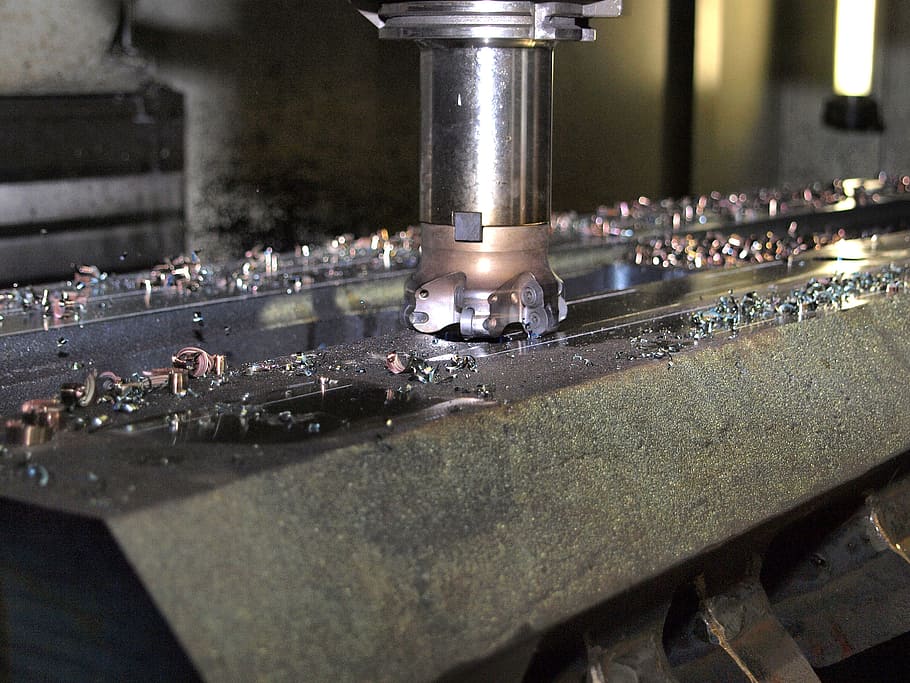
Milling uses rotating cutting tools to remove material and create complex geometries. In automotive applications, milling produces:
- Engine blocks: Machining cylinder bores, mounting surfaces, and oil passages
- Cylinder heads: Creating combustion chambers, valve seats, and coolant channels
- Transmission housings: Machining bearing bores and mounting faces
Rough milling removes large amounts of material quickly. Finish milling achieves tight tolerances and smooth surfaces. With 5-axis CNC milling, manufacturers can produce complex parts in a single setup, reducing errors and cycle times.
Turning: Cylindrical Components
Turning rotates the workpiece while a stationary cutting tool shapes it. This process is ideal for cylindrical parts:
- Crankshafts: The backbone of engine rotation
- Camshafts: Controlling valve timing
- Axles and shafts: Power transmission components
- Brake rotors: Flat, circular surfaces requiring precise parallelism
CNC lathes provide precise control over diameter, length, and surface finish. Modern turning centers can combine turning with milling, drilling, and threading in one machine.
Drilling: Precision Hole Creation
Drilling creates holes for fasteners, fluid passages, and assembly features. Automotive applications include:
- Engine blocks: Oil galleries and coolant passages
- Transmission cases: Bolt holes and fluid channels
- Brake calipers: Mounting holes and fluid ports
Precision drilling ensures proper hole location and size. In engine manufacturing, drilling must achieve positional tolerances within ±0.05 mm to ensure proper assembly and fluid flow.
Grinding: Achieving Ultimate Precision
Grinding uses abrasive wheels to remove minute amounts of material and achieve exceptional surface finishes and tolerances. It is the go-to process for finishing critical components:
- Crankshaft journals: Requiring surface finishes below Ra 0.4μm
- Camshaft lobes: Demanding precise profiles for valve timing
- Gears: Achieving smooth, quiet operation
Grinding can achieve tolerances of ±0.0025 mm—far tighter than most cutting processes. For high-performance engines, grinding is essential.
| Process | Typical Tolerance | Surface Finish (Ra) | Common Applications |
|---|---|---|---|
| Milling | ±0.01–0.05 mm | 0.8–3.2 μm | Engine blocks, housings |
| Turning | ±0.005–0.02 mm | 0.4–1.6 μm | Shafts, rotors |
| Drilling | ±0.05–0.1 mm | 1.6–6.3 μm | Holes, passages |
| Grinding | ±0.0025–0.01 mm | 0.1–0.8 μm | Crankshafts, cams, gears |
Why Is Automotive Machining So Important?
Automotive machining is not just about making parts. It is about enabling the performance, safety, and innovation that define modern vehicles.
Precision and Quality
The automotive industry demands components that meet exact specifications. A piston ring with a gap 0.1 mm too wide can cause oil consumption and emissions issues. A connecting rod bolt torqued incorrectly can lead to catastrophic engine failure.
Automotive machining ensures that each part meets its design specifications. Statistical process control monitors production in real time, catching deviations before they become defects. This approach reduces scrap rates and ensures that every component leaving the factory meets quality standards.
Consistency and Repeatability
Modern vehicle production runs in the hundreds of thousands or millions. A machining process that works for one part must work for every part. CNC automation provides this consistency.
For example, a single CNC machining center can produce 200,000 identical cylinder heads over a year, with each one meeting the same tolerances as the first. This repeatability enables just-in-time manufacturing and reduces waste.
Material Flexibility
Automotive components use a wide range of materials, each selected for specific properties:
- Aluminum alloys: Lightweight, used for engine blocks and cylinder heads
- Steel and iron: Strong, used for crankshafts and transmission gears
- Titanium: High strength-to-weight, used in high-performance applications
- Composites: Lightweight, used for structural components
Automotive machining processes must adapt to each material's unique characteristics. Aluminum requires sharp tools and high speeds. Steel demands rigid setups and robust tooling. Machining expertise ensures that each material is processed optimally.
Innovation and Development
The automotive industry is transforming rapidly. Electric vehicles, lightweight materials, and advanced safety systems all require new components and manufacturing approaches. Automotive machining enables this innovation:
- EV motor housings: Complex geometries requiring precision machining
- Battery enclosures: Large, thin-walled components demanding careful fixturing
- Powertrain components: Tighter tolerances for higher efficiency
Without advanced machining capabilities, these innovations would remain concepts rather than production realities.
Where Is Automotive Machining Applied?
Automotive machining touches virtually every system in a vehicle. Here are the key applications.
Engine Components
The engine is the most demanding application for precision machining. Key components include:
- Engine blocks: Machining cylinder bores, deck surfaces, and oil passages
- Cylinder heads: Creating combustion chambers, valve seats, and coolant channels
- Crankshafts: Turning and grinding bearing surfaces
- Camshafts: Machining lobes and bearing journals
- Pistons: Turning and grooving for rings
Each of these components requires tolerances in the micron range to ensure proper fit, sealing, and performance.
Transmission Components
Transmissions transfer power from the engine to the wheels. Machined components include:
- Gears: Hobbing, shaping, and grinding for precise tooth profiles
- Shafts: Turning and spline cutting for power transfer
- Housings: Milling and drilling for assembly and fluid passages
A modern automatic transmission contains 50–100 precisely machined gears, each requiring consistent tooth profiles for smooth, quiet operation.
Suspension and Steering Components
These systems affect ride quality, handling, and safety. Machined parts include:
- Control arms: Milling and drilling for suspension geometry
- Steering knuckles: Complex castings requiring precision machining
- Steering racks: Turning and milling for precise movement
Proper machining ensures proper alignment, which affects tire wear, fuel efficiency, and vehicle stability.
Brake Components
Brake systems are critical for safety. Machined components include:
- Brake rotors: Turning and grinding for flat, parallel surfaces
- Brake calipers: Drilling and tapping for mounting and fluid connections
- Brake drums: Turning and boring for consistent friction surfaces
Surface finish and dimensional accuracy directly affect braking performance and noise.
Body and Chassis Components
The structural foundation of the vehicle also requires machining:
- Frame rails: Drilling for assembly and mounting
- Mounting brackets: Milling and drilling for component attachment
- Structural reinforcements: Precision machining for fit-up
| System | Key Components | Critical Requirements |
|---|---|---|
| Engine | Blocks, heads, crankshafts | Tight tolerances, surface finish |
| Transmission | Gears, shafts, housings | Tooth profiles, bore alignment |
| Suspension | Control arms, knuckles | Geometry, mounting accuracy |
| Brakes | Rotors, calipers | Flatness, parallelism |
| Body/Chassis | Frames, brackets | Hole location, fit-up |
Conclusion
Automotive machining is the unseen foundation upon which modern vehicles are built. It transforms raw materials into the precision components that deliver performance, safety, and reliability. From the engine block to the brake rotor, every machined part contributes to the vehicle's overall quality.
The importance of this field continues to grow. As vehicles become more sophisticated—with electric powertrains, advanced safety systems, and lightweight materials—the demand for precision machining only increases. Manufacturers who master automotive machining gain the ability to produce components that meet the industry's exacting standards, consistently and at scale.
Whether you are specifying parts, managing production, or sourcing components, understanding automotive machining helps you appreciate what goes into every vehicle on the road. It is not just about cutting metal. It is about enabling mobility, safety, and innovation.
FAQs
What is the difference between automotive machining and general machining?
Automotive machining focuses specifically on components for vehicles, with requirements for high volume, tight tolerances, and stringent quality standards (such as IATF 16949). General machining serves a broader range of industries with varying requirements.
Why is precision so critical in automotive machining?
Even minor deviations can affect vehicle performance, safety, and reliability. A piston ring gap 0.1 mm too wide can increase oil consumption and emissions. Improperly machined brake components can compromise stopping distance. Precision ensures that components function as designed.
What materials are commonly used in automotive machining?
Common materials include aluminum alloys (for engine blocks and cylinder heads), steel and iron (for crankshafts and gears), titanium (for high-performance applications), and increasingly composites and advanced alloys for lightweighting.
How has CNC technology changed automotive machining?
CNC machines provide consistent accuracy across high production volumes. They enable complex geometries (such as 5-axis machining) and integrate with automated systems for lights-out manufacturing. This consistency reduces defects and enables just-in-time production.
What role does automotive machining play in electric vehicle production?
EVs require new components such as motor housings, battery enclosures, and lightweight structural parts. These components demand precision machining to achieve tight tolerances, thermal management features, and weight reduction goals. Machining remains essential as the industry transitions to electric powertrains.
Contact Yigu Technology for Custom Manufacturing
At Yigu Technology, we bring precision machining expertise to the automotive industry and beyond. With 15 years of experience, advanced 5-axis CNC machining capabilities, and ISO 9001 certification, we produce components that meet the stringent demands of automotive applications.
Whether you need engine components, transmission parts, or custom assemblies, our team combines technical knowledge with transparent communication. We understand that precision is not optional—it is essential. Contact us today to discuss your custom manufacturing needs and discover how our expertise can support your projects.