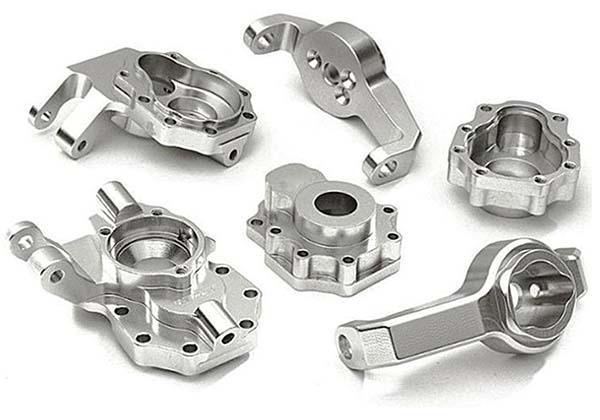
Metal 3D printing sounds like magic, but getting a part that is both strong and precise is hard. Traditional methods often fall short with complex designs. Selective Laser Melting (SLM) changes that. It uses a high-powered laser to fuse fine metal powder, layer by layer, into solid form. This process creates parts with stunning accuracy and detail. In this guide, we break down how SLM works, why its precision matters, and how you can use it for your toughest projects.
What is Selective Laser Melting?
At its core, Selective Laser Melting is a powder bed fusion technology. Think of it as a high-tech way of building with metal dust. A thin layer of metal powder is spread across a platform. Then, a laser scans the surface, melting the powder exactly where the part needs to be solid. The platform drops down by a hair's breadth—usually between 20 to 100 microns—and a new layer of powder is spread. The laser melts the next cross-section, fusing it to the one below. This repeats until a fully dense metal object emerges from the powder.
For example, imagine a complex turbine blade with internal cooling channels. Making this with traditional machining would require multiple steps and welding. With SLM, you design the blade with the channels inside, and the machine prints it in one go. No assembly needed. That is the power of this process.
How Does the SLM Process Actually Work?
Understanding the steps helps you see where the precision comes from. It is a carefully controlled dance between software, hardware, and material.
What are the key steps?
- Design the Model: It all starts in CAD software. You create a perfect 3D model of your part. For SLM, you can design features—like internal lattices or organic curves—that are impossible to machine.
- Slice It Up: That 3D model is then "sliced" into hundreds or thousands of ultra-thin layers. This digital file tells the printer exactly where to melt for each layer.
- Set Up the Build: The build chamber is sealed and flooded with an inert gas, like argon or nitrogen. This stops the metal from oxidizing when it gets hot.
- Laser Melting: A high-powered laser (from 200 to 1000 watts) fires onto the powder bed, tracing the shape of the first layer. It melts the particles together into solid metal.
- Lower and Recoat: The platform lowers by one layer's thickness. A recoater blade sweeps across, spreading a fresh, even layer of powder.
- Repeat: The laser melts the new layer, bonding it to the one below. Step 4 and 5 repeat until the part is complete.
- Cool and Remove: The finished part, buried in unused powder, cools down slowly to avoid warping. It is then removed from the machine and separated from the loose powder.
How do technical settings impact precision?
The machine's settings are not just numbers. They are the levers of quality. Get them wrong, and your precision fails.
- Laser Power: Too little power, and the powder does not fully melt. You get weak spots and porosity. Too much power, and you get "keyholing," where the melt pool becomes unstable, creating voids. For tough materials like titanium alloys, we often run at the higher end of the power range to ensure deep, complete fusion.
- Layer Thickness: This is a direct trade-off. Thinner layers (like 20-30 microns) capture incredible detail and give a smooth surface finish. Think of a dental implant—it needs that fine resolution. Thicker layers (like 50-100 microns) build faster, but the surface will have a more obvious "stair-step" effect. You gain speed but lose some detail.
- Scan Speed: If the laser moves too fast, it does not dump enough energy into the powder. If it moves too slow, it can over-melt and distort the part. The goal is a "Goldilocks" speed for a stable melt pool.
- Material Choice: Each metal behaves differently. Aluminum alloys spread heat quickly and need different scan strategies than stainless steel or cobalt-chrome. You must tune your parameters to the material's specific melting point and thermal conductivity.
How Precise Can SLM Really Get?
This is the million-dollar question. Precision is why engineers choose SLM over casting or machining. The answer is: very precise, but you need to know the numbers.
What dimensional accuracy can you expect?
For a well-tuned SLM machine, you can typically expect dimensional tolerances between ±20 to ±50 microns. To put that in perspective, a human hair is about 70 microns wide. So, we are talking about tolerances finer than a strand of hair.
- In Aerospace: A turbine blade must fit perfectly into a disk. A deviation of just a few microns can throw off the balance at 50,000 RPM. SLM routinely hits the required ±30-50 micron tolerance for these critical components.
- In Medicine: A custom hip implant needs to match a patient's bone exactly. Using SLM, we can print from a CT scan and achieve a fit within ±20-30 microns. This level of precision means better osseointegration (where bone grows into the implant) and a longer-lasting repair.
Here is a quick look at how SLM stacks up against traditional methods:
| Manufacturing Method | Typical Achievable Tolerance | Best For |
|---|---|---|
| Selective Laser Melting (SLM) | ±0.020 - 0.050 mm | Complex geometries, internal features, custom parts |
| Investment Casting | ±0.100 - 0.250 mm | High-volume production of simple to moderately complex shapes |
| CNC Machining | ±0.005 - 0.025 mm | Simple shapes, tight tolerances on specific features |
| Sand Casting | ±1.0 - 3.0 mm | Large, simple parts where precision is not critical |
Why Does Material Choice Matter for Precision?
You cannot just put any metal dust in an SLM machine and hope for the best. The powder itself is a key player in the precision game.
How does powder quality affect the part?
- Particle Size Distribution: Imagine trying to build a wall with a mix of boulders and pebbles. It would be uneven. The same is true for powder. A consistent, fine particle size allows for smooth, thin layers and uniform melting. If the particles are all different sizes, you get uneven melt pools and a rougher surface.
- Material Properties:
- Titanium (Ti-6Al-4V): It has high strength and is lightweight, but it is also reactive. It needs a perfectly inert atmosphere to prevent oxidation, which can ruin the part's surface and precision.
- Aluminum (AlSi10Mg): It has high thermal conductivity. It cools and shrinks fast. You have to account for this thermal expansion in your design. If you design a 100mm part out of aluminum, you might need to scale it up slightly in the digital file to compensate for the shrinkage as it cools.
- Stainless Steel (316L): This is a forgiving material. It is less prone to warping and is a great workhorse for precise, strong parts.
- Cobalt-Chrome: This is hard and wear-resistant, perfect for medical implants. However, its high melting point and viscosity when molten mean you need precise laser control to keep the detail sharp.
Conclusion
Selective Laser Melting is not just another 3D printing method. It is a fundamental shift in how we think about metal manufacturing. By building parts layer by layer with a laser, it achieves a level of precision—often within ±20 to 50 microns—that unlocks designs impossible to make any other way. From aerospace components that must survive extreme stress to medical implants that must fit a human body perfectly, SLM delivers. The key is understanding how laser power, layer thickness, and material properties all work together. When you control these factors, you get parts that are not just printed, but precision-engineered.
Frequently Asked Questions
How does Selective Laser Melting differ from Direct Metal Laser Sintering (DMLS)?
This is a common point of confusion. While the machines look similar, the physics is different. SLM fully melts the metal powder into a solid, homogenous part. DMLS heats the powder just enough to fuse (or sinter) it at a molecular level, but does not fully melt it. SLM parts are generally denser and stronger, while DMLS is often used for alloys that are harder to fully melt. For most load-bearing applications, SLM is the preferred choice.
What are the main limitations of Selective Laser Melting?
While powerful, SLM has trade-offs. The build size is limited by the machine's chamber. The process is slower than mass production methods like casting. The equipment and metal powders are expensive, making it best suited for high-value applications. Finally, parts often require support structures to manage heat and prevent warping, which must be cut off after printing.
Can I use Selective Laser Melting for mass production?
For traditional, high-volume mass production (millions of parts), SLM is generally too slow and costly. However, it excels at mass customization and bridge production. It is perfect for producing a small batch of custom medical implants, or for making a few hundred high-performance aerospace brackets while you wait for a traditional casting mold to be made. Its strength lies in complexity and customization, not brute-force speed.
Need Metal Parts with Micron-Level Precision? Contact Yigu Technology for Custom Manufacturing
At Yigu technology, we live and breathe precision. As experienced product engineers, we specialize in turning complex designs into reality using Selective Laser Melting. We do not just push "print." We analyze your material needs—whether it's titanium for aerospace or cobalt-chrome for medical devices—and optimize every parameter to deliver parts that meet your tightest tolerances. If you have a project that demands the best in metal 3D printing, let's talk. Contact Yigu technology today and let's build something precise together.