Introduction
Walk into any modern factory, and you will see them. Machines humming quietly, cutting metal with precision measured in microns. Behind these machines are companies pushing the boundaries of what is possible. They are not just manufacturers. They are innovators shaping the future of global industry.
The titans of CNC machining are the companies and individuals driving advances in accuracy, speed, and complexity. From 5-axis machining centers that create turbine blades in a single setup to AI-driven systems that predict tool wear before it happens, these leaders are redefining precision engineering.
At Yigu Technology, we operate in this world. We see firsthand how the technologies and materials developed by industry leaders enable the components that power aerospace, automotive, and healthcare. This guide explores the key players, technologies, and trends driving CNC machining forward.
What Technologies Define the Titans?
5-Axis Machining
5-axis machining is one of the most significant advances in CNC technology. Traditional 3-axis machines move along X, Y, and Z axes. They are limited to machining one face at a time. Complex parts require multiple setups, each introducing potential alignment errors.
5-axis machines add two rotational axes (A and B, or A and C). This allows the tool to approach the workpiece from any angle. Complex geometries can be machined in a single setup.
| Capability | 3-Axis | 5-Axis |
|---|---|---|
| Setups for complex part | 3–5 | 1 |
| Positioning accuracy | ±0.01–0.05 mm | ±0.005 mm |
| Surface finish capability | Good | Excellent |
| Part complexity | Limited | Unlimited |
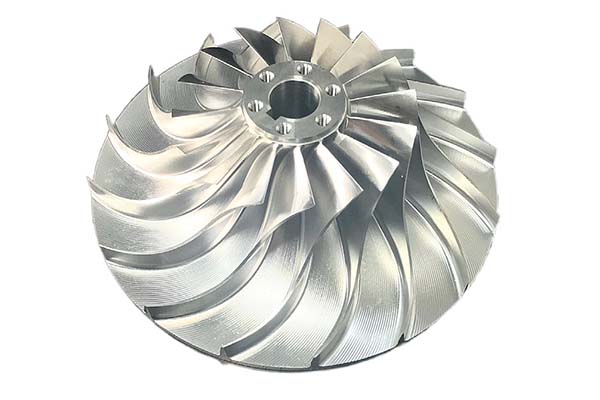
Aerospace example: Turbine blades require complex airfoil shapes with curved surfaces and undercuts. 5-axis machining creates these in one setup, achieving precision of ±0.005 mm. Even a 0.001 mm deviation can affect engine efficiency and safety.
Hybrid Manufacturing
Hybrid manufacturing combines additive (3D printing) and subtractive (CNC machining) processes in a single machine or workflow.
How it works:
- Additive process builds a near-net shape layer by layer
- CNC machining finishes critical surfaces to final tolerances
Benefits:
- Material waste reduced by up to 90% compared to subtractive-only methods
- Internal features that cannot be machined can be printed
- Complex geometries become practical
- Production time shortened for complex parts
Real-World Example:
GE Aviation developed 3D-printed fuel nozzles using a hybrid CNC/additive process. The result:
- Part count reduced by 90% (from multiple assembled parts to one integrated part)
- Weight reduced by 25%
- Manufacturing cost reduced by 30%
AI-Driven Optimization
Artificial intelligence is transforming CNC machining from reactive to predictive.
Siemens, a leader in industrial technology, has developed AI-driven algorithms that predict tool wear by analyzing real-time data:
- Spindle load
- Vibration patterns
- Temperature
- Cutting forces
Results:
- Proactive tool changes reduce unplanned downtime by 25%
- Tools are used to their full life, not replaced too early or too late
- Consistent part quality across production runs
How it works: Sensors on the machine feed data to algorithms trained on historical performance. When patterns indicate approaching failure, the system alerts operators to schedule tool changes during planned downtime.
Automation and Robotics
The titans of CNC machining are integrating automation at scale.
| Automation Type | Impact |
|---|---|
| Robotic loading/unloading | Machines run continuously; lights-out operation |
| Pallet systems | Multiple jobs queued; minimal operator intervention |
| Automated tool changers | Tools swapped without stopping production |
| In-process inspection | Dimensions verified during machining; adjustments in real time |
A fully automated CNC cell can run overnight, through weekends, producing parts with no human presence. One operator can manage multiple cells during the day.
What Material Advancements Enable New Applications?
The choice of materials is as critical as the machines themselves. Titans of CNC machining work with advanced materials that push performance boundaries.
| Material | Application | Key Property |
|---|---|---|
| Titanium alloys | Aerospace brackets, engine components | High strength-to-weight ratio; corrosion resistance |
| Carbon-fiber composites | Automotive parts, aerospace structures | Lightweight; extremely rigid |
| Ceramics | High-temperature tools, wear components | Heat resistance to >1000°C |
| Inconel | Jet engine components, gas turbines | Maintains strength at high temperatures |
| PEEK | Medical implants, semiconductor tooling | Biocompatible; high-temperature resistance |
Titanium Alloys
Titanium is the material of choice for aerospace structural components. Its strength-to-weight ratio is unmatched among metals. A titanium bracket provides the same strength as steel at roughly half the weight.
SpaceX example: Titanium components machined for reusable rockets must withstand extreme conditions. The landing legs of Falcon 9 rockets are CNC-machined from titanium—strong enough to support the rocket during landing, lightweight enough to minimize flight weight.
Since the first successful Falcon 9 booster landing in 2015, SpaceX has achieved over 260 successful booster landings as of 2024. The reliability of these components is a testament to precision machining.
Carbon-Fiber Composites
Carbon fiber combines high strength with very low weight. It is increasingly used in automotive and aerospace applications where weight reduction is critical.
Automotive example: Carbon-fiber chassis components reduce vehicle weight, improving fuel efficiency and performance. CNC machining finishes these parts to final tolerances after molding.
Ceramics
Ceramics offer extreme heat resistance—some grades withstand temperatures above 1000°C. They are used for:
- High-temperature cutting tools (machining superalloys)
- Wear components in extreme environments
- Heat shields and thermal barriers
How Are Titans Impacting Key Industries?
Aerospace and Defense
In aerospace, precision is not negotiable. Components must withstand extreme conditions—high pressure, high temperature, high stress.
GE Aviation:
- Developed 3D-printed fuel nozzles using hybrid CNC/additive process
- Reduced part count by 90% (from multiple parts to one integrated part)
- Reduced weight by 25%
- Reduced manufacturing cost by 30%
SpaceX:
- CNC-machined titanium components for reusable rockets
- Landing legs, engine parts, structural elements
- Titanium’s strength-to-weight ratio enables reusable rocket design
Impact: CNC-machined components enable aircraft and spacecraft that are lighter, more fuel-efficient, and more reliable.
Automotive
The automotive industry is evolving toward electric vehicles, where weight and efficiency are paramount.
Tesla:
- CNC-machined battery enclosures for Model 3
- Precision cooling channels maintain optimal battery temperature
- Thermal management extends battery life by 10–15% compared to competitors
Volkswagen:
- 5-axis milling for electric motor parts
- Complex geometries optimized for efficiency
- Reduced motor energy consumption by 20%
Impact: CNC machining enables the precision components needed for electric vehicle performance and range.
Healthcare
In medical manufacturing, precision affects patient outcomes directly.
Stryker:
- CNC-machined titanium spinal implants
- Accuracy of ±0.01 mm
- 90% success rate in improving spinal conditions (reduced pain, increased mobility)
3D Systems:
- Customized orthopedic guides using SLA printing + CNC finishing
- Surgical guides help surgeons place implants accurately
- Reduced surgical time by 30%
- Improved implant placement accuracy
Impact: Precision machining enables implants that fit perfectly, reducing complications and improving recovery.
What Trends Are Shaping the Future?
Digital Twins
A digital twin is a virtual replica of a physical machine or process. In CNC machining, digital twins allow:
- Simulation of machining processes before cutting metal
- Optimization of toolpaths without trial and error
- Predictive maintenance based on virtual models
Benefit: Reduced setup time, fewer scrapped parts, and faster time to market.
Sustainable Manufacturing
The titans are focusing on sustainability:
- Material efficiency: Near-net shape processes reduce waste
- Energy efficiency: Machines designed for lower power consumption
- Coolant management: Minimum quantity lubrication reduces waste
- Recycling: Metal chips and swarf recycled back into production
Advanced Materials
New materials continue to emerge:
- Metal matrix composites: Aluminum with ceramic particles for higher stiffness
- High-entropy alloys: Multiple principal elements for extreme environments
- Graded materials: Composition varies within a single part
AI and Machine Learning
AI applications will expand:
- Autonomous parameter optimization: AI sets speeds and feeds based on material and tool
- Predictive quality: AI predicts part quality before inspection
- Self-correcting machines: Machines adjust parameters in real time to maintain tolerances
How Do You Choose the Right CNC Machining Partner?
Selecting a CNC machining partner is a strategic decision. Consider:
| Factor | What to Look For |
|---|---|
| Industry experience | Track record in your industry (aerospace, medical, automotive) |
| Technology | 5-axis capability; automation; in-process inspection |
| Materials | Experience with your required materials |
| Quality systems | ISO 9001, AS9100, ISO 13485 certifications |
| Capacity | Ability to scale from prototypes to production |
| Communication | Responsive; provides DFM feedback |
Red flags:
- Vague answers about tolerances
- No in-house inspection equipment
- Unwilling to provide references
- No documented quality processes
Yigu Technology's Perspective
At Yigu Technology, we operate alongside the titans of CNC machining. We adopt the same technologies—5-axis machining, in-process inspection, rigorous quality control—to serve clients who need precision components.
Our approach:
- Technology: 5-axis machining centers for complex geometries
- Materials: Experience with metals, plastics, and composites
- Quality: ISO 9001 certified; in-house CMM inspection
- Flexibility: Prototypes to production; one part to thousands
We believe that the future of CNC machining is about integration: combining additive and subtractive processes, using AI to optimize parameters, and connecting machines in smart factories. These advances will make precision manufacturing faster, more efficient, and more accessible.
Conclusion
The titans of CNC machining are not defined by size alone. They are defined by their commitment to precision, innovation, and quality. They invest in 5-axis technology, hybrid manufacturing, and AI-driven optimization. They work with advanced materials—titanium, composites, ceramics—to enable new applications. And they serve industries where precision is not optional: aerospace, automotive, healthcare.
For manufacturers, partnering with these leaders—or adopting their practices—is essential for staying competitive. The technologies they develop today will define manufacturing for years to come.
FAQ
How do I choose the right CNC machining partner?
Select a partner based on:
- Industry experience: Look for a proven track record in your specific industry (aerospace, medical, automotive)
- Technology: 5-axis capability, automation, and in-process inspection indicate advanced capabilities
- Quality systems: ISO 9001, AS9100, or ISO 13485 certification ensures documented processes
- Communication: A good partner provides design for manufacturability (DFM) feedback and clear timelines
Ask for references and sample parts. A reputable partner will share both.
What are the best materials for CNC machining in high-performance applications?
The best material depends on the application:
- Aluminum: Lightweight, high thermal conductivity; ideal for automotive and electronics
- Titanium alloys: Highest strength-to-weight ratio; essential for aerospace and medical implants
- Carbon-fiber composites: Lightweight and rigid; used in automotive and aerospace structures
- Ceramics: Extreme heat resistance (>1000°C); used for high-temperature tools and wear components
- Hardened steels: High strength and wear resistance; used for gears, shafts, and heavy-duty machinery
What is 5-axis machining and why does it matter?
5-axis machining adds two rotational axes to the three linear axes of traditional machining. This allows the cutting tool to approach the workpiece from any angle. Benefits:
- Complex parts machined in a single setup (vs. 3–5 setups on 3-axis)
- Positioning accuracy improved to ±0.005 mm
- Surface finish superior to multi-setup methods
- Undercuts and complex geometries become practical
For aerospace components like turbine blades, 5-axis machining is essential.
How is AI being used in CNC machining?
AI is used for:
- Predictive tool wear: Analyzing spindle load, vibration, and temperature to predict when tools will fail, reducing downtime by up to 25%
- Parameter optimization: Setting speeds and feeds for optimal tool life and surface finish
- Quality prediction: Identifying parts that may be out of spec before inspection
- Process optimization: Adjusting parameters in real time to maintain tolerances
Siemens and other industrial leaders have developed AI systems that integrate directly with CNC controls.
What industries benefit most from advanced CNC machining?
All industries benefit, but the impact is greatest where precision is critical:
- Aerospace: Turbine blades, structural components, engine parts—safety depends on precision
- Automotive: Electric vehicle components, battery enclosures, motor parts—efficiency depends on precision
- Medical: Implants, surgical instruments, diagnostic equipment—patient outcomes depend on precision
- Defense: Missile components, radar housings, armored vehicle parts—reliability depends on precision
Contact Yigu Technology for Custom Manufacturing
At Yigu Technology, we bring the same technologies used by industry titans to your projects. Our capabilities include 5-axis CNC machining, multi-process manufacturing, and rigorous quality control with in-house CMM inspection.
We serve the aerospace, medical, automotive, and industrial sectors with precision components that meet the most demanding specifications. Whether you need a prototype or a production run, we deliver quality and reliability.
Contact us today to discuss your CNC machining project. Let us show you how precision manufacturing can elevate your products.