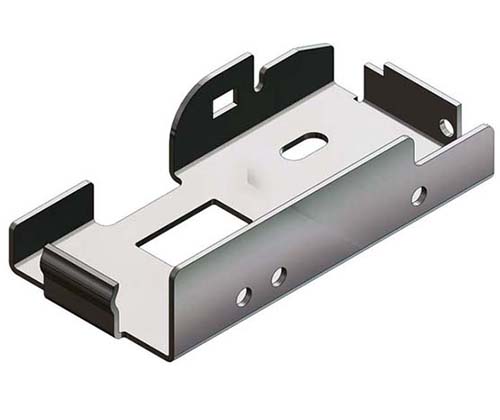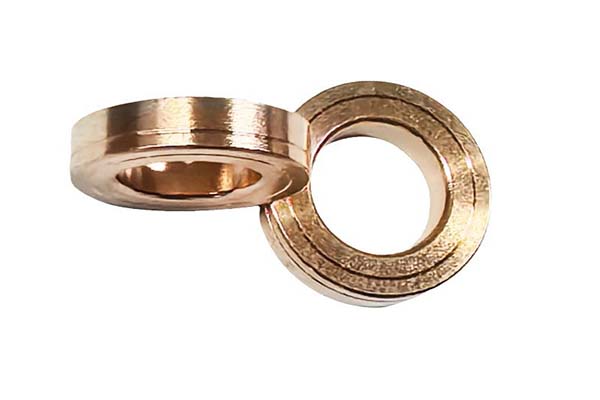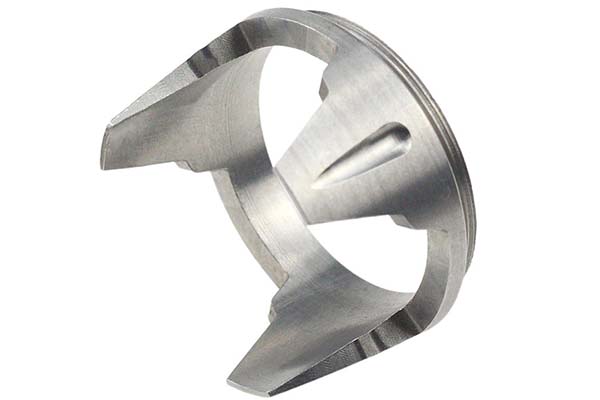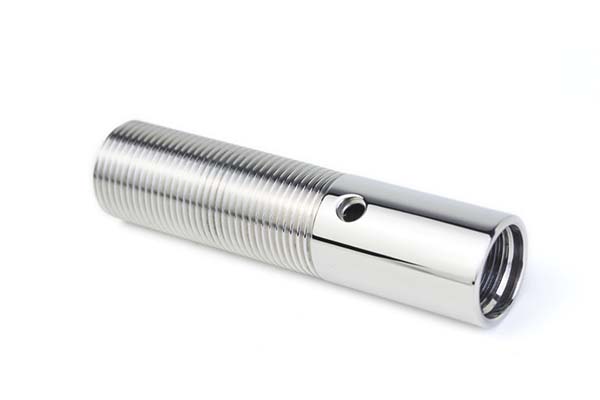
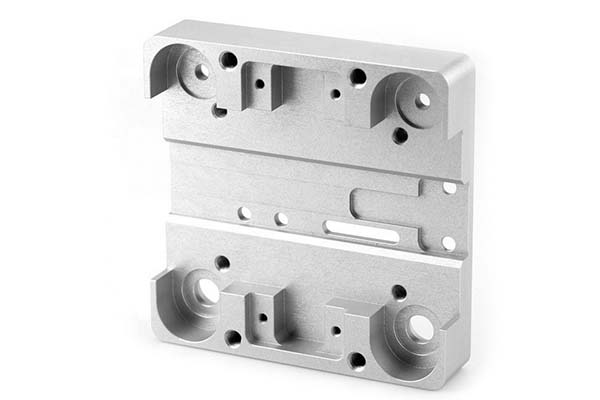
Manufacturers in industries like automotive, aerospace, and medical devices face a common challenge. They need parts with features measured in microns. They need those parts to be identical across millions of pieces. And they need to produce them cost-effectively. Standard stamping can achieve basic shapes. High precision metal stamping goes further. It combines advanced tooling,精密 machinery, and rigorous quality control to produce components with tolerances as tight as ±0.01 mm. The process handles complex geometries, thin materials, and high volumes with consistency that other methods cannot match. This guide explains how high precision stamping works, what materials it uses, and where it delivers the most value.
What Sets High Precision Stamping Apart?
High precision metal stamping is not simply standard stamping with tighter measurements. It is a distinct approach to manufacturing that prioritizes accuracy at every step. The dies are machined to tighter tolerances. The presses offer more precise control over speed and force. The inspection methods detect deviations that would be invisible to the naked eye.
The result is parts that meet exact specifications consistently, even when produced in volumes of millions per month.
How Does the High Precision Stamping Process Work?
Material Preparation
The process begins with sheet metal coils or blanks. Materials are selected based on the application. Common choices include:
- Steel and stainless steel
- Aluminum alloys
- Brass and copper
- Specialty alloys like titanium
Before stamping, the material may be cleaned to remove oils or debris that could affect precision. Lubricants are applied to reduce friction and protect both the material and the tooling.
Die Design and Tooling
The die is the most critical component. In high precision stamping, dies are machined to tolerances that match the final part. A die designed to produce a part with ±0.01 mm features must itself be manufactured to ±0.005 mm or better.
Die manufacturing uses:
- CNC milling: For rough shaping and basic geometry
- Surface grinding: For achieving flatness and parallelism
- Electrical discharge machining (EDM) : For intricate features, sharp corners, and fine details
- Wire EDM: For cutting complex profiles with high accuracy
Die materials are chosen for wear resistance and dimensional stability. Carbide is common for high-volume runs. Tool steel like D2 or A2 is used for moderate volumes. Both are heat-treated to HRC 58 to 62 for hardness and durability.
The Stamping Press
High precision stamping uses presses that offer superior control. Servo presses are preferred for complex parts. They allow variable speed throughout the stroke. The ram can move slowly during contact with the material, then quickly during return. This control reduces shock, improves material flow, and extends tool life.
Mechanical presses with precision drives are also used for high-speed applications. They offer consistent force and cycle times but less flexibility.
Press tonnage ranges from 10 tons for small electronic parts to 500 tons or more for larger automotive components.
The Stamping Process
As the press cycles, the material is fed through the die. In progressive dies, multiple operations occur at each station:
- Piercing: Creates holes and cutouts
- Blanking: Cuts the rough shape
- Forming: Bends and shapes
- Coining: Compresses for fine detail
- Cutoff: Separates the finished part
Each operation is precisely aligned. Registration between stations is typically maintained within ±0.005 mm.
What Quality Controls Ensure Precision?
High precision stamping relies on rigorous inspection throughout the production process.
First Article Inspection
When a new die is set up, the first parts are measured exhaustively. Coordinate measuring machines (CMMs) verify every critical dimension. Optical comparators check profiles and contours. Surface finish is measured with profilometers.
The first article must meet all specifications before production begins. Any deviation is addressed through die adjustment or process tuning.
In-Process Monitoring
Modern presses monitor key parameters in real time:
- Punch force: Detects dull tools or material variations
- Strip position: Ensures proper alignment
- Press speed and tonnage: Maintains consistent forming conditions
- Part ejection: Confirms parts are clearing the die
If any parameter moves outside control limits, the press stops automatically. This prevents a run of defective parts.
Statistical Process Control
Statistical process control (SPC) tracks measurements over time. Operators sample parts at regular intervals. Data is charted to detect trends. A gradual increase in punch force might indicate a dull tool. Early detection allows tool change before defects occur.
Advanced Inspection Techniques
For critical applications, additional inspection methods are used:
- Vision systems: Automated optical inspection checks for surface defects and dimensional features at full production speed
- X-ray inspection: Verifies internal features or detects voids in thick parts
- Non-destructive testing (NDT) : Ultrasonic or eddy current testing finds subsurface flaws
What Materials Are Used in High Precision Stamping?
| Material | Properties | Typical Applications |
|---|---|---|
| Low-carbon steel | Good formability, moderate strength | Automotive brackets, appliance components |
| Stainless steel (304, 316) | Corrosion resistance, strength | Medical devices, food equipment |
| Aluminum (5052, 6061) | Lightweight, formable | Electronics enclosures, aerospace parts |
| Brass | Conductivity, corrosion resistance | Electrical connectors, terminals |
| Copper | Highest conductivity | RF shielding, battery contacts |
| Titanium | Strength-to-weight ratio, biocompatibility | Aerospace, medical implants |
Material selection affects every aspect of the stamping process. Formability determines how tight bends can be. Work hardening behavior influences whether intermediate annealing is needed. Surface finish affects die wear and part quality.
Where Is High Precision Stamping Used?
Automotive Components
Modern vehicles contain hundreds of precision-stamped parts. Examples include:
- Engine components: Fuel injector cups, valve guides
- Transmission parts: Clutch plates, gear components
- Safety systems: Airbag housings, seat belt retractor components
- Electrical systems: Connector terminals, sensor housings
A typical engine control unit contains dozens of stamped terminals, each with features measured in tenths of a millimeter.
Aerospace and Defense
Aerospace demands components that are both lightweight and reliable. Precision stamping produces:
- Structural brackets: For interior and exterior applications
- Avionics housings: Protecting sensitive electronics
- Engine components: Seals, shims, and small structural parts
- Fastener components: Locking features and retainers
Parts must meet strict specifications like AS9100 and often require full traceability from raw material to finished part.
Medical Devices
Medical applications demand precision and biocompatibility. Stamped components include:
- Surgical instruments: Handles, blades, and small mechanisms
- Implants: Orthopedic and dental components (with proper finishes)
- Diagnostic equipment: Structural parts for MRI and CT scanners
- Drug delivery devices: Precision mechanisms for insulin pumps and injectors
The medical industry often requires ISO 13485 certification and full documentation of materials and processes.
Electronics and Telecommunications
Electronics require tiny, precise components in massive volumes. High precision stamping produces:
- Connector terminals: For smartphones, computers, and networking equipment
- Shielding cans: To block electromagnetic interference
- Lead frames: For semiconductor packages
- Battery contacts: For portable devices
A single smartphone contains dozens of stamped components. A data center switch may contain thousands.
What Are the Key Benefits?
| Benefit | Description |
|---|---|
| Tight tolerances | Achieve ±0.01 mm or better on critical features |
| High repeatability | Millions of identical parts |
| Cost efficiency | Low per-part cost at volume |
| Complex geometries | Combine multiple operations in one die |
| Material versatility | Wide range of metals and alloys |
| Short cycle times | High-speed presses produce parts per second |
How Does High Precision Stamping Compare to Other Processes?
| Process | Tolerance | Volume | Cost per Part |
|---|---|---|---|
| High precision stamping | ±0.01 mm | High | Low |
| CNC machining | ±0.005 mm | Low to medium | High |
| Additive manufacturing | ±0.1 mm | Low | Very high |
| Casting | ±0.5 mm | Medium | Medium |
Stamping is not always the right choice. For very low volumes, machining may be more economical. For extremely thick parts, fabrication may be necessary. But for high-volume production of thin, precise components, precision stamping is unmatched.
Conclusion
High precision metal stamping is a manufacturing process that combines advanced tooling,精密 machinery, and rigorous quality control to produce components with exceptional accuracy and consistency. It is the method behind countless parts that make modern life possible: the connectors in your phone, the brackets in your car, the components in life-saving medical devices.
Success depends on every element working together. The dies must be machined to sub-micron accuracy. The presses must deliver precise force and control. The inspection systems must detect deviations invisible to the eye. And the process must be managed with discipline, using SPC and in-process monitoring to maintain consistency over millions of parts.
For manufacturers who need precision, repeatability, and scale, high precision stamping is not just an option. It is the standard.
FAQ About High Precision Metal Stamping
What industries benefit the most from high precision metal stamping?
Automotive, aerospace, medical devices, and electronics benefit most. These industries require components with tight tolerances, high reliability, and consistent quality. A single defective part can have significant consequences, making precision essential.
How does high precision stamping ensure accuracy and repeatability?
Accuracy comes from the die. Dies are machined to tighter tolerances than the parts they produce. Repeatability comes from the press and process control. Servo presses deliver consistent force and speed. In-process monitoring catches variations before defects occur. Statistical process control ensures trends are detected early.
What are the key benefits of high precision stamping?
The key benefits are tight tolerances (down to ±0.01 mm), high repeatability, cost-effectiveness at volume, and the ability to produce complex geometries. The process also offers material versatility and short cycle times.
What materials can be used in high precision stamping?
Common materials include low-carbon steel, stainless steel, aluminum alloys, brass, copper, and specialty alloys like titanium. Material selection depends on the application requirements for strength, corrosion resistance, conductivity, and weight.
How do you control quality in high precision stamping?
Quality is controlled through first article inspection, in-process monitoring, statistical process control, and advanced inspection techniques like vision systems and CMMs. Tooling maintenance and regular calibration of measurement equipment are also essential.
Contact Yigu Technology for Custom Manufacturing
High precision metal stamping requires expertise, advanced equipment, and a commitment to quality. At Yigu Technology, we specialize in custom precision stamping for automotive, medical, electronics, and aerospace clients. Our team designs and builds tooling with tolerances that match your part requirements. We run parts on modern servo and mechanical presses with in-process monitoring. Our quality control includes CMM inspection, optical measurement, and statistical process control. Whether you need connectors, brackets, or complex formed components, we have the capabilities to deliver precision at scale. Contact us today to discuss your project.