Introduction
In product development, the right prototype manufacturing partner can mean the difference between a successful launch and costly delays. A high-quality prototype reduces production errors by up to 50% and accelerates time-to-market by 30%. But with hundreds of options globally, how do you navigate this decision? The choice requires balancing technical expertise, cost, scalability, and industry specialization. At Yigu Technology, we help clients select the right partners based on their unique needs. This article provides a structured approach—covering critical factors, comparative analysis of leading companies, and actionable insights to guide your decision.
Why Are Prototype Manufacturing Companies Important?
Prototyping is the bridge between concept and reality. It allows teams to test functionality, refine designs, and validate market fit before mass production.
Key benefits:
- Reduce production errors: Up to 50% reduction with high-quality prototypes
- Accelerate time-to-market: Up to 30% faster
- Mitigate risk: Identify design flaws early—when they are cheap to fix
- Validate user experience: Test ergonomics, aesthetics, and usability
Top Prototype Manufacturing Companies: A Comparative Overview
| Company | Founded | Revenue (2023) | Employees | Key Services | Notable Clients |
|---|---|---|---|---|---|
| Protolabs | 1999 | $506M | 2,145 | CNC machining, 3D printing, injection molding | Bosch, BMW |
| 3D Systems | 1986 | $390M | 2,032 | Stereolithography, medical prototypes | Healthcare institutions |
| Stratasys | 1989 | $627.6M | 1,980 | Additive manufacturing, aerospace parts | Boeing, Adidas |
| Xometry | 2013 | $460M | 992 | Global manufacturing network, on-demand services | Fortune 100 companies |
| Star Rapid | 2005 | $42M | 280 | CNC machining, vacuum casting | Siemens, Philips |
| WayKen | 2013 | $32M | 44 | Rapid prototyping, low-volume production | Automotive startups |
| Materialise | 1990 | $290M | 2,437 | 3D printing software, medical implants | Johnson & Johnson |
| FOWMOULD | 1978 | N/A | 131 | Vacuum casting, cost-effective solutions | Consumer goods brands |
| 3ERP | 2010 | $36.8M | 200 | Metal fabrication, aerospace components | Aviation industry leaders |
| Yigu Technology | 2020 | N/A | 500 | CNC machining, precision parts | Electronics manufacturers |
Key observations:
- Revenue leadership: Stratasys and Protolabs dominate in revenue—reflecting scale and diversified services
- Specialization: 3D Systems excels in medical and dental; Xometry offers a global manufacturing network
- Cost-effectiveness: FOWMOULD is praised for affordability, particularly in consumer goods
What Critical Factors Should You Consider?
1. Project Requirements
| Factor | Questions to Ask |
|---|---|
| Fidelity level | Do you need a low-fidelity (conceptual) or high-fidelity (functionally identical) prototype? |
| Material expertise | Does the company work with your required materials (metals, plastics, composites)? |
| Complexity | Medical devices demand higher precision than consumer goods. Does the company have relevant experience? |
2. Technical Capabilities
| Factor | What to Look For |
|---|---|
| Manufacturing processes | CNC machining, 3D printing (FDM, SLA, SLS, SLM), vacuum casting, injection molding |
| Innovation | Investment in R&D—Protolabs spends $44M annually on innovation |
| Precision | Achievable tolerances—CNC machining to ±0.001 inches; 3D printing to ±0.005–0.02 inches |
3. Cost and Budget
| Factor | Considerations |
|---|---|
| Pricing models | Per project vs. hourly rates; average rates range from $30 (basic 3D prints) to $50,000 (advanced electronics) |
| Hidden costs | Clarify fees for iterations, testing, tooling, or IP protection |
| Volume | Small-batch prototypes have higher per-unit cost; larger volumes benefit from economies of scale |
4. Track Record and Reputation
| Factor | What to Review |
|---|---|
| Case studies | Past projects similar to yours—demonstrate reliability and capability |
| Client feedback | Platforms like DesignRush, Google My Business, industry forums |
| Certifications | ISO 9001, AS9100 (aerospace), ISO 13485 (medical) |
5. Scalability and Flexibility
| Factor | Considerations |
|---|---|
| Low-volume vs. high-volume | Smaller firms like WayKen excel in agility; larger companies handle mass production |
| Geographic reach | Global networks (Xometry) ensure access to diverse manufacturing capabilities |
| Post-prototype support | Can the company scale to low-volume production after prototyping? |
How Do You Balance Innovation and Practicality?
While industry giants like 3D Systems offer unmatched resources, startups and mid-sized firms often bring niche expertise and cost-effective solutions.
Key takeaway: Prioritize niche expertise over brand name. A company that specializes in your industry (healthcare, aerospace, automotive) will likely understand regulatory requirements and technical nuances better.
Example: A client needed a custom automotive component. Instead of a large competitor, we recommended a mid-sized firm with expertise in rapid prototyping and metal casting. They delivered a functional prototype in half the time of the larger competitor.
What Does a Real-World Case Study Reveal?
Startup Success: FOWMOULD
Challenge: A startup developing a portable water purifier faced budget constraints but needed a high-quality prototype for investor pitches.
Solution: FOWMOULD used vacuum casting to create a durable, aesthetically appealing model at 40% of the cost quoted by competitors.
Result: The prototype impressed investors, securing $2M in funding and accelerating production.
What Future Trends Should You Watch?
| Trend | Impact |
|---|---|
| AI integration | Optimize design for manufacturability (DFM); predict material performance |
| Sustainability | Eco-friendly materials; energy-efficient processes |
| Hybrid manufacturing | Combine additive and subtractive methods for complex geometries |
| Digital twins | Virtual prototypes paired with physical testing—faster iteration |
Yigu Technology's Perspective
As a custom manufacturer of non-standard plastic and metal products, Yigu Technology helps clients select the right prototype manufacturing partners.
What we offer:
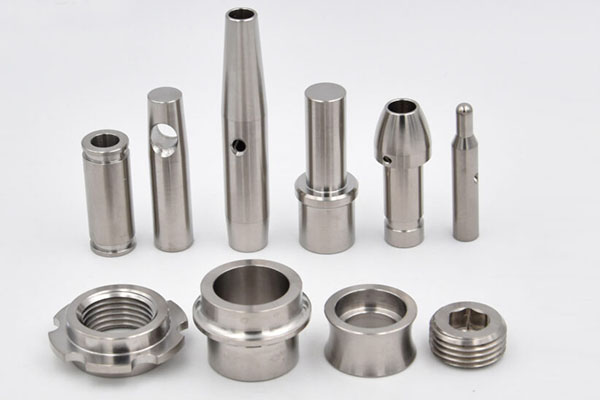
- CNC machining: Precision parts with tight tolerances
- Material expertise: Metals, plastics, composites
- DFM feedback: Optimize designs for manufacturability
- Scalability: From prototype to low-volume production
Our advice:
- Start with requirements: Define fidelity, materials, and complexity before evaluating partners
- Ask for case studies: Review past projects similar to yours
- Check certifications: ISO 9001, AS9100, ISO 13485 for regulated industries
- Clarity on costs: Understand pricing models, hidden fees, and iteration costs
- Protect IP: Sign NDAs; choose companies with strict IP policies
Conclusion
Choosing the right prototype manufacturing company requires balancing:
- Project requirements: Fidelity, materials, complexity
- Technical capabilities: Processes, precision, innovation
- Cost and budget: Pricing models, hidden costs, volume considerations
- Track record: Case studies, client feedback, certifications
- Scalability: Low-volume agility vs. high-volume capacity
Key insights from industry leaders:
- Protolabs and Stratasys: Scale and diversified services
- 3D Systems: Medical and dental specialization
- Xometry: Global manufacturing network
- FOWMOULD: Cost-effective solutions for consumer goods
- Niche expertise: Often outperforms brand name for specific applications
Case study: A startup secured $2M funding with a vacuum-cast prototype at 40% lower cost.
Future trends: AI integration, sustainability, hybrid manufacturing, digital twins.
By leveraging data-driven insights and understanding your project’s unique needs, you can partner with a company that accelerates innovation and ensures a successful product launch. Remember, the goal is not just to create a prototype—it is to build a long-term relationship that drives your business forward.
Frequently Asked Questions
How long does it take to design a prototype?
Timelines vary widely. Simple prototypes: 2–4 weeks. Complex projects (medical devices, aerospace): 6–12 months. Factors include design complexity, iteration cycles, testing requirements, and material availability.
What should I look for in a prototype company’s portfolio?
Focus on projects similar to yours—industry, complexity, technology. For consumer electronics, look for CNC machining and plastic molding experience. For medical devices, look for biocompatible materials and precision capabilities. For aerospace, look for AS9100 certification and metal fabrication expertise.
How can I protect my intellectual property (IP) when working with a prototype company?
Sign a non-disclosure agreement (NDA) before sharing designs. Choose companies with strict IP policies. Ask about their history of protecting client information. Some firms (Protolabs, Xometry) offer secure online platforms for file sharing. Verify data security protocols.
What certifications should I look for?
ISO 9001: General quality management. AS9100: Aerospace quality management. ISO 13485: Medical device quality management. ISO 14001: Environmental management. Choose based on your industry requirements.
How do I compare quotes from different prototype companies?
Compare not just price, but: included services (design feedback, post-processing, testing), lead time, material quality, precision capabilities, and iteration costs. A lower quote may exclude essential services; a higher quote may include valuable DFM feedback that reduces overall development cost.
Contact Yigu Technology for Custom Manufacturing
At Yigu Technology, we specialize in prototype manufacturing and custom production. Our capabilities include CNC machining, precision parts, and DFM feedback. We serve electronics, automotive, and industrial clients.
If you are developing a new product and need guidance on selecting the right prototype manufacturing partner, contact our engineering team. Let us help you navigate the decision—balancing technical expertise, cost, and scalability—to bring your ideas to life faster.