Introduction
Every product development team faces the same pressure: build a prototype that validates your design, but do it without blowing the budget. Prototype costs can spiral quickly—materials, labor, technology, iterations—and unexpected expenses often appear mid-project. But cost control does not mean compromising quality. It means making intentional choices about materials, design complexity, quantity, and manufacturing methods. At Yigu Technology, we help clients balance cost and quality daily. This article explains the factors that drive prototype costs and offers practical strategies to control them without sacrificing the insights you need.
What Drives Prototype Cost?
Prototype cost is the total expense of creating a physical model to test and validate a design. It includes materials, labor, equipment, programming, and post-processing.
Understanding the components of prototype cost is essential for budget planning. Accurate cost estimation helps you decide whether to proceed with a product concept, re-evaluate the design, or find cost-saving opportunities.
What Factors Affect Prototype Cost?
Material Selection
Materials are often the largest variable in prototype cost. The choice between standard plastics, engineering plastics, composites, and metals creates wide cost ranges.
| Material Category | Approximate Cost per Ton | Key Characteristics | Best For |
|---|---|---|---|
| Steel | $500–$1,500 | High strength, heavy, traditional processes | Structural parts, durability testing |
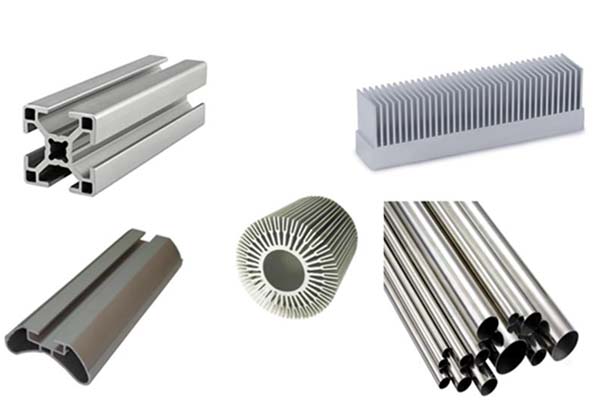
| Aluminum | $2,000–$4,000 | Lightweight, good corrosion resistance, complex processing | Aerospace, automotive, weight-sensitive applications |
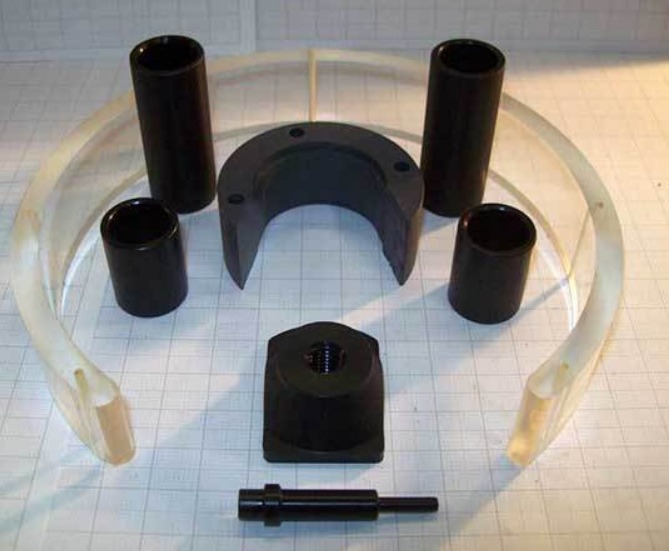
| Engineering plastics | $3,000–$10,000 | Lightweight, good strength, easy to process | Consumer products, housings, functional testing |
| Carbon fiber composites | $10,000–$50,000+ | Extremely strong, lightweight, specialized processing | High-performance automotive, aerospace |
Example: An automotive prototype body panel in steel might cost $500–$1,500 per ton of material. The same panel in aluminum would cost $2,000–$4,000 per ton. In carbon fiber, material cost alone could exceed $10,000–$50,000 per ton. The choice depends on whether weight reduction justifies the added expense.
Design Complexity
Complex designs cost more to produce. Simple geometries require less engineering time, fewer manufacturing steps, and less specialized equipment.
| Complexity Level | Cost Impact | Examples |
|---|---|---|
| Simple | Low | Basic shapes, rectangular enclosures, simple brackets |
| Moderate | Medium | Organic curves, simple internal features, snap-fits |
| High | High | Undercuts, internal channels, thin walls, intricate details |
Example: A basic smartphone prototype with a rectangular shape might cost $500–$1,000. A foldable smartphone prototype with a complex hinge mechanism, flexible display, and integrated components could cost $10,000–$50,000 or more—primarily due to engineering complexity and specialized components.
Quantity of Prototypes
Quantity directly affects cost per unit due to economies of scale. Fixed costs—design, programming, setup, tooling—are spread across more units as quantity increases.
| Quantity | Fixed Cost Allocation | Cost Per Unit (Typical) |
|---|---|---|
| 1–10 | High | $500–$5,000 |
| 10–100 | Moderate | $200–$1,000 |
| 100–1,000 | Low | $50–$300 |
Example: A startup producing 10 IoT device prototypes might pay $10,000 in fixed setup costs plus $200 per unit in variable costs—a total of $12,000 or $1,200 per unit. Producing 100 units spreads the same $10,000 fixed cost, resulting in $30,000 total or $300 per unit—a 75% reduction in per-unit cost.
Prototyping Technology
Different technologies have different cost structures. The choice depends on your precision, material, and quantity requirements.
| Technology | Fixed Cost | Variable Cost | Best For |
|---|---|---|---|
| FDM 3D printing | Low | Low | Simple concepts, low-cost iterations |
| SLA 3D printing | Moderate | Moderate | High detail, smooth surfaces |
| SLS 3D printing | High | Moderate–High | Functional parts, complex geometries |
| CNC machining | High | High (machining time) | Precision parts, metals, tight tolerances |
| Injection molding | Very high (mold) | Very low (per part) | High volumes, production-like parts |
How Can You Control Prototype Cost?
Optimize Material Procurement
Find quality low-cost suppliers: Use online platforms like Alibaba, ThomasNet, or industry-specific directories to compare suppliers. Attend industry exhibitions—such as CES for electronics or MD&M for medical devices—to meet suppliers face-to-face and negotiate prices.
Centralize purchasing: Volume discounts matter. A startup buying 100 components might pay $5 per unit. By grouping orders with other companies or departments to purchase 1,000 units, the price might drop to $3 per unit. A group of small tech startups reduced procurement costs by 20% through joint purchasing.
Consider material alternatives: High-strength plastics can replace metals in many applications. In automotive interior components, switching from metal to plastic composites reduced material cost by 30% while maintaining strength and durability. Evaluate whether the premium material is truly necessary for your testing objectives.
Simplify Design
Complexity drives cost. Focus on core functionality and eliminate unnecessary features.
| Design Approach | Cost Impact |
|---|---|
| Eliminate decorative features | Reduces machining or printing time |
| Simplify internal structures | Reduces need for supports or complex tool paths |
| Use standard wall thicknesses | Improves manufacturability |
| Reduce tight tolerances where not needed | Allows faster, cheaper processes |
Example: A consumer electronics company simplified a smartwatch prototype by removing decorative grooves. Cost dropped from $500 to $200 per unit—a 60% reduction—without compromising functionality.
Leverage Simulation and Virtual Prototyping
Test digitally before building physically. CAD simulation can identify fit issues, stress points, and assembly problems without material costs.
| Simulation Type | What It Tests | Cost Savings |
|---|---|---|
| Stress analysis | Structural integrity under load | Prevents redesign of failed parts |
| Thermal simulation | Heat dissipation, thermal expansion | Avoids material selection mistakes |
| Kinematic analysis | Movement of moving parts | Identifies interference early |
| Assembly simulation | Fit and clearance | Prevents rework |
A medical device company used simulation to optimize a surgical instrument design before prototyping. They avoided three physical iterations, saving $15,000 in prototyping costs.
Match Technology to Stage
Use low-cost methods early; reserve expensive methods for final validation.
| Development Stage | Recommended Technology | Cost Strategy |
|---|---|---|
| Concept exploration | FDM, foam, clay | Lowest cost; rough models |
| Form and fit testing | SLA, SLS | Moderate cost; accurate geometry |
| Functional testing | SLS, CNC | Higher cost; production-like materials |
| Final validation | CNC, injection molding | Production-equivalent materials |
Optimize for the Manufacturing Process
Design with the manufacturing method in mind. Small changes can yield significant savings.
For 3D printing:
- Orient parts to minimize supports
- Use standard layer heights
- Avoid unnecessary overhangs
For CNC machining:
- Design for standard tool sizes
- Avoid deep cavities with small openings
- Use radii instead of sharp internal corners
For injection molding:
- Add draft angles (1–2 degrees)
- Maintain uniform wall thickness
- Avoid undercuts that require complex molds
Plan for Iteration
Budget for multiple prototype cycles. The first prototype often reveals issues that require refinement.
| Iteration | Purpose | Cost Strategy |
|---|---|---|
| Iteration 1 | Validate concept, identify major issues | Low-cost materials, fast methods |
| Iteration 2 | Test fixes, refine design | Moderate-cost materials |
| Iteration 3 | Final validation | Production-equivalent materials |
A consumer electronics company planned for three iterations. Each iteration cost less than the previous as design stabilized. The total prototyping budget was 30% lower than if they had attempted to perfect the design in a single iteration.
Choose the Right Service Provider
Price is important, but so is quality and experience.
- Get multiple quotes: Compare pricing across providers, but ensure you are comparing similar scope.
- Review portfolios: Look for experience with similar materials and complexity.
- Check quality systems: ISO 9001 certification indicates process discipline.
- Ask about design feedback: Experienced providers often suggest cost-saving modifications.
A company switched to a more experienced provider who suggested design changes that reduced machining time. The result: 20% lower cost and faster delivery.
Yigu Technology's Perspective
As a custom manufacturer of plastic and metal parts, Yigu Technology helps clients control prototype costs daily.
What we have learned:
- Material choice is critical: Select materials that match your testing objectives. Do not overspecify.
- Simplicity saves money: Complex designs drive cost. Evaluate whether every feature is necessary.
- Quantity matters: Plan quantities strategically. Small batch sizes carry high fixed costs.
- Iteration is expected: Budget for multiple cycles. The first prototype is rarely final.
- Ask for feedback: Experienced manufacturing partners can suggest cost-saving design modifications.
We encourage clients to view prototype cost not as an expense to minimize, but as an investment to optimize. Spending wisely on prototypes reduces risk and prevents far larger costs downstream.
Conclusion
Prototype cost is influenced by material selection, design complexity, quantity, and manufacturing technology. High costs can derail projects—especially for startups and small businesses with limited resources. But effective cost control is possible through strategic choices.
Optimize material procurement by finding quality suppliers, centralizing purchases, and considering alternatives. Simplify designs without compromising function. Leverage simulation to test virtually before building physically. Match technology to development stage—use low-cost methods early, reserve expensive methods for final validation. Plan for iteration, because refinement is part of the process.
When managed effectively, prototype costs enable innovation rather than constrain it. They allow you to test, learn, and refine—ultimately bringing better products to market faster.
Frequently Asked Questions
What is the biggest factor affecting prototype cost?
Material selection and design complexity are typically the largest factors. A simple PLA prototype may cost $10–$50. A complex metal prototype may cost $1,000–$5,000. The choice between standard materials and high-performance materials can create 10x cost differences.
How can I reduce prototype cost without sacrificing quality?
Simplify the design. Eliminate unnecessary features. Use simulation to test virtually before building physically. Match materials to testing objectives—do not overspecify. Choose the right technology for your stage: FDM for concepts, SLA for detail, SLS for function, CNC for final validation.
Is 3D printing always cheaper than CNC machining for prototypes?
For low volumes and complex geometries, 3D printing is often cheaper. For high-precision metal parts or parts requiring production-grade materials, CNC machining may be cost-effective even for low volumes. The cheapest option depends on your material, precision, and complexity requirements.
How does quantity affect prototype cost?
Fixed costs—design, programming, setup, tooling—are spread across units. Producing 10 units may cost $1,200 per unit. Producing 100 units may drop per-unit cost to $300—a 75% reduction. If you anticipate needing multiple units, consider ordering them together.
What should I look for in a prototyping service provider?
Look for experience with your material and complexity, quality certifications (ISO 9001), clear communication, and a willingness to provide design feedback. The cheapest quote is not always the best value if it leads to rework or delayed timelines.
Contact Yigu Technology for Custom Manufacturing
At Yigu Technology, we specialize in cost-effective prototyping and custom manufacturing. Our capabilities include FDM, SLA, SLS, CNC machining, and injection molding. We help clients balance cost, quality, and speed.
If you are planning a prototyping project and want to control costs without compromising results, contact our engineering team. Let us help you choose the right materials, technologies, and design approaches for your budget.