Every plastic component starts with a design. That design specifies exact dimensions. But in the real world, no manufacturing process produces identical parts every time. A plastic gear meant to be 50 mm in diameter will vary slightly from one batch to the next. The question is: how much variation is acceptable before the part fails to function? This is where plastic part tolerance becomes critical. Tolerance defines the acceptable range of variation. It provides a buffer for the inevitable imperfections in production. Without it, the slightest deviation from the intended dimensions could render a part useless—leading to increased costs, production delays, and product failures. In this guide, we will explore what plastic part tolerance means, how it is measured, why it matters across industries, and how to get it right.
Introduction
In manufacturing, plastic part tolerance refers to the acceptable range of variation in the dimensions of a plastic component. Every plastic part is designed to have specific dimensions. But in the real world, producing parts with exactly the same dimensions every time is impossible. Tolerance allows for minor differences while still ensuring the part functions as intended.
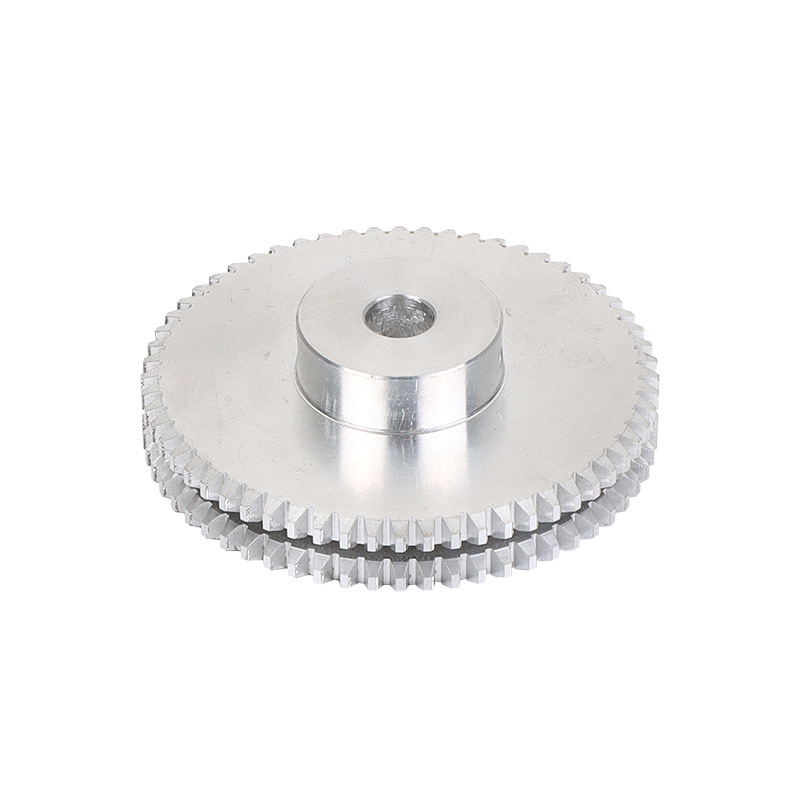
For example, if a plastic gear is designed to have a diameter of 50 mm, a tolerance of ±0.2 mm means the actual diameter can range from 49.8 mm to 50.2 mm and still be acceptable. This small range accounts for natural variability in the plastic injection molding process, material properties, and other manufacturing factors.
Tolerance is crucial because it provides a buffer for inevitable production imperfections. Without it, the slightest deviation from exact dimensions could make a part useless. This leads to higher costs and production delays.
How Is Plastic Part Tolerance Measured?
Several common methods and tools are used to measure plastic part tolerance. Each serves different precision needs and part geometries.
Calipers
- Types: Vernier calipers and digital calipers are frequently used. Vernier calipers allow readings to an accuracy of 0.02 mm. Digital calipers provide direct readouts with accuracy up to 0.01 mm.
- How they work: They physically measure the distance between two opposite sides. To measure the length of a plastic rod, the jaws open around the rod, and the measurement appears on the scale or digital display.
Micrometers
- Accuracy: Up to 0.001 mm.
- How they work: Micrometers use a screw-based mechanism. Rotating the thimble moves the spindle in a controlled way. For measuring the diameter of a small plastic tube, the tube sits between the anvil and spindle. The measurement reads from the sleeve and thimble markings.
Coordinate Measuring Machines (CMMs)
- Accuracy: 0.001–0.005 mm.
- How they work: CMMs use a probe to touch the part surface at multiple points. The probe can be touch-trigger or scanning. As it moves across the surface, it records X, Y, and Z coordinates. Software processes these points to calculate dimensions, shape, and position. CMMs excel at complex parts with tight tolerances—common in aerospace and medical devices.
Optical Measuring Devices
- Types: Optical comparators and laser scanners.
- Optical comparators: Project an enlarged image of the part onto a screen. Dimensions are measured by comparing the image to a calibrated scale.
- Laser scanners: Use laser light to scan the surface. Reflected light is analyzed to create a 3D model. From this model, dimensions are accurately measured using time-of-flight or triangulation methods.
Why Do Plastic Part Tolerance Standards Matter?
Tolerance standards are not just technical specifications. They directly impact product quality, assembly efficiency, and long-term costs.
Ensuring Product Quality
Plastic part tolerance standards are the bedrock of product quality. Consider the automotive industry. A car contains thousands of plastic parts—from interior dashboards to exterior bumpers and engine components.
If a plastic gear in the engine's timing system fails to meet tolerance standards, it can cause misalignment of moving parts. This misalignment can reduce fuel efficiency. In severe cases, it can lead to engine failure, creating significant safety risks.
A study by a leading automotive research institute found that cars with plastic parts deviating from tolerance standards by more than 10% had a 30% higher probability of engine-related issues within the first 50,000 miles.
In medical devices, the stakes are even higher. A plastic syringe with inconsistent wall thickness due to poor tolerance control may not deliver the correct medication dosage. This can have life-threatening consequences, especially in critical care.
Facilitating Assembly
When plastic parts adhere to tolerance standards, assembly becomes smoother. In electronics manufacturing, hundreds of plastic components must fit precisely. A smartphone housing that meets tolerance standards will fit perfectly with circuit boards, batteries, and internal components. This reduces time spent on fitting and adjustments.
Research shows that electronics manufacturers adhering strictly to plastic part tolerance standards reduced assembly time by an average of 20%. The rate of products rejected due to assembly issues dropped from 8% to 3%.
When parts do not meet tolerance requirements, they may not fit together properly. This leads to costly rework—disassembling, adjusting, or replacing parts. In some cases, entire products are scrapped, increasing costs and delaying launches.
Cost-Efficiency in the Long Run
Maintaining strict tolerance standards may seem costly at first. Tighter tolerances require more precise processes, better materials, and accurate measuring equipment. However, in the long term, it is highly cost-effective.
Consider a plastic injection molding company producing consumer goods. By investing in high-precision molds and closely controlling tolerance, the company reduced its scrap rate from 15% to 5%.
With a production volume of 100,000 parts per month and an average cost of $5 per part, this reduction saved $50,000 per month—calculated as $5 × 100,000 × (15% – 5%).
Additionally, products with parts within tolerance experience fewer failures during use. A study of the home appliance industry found that products with well-controlled plastic part tolerances had 40% lower after-sales costs over five years compared to those with looser tolerance control.
How Do Tolerance Standards Vary Across Industries?
Different industries apply tolerance standards based on their unique performance requirements, part sizes, and materials.
Automotive Industry
The automotive industry demands extremely strict tolerances. For engine-related plastic components like intake manifolds, critical dimensions may require tolerances as tight as ±0.1–0.3 mm. Even slight deviations can affect engine performance, fuel efficiency, and emissions.
Common plastics include ABS (Acrylonitrile Butadiene Styrene), PC (Polycarbonate), and their blends. For ABS parts under 100 mm, linear dimension tolerances often follow QC-T-29017-1991 at around ±0.2 mm. When ABS is glass-filled, tolerances can be tightened further because glass fibers reduce shrinkage during molding.
For plastic gears in transmission systems, pitch diameter tolerance may be specified at ±0.05–0.1 mm. This ensures smooth power transmission and prevents gear slippage or excessive noise.
Consumer Electronics Industry
The consumer electronics industry has unique tolerance requirements driven by miniaturization and the need for high-performance devices. Plastic housings for smartphones and tablets must fit precisely with internal components.
For a smartphone plastic housing, thickness tolerance is typically ±0.05–0.1 mm. This ensures a sleek, uniform appearance while providing a proper seal against dust and moisture.
Small components demand even tighter control. A plastic connector in a laptop charger may require a tolerance of ±0.03–0.05 mm to ensure a secure, reliable connection.
Compared to automotive, consumer electronics often requires tighter tolerances for small-scale parts. However, automotive parts like bumpers may have larger allowances for non-critical dimensions—overall length tolerances of ±1–2 mm may be acceptable—with focus on surface finish and fitment with the vehicle body.
The table below summarizes tolerance differences across industries:
| Industry | Typical Tolerance Range | Critical Considerations |
|---|---|---|
| Automotive | ±0.1–0.3 mm (critical) | Engine performance, fuel efficiency, safety |
| Consumer Electronics | ±0.03–0.1 mm | Miniaturization, fitment, aesthetics |
| Medical Devices | ±0.01–0.1 mm | Dosage accuracy, biocompatibility, reliability |
What Factors Affect Plastic Part Tolerance?
Achieving consistent tolerances requires understanding the factors that cause dimensional variation.
Material Shrinkage
Plastic materials shrink as they cool after molding. Different materials have different shrinkage rates. Amorphous plastics like ABS shrink 0.4–0.7%. Semi-crystalline plastics like nylon shrink 1.0–2.5%. Glass-filled materials shrink less because fibers restrict polymer movement.
Processing Parameters
- Injection pressure: Higher pressure reduces shrinkage but can increase internal stress
- Melt temperature: Higher temperatures increase shrinkage
- Cooling time: Insufficient cooling leads to warpage and dimensional instability
- Holding pressure and time: Affect packing of material into the cavity
Tooling Quality
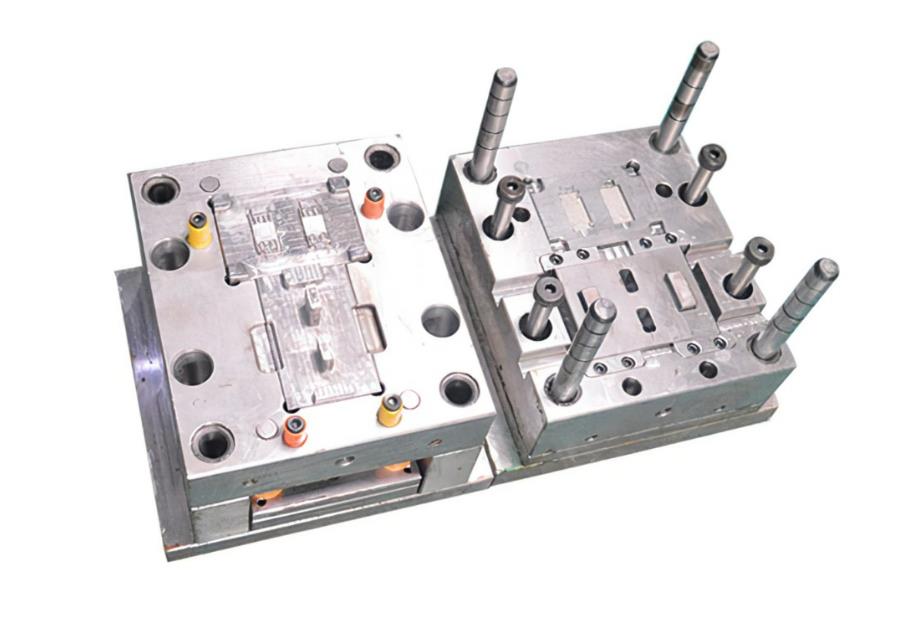
Mold precision directly impacts part tolerance. A mold machined to ±0.01 mm will produce parts with better consistency than one with looser machining tolerances. Mold wear over time also affects dimensional stability.
Part Design
Wall thickness variations cause differential shrinkage. Uniform wall thickness promotes consistent dimensional control. Features like ribs, bosses, and sharp corners create stress concentrations that can lead to warpage.
How Does Yigu Technology Control Plastic Part Tolerances?
As a non-standard plastic and metal products custom supplier, Yigu Technology understands that tolerance control is fundamental to manufacturing success. We approach tolerance management through three pillars: precision equipment, process expertise, and rigorous quality systems.
Advanced Manufacturing Equipment
We invest in high-precision injection molding machines with closed-loop control systems. These machines maintain consistent injection pressure, temperature, and speed throughout each cycle. Our molds are manufactured with ±0.01 mm machining accuracy, ensuring a solid foundation for dimensional stability.
Engineering Expertise
Our engineering team conducts shrinkage analysis for each material before production begins. We calculate expected dimensional changes based on material type, part geometry, and processing conditions. We then adjust mold dimensions to compensate—a practice known as mold shrink compensation.
We also optimize processing parameters through design of experiments (DOE) . This identifies the ideal combination of injection pressure, melt temperature, and cooling time for each part.
Quality Control System
Every batch undergoes dimensional inspection using calibrated tools:
- Digital calipers and micrometers: For linear dimensions
- CMM: For complex geometries and critical features
- Optical comparators: For profile and contour verification
We maintain statistical process control (SPC) charts to monitor dimensional trends. If measurements drift toward tolerance limits, we adjust processes before non-conforming parts are produced. Parts that do not meet specified tolerances are rejected—no exceptions.
Material Selection Support
We help customers select materials that balance performance requirements with achievable tolerances. For applications requiring tight tolerances, we recommend glass-filled materials or low-shrinkage resins where appropriate.
Conclusion
Plastic part tolerance standards are not merely technical details. They are fundamental to product quality, assembly efficiency, and long-term cost control. From automotive engines requiring ±0.1 mm precision to smartphone housings demanding ±0.05 mm consistency, tolerances determine whether parts fit, function, and last. Understanding how tolerances are measured—using tools from calipers to CMMs—and how they vary across industries enables manufacturers to set realistic specifications. Factors like material shrinkage, processing parameters, and tooling quality all influence achievable tolerances. For manufacturers seeking reliable, high-quality plastic components, partnering with suppliers who prioritize tolerance control is essential. When tolerances are managed correctly, products perform better, assemblies move faster, and costs stay under control.
FAQs
What is the typical tolerance range for plastic parts in consumer electronics?
For consumer electronics, typical tolerances vary by component. Small parts like smartphone housings require ±0.05–0.1 mm for thickness dimensions. Plastic connectors may require ±0.03–0.05 mm to ensure reliable connections. These tight ranges reflect the miniaturization trend in electronics, where even slight deviations affect assembly, functionality, or aesthetics.
Are there international standards for plastic part tolerance?
Yes. ISO 20457 is the most widely used international standard for plastic molded parts. It provides guidelines on dimensional, form, and position tolerances. It is applicable across industries and helps ensure that parts from different global suppliers meet common requirements. In North America, ASTM standards also address plastic part tolerances, with specific provisions related to material properties and testing methods.
What is the difference between general tolerance and specific tolerance?
General tolerances apply to dimensions not individually specified on a drawing. They are typically defined by standards like ISO 2768 or the manufacturer's internal guidelines. Specific tolerances are individually assigned to critical dimensions where precise control is essential for function, fit, or appearance. Critical dimensions on a drawing are usually marked with explicit tolerance values.
How does material choice affect achievable tolerances?
Material choice significantly impacts tolerance capability. Amorphous plastics like ABS and polycarbonate offer good dimensional stability with 0.4–0.7% shrinkage. Semi-crystalline plastics like nylon and acetal have higher shrinkage—1.0–2.5%—making tolerances harder to maintain. Glass-filled materials reduce shrinkage by 20–50%, enabling tighter tolerances. Processing conditions and part geometry also play major roles.
Can plastic parts be produced with tolerances as tight as metal parts?
Generally, no. Plastics have higher thermal expansion and shrinkage than metals. They also exhibit more variability due to processing conditions. While advanced molding techniques can achieve tolerances of ±0.01–0.03 mm for very small features, typical plastic part tolerances range from ±0.05 mm to ±0.5 mm, depending on size and material. Metal machining can routinely achieve ±0.005 mm. Designers should set realistic tolerances based on material capabilities.
Contact Yigu Technology for Custom Manufacturing
Need plastic components with precise, reliable tolerances? Yigu Technology specializes in custom plastic injection molding with rigorous dimensional control. Our advanced equipment, engineering expertise, and comprehensive quality systems ensure your parts meet specifications—batch after batch. Contact us today to discuss your project requirements and receive a customized manufacturing proposal.