Introduction
Modern storage is no longer about static shelves and manual retrieval. Today, automated storage and retrieval systems (AS/RS) move trays, bins, and products with precision and speed. At the heart of these systems lies a simple yet ingenious component: the plastic rack pinion. This combination of a linear rack and a rotating pinion converts motor motion into smooth, controlled linear movement. When made from high-performance plastics, these components deliver reliability, efficiency, and design flexibility that metal alternatives often cannot match. This guide explores how plastic rack pinions work, where they excel, and how to select the right one for your storage application.
What Are Plastic Rack Pinions?
The Basic Mechanism
A rack pinion system consists of two parts:
- Rack: A straight bar with teeth cut along its length—essentially a gear "unrolled" into a line
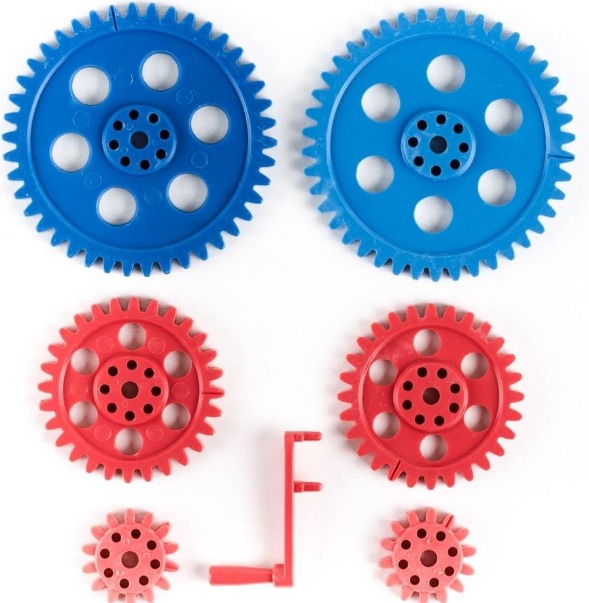
- Pinion: A small circular gear that meshes with the rack
When the pinion rotates, it moves the rack linearly. Reverse the setup, and linear motion rotates the pinion. This simple mechanism converts rotational motion to linear motion—and back again—with high efficiency.
Common Plastic Materials
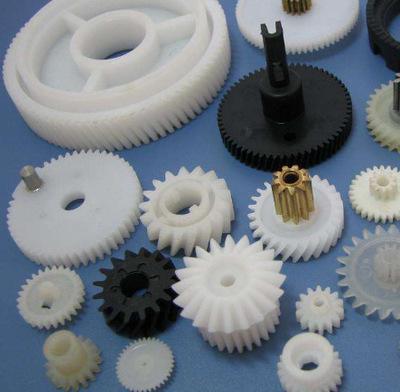
Plastic rack pinions are manufactured from engineering plastics chosen for specific properties:
| Material | Key Properties | Best For |
|---|---|---|
| POM (Acetal) | High stiffness, low friction, excellent wear resistance | Long-term, repeated-cycle applications |
| Nylon (PA) | Good mechanical strength, impact resistance, self-lubricating | Moderate-load, lightweight applications |
| Polycarbonate (PC) | High impact strength, dimensional stability, transparent grades available | Applications requiring visibility or shock resistance |
Why Use Plastic Rack Pinions in Storage?
Efficiency and Energy Savings
Plastic rack pinions have low friction coefficients. This means less energy is required to move storage components. In automated warehouses operating 24/7, these energy savings add up significantly over time.
Lightweight Construction
Plastic components weigh substantially less than metal equivalents. This reduces:
- Overall system weight
- Structural support requirements
- Inertia during acceleration and deceleration
- Motor power demands
In multi-level storage systems, every kilogram saved allows for higher payload capacity or faster movement.
Smooth, Quiet Operation
Plastics naturally dampen vibration and noise. In environments like hospitals, libraries, or office document storage, quiet operation is essential. Plastic rack pinions enable smooth movement without the clatter associated with metal gears.
Corrosion Resistance
Storage environments can be harsh—humidity, cleaning chemicals, or stored materials themselves. Plastic does not rust. This eliminates the need for protective coatings and reduces maintenance requirements.
How Do Plastic Rack Pinions Work?
The Conversion of Motion
The principle is straightforward:
- A motor rotates the pinion.
- Pinion teeth engage with rack teeth.
- As the pinion turns, it "walks" along the rack.
- The rack moves in a straight line.
In a storage system, the rack might attach to a moving tray, a robotic arm, or a vertical lift platform. The motor-driven pinion positions the component precisely where needed.
Key Components and Their Functions
The Rack
| Feature | Function | Consideration |
|---|---|---|
| Tooth Profile | Standard involute shape ensures smooth engagement | Reduces friction, wear, and noise |
| Pitch | Distance between corresponding points on adjacent teeth | Smaller pitch = higher precision movement |
| Length | Determines travel distance | Must accommodate full range of motion |
In pharmaceutical warehouses where small vials require precise retrieval, racks with fine pitch teeth provide the accuracy needed.
The Pinion
| Feature | Function | Consideration |
|---|---|---|
| Modulus | Measure of tooth size | Larger modulus = higher load capacity |
| Number of Teeth | Affects speed and torque ratio | Fewer teeth = faster movement; more teeth = higher torque |
| Diameter | Influences torque transmission | Larger diameter = higher torque, slower rotation |
For moving heavy storage bins, a pinion with larger modulus and more teeth handles the load. For quick retrieval of lightweight items, a smaller pinion with fewer teeth delivers speed.
What Storage Applications Use Plastic Rack Pinions?
Automated Storage and Retrieval Systems (AS/RS)
In large-scale warehouses, AS/RS units use rack pinions for both horizontal and vertical movement. Vertical lift modules (VLMs) employ vertical racks with pinion-driven lifts to access storage trays across multiple levels.
A single VLM can occupy a footprint of just a few square meters while providing access to thousands of items. The smooth, reliable motion of plastic rack pinions enables these systems to operate continuously with minimal maintenance.
Robotic Storage Systems
Mobile robots in warehouses and fulfillment centers use rack pinion mechanisms for:
- Lifting mechanisms to raise and lower payloads
- Extension arms to reach into deep storage racks
- Positioning systems for precise placement of items
Industrial Shelving and Workstations
Even manual storage systems benefit. Adjustable-height workstations and shelving units use rack pinion mechanisms for smooth, tool-free height adjustment. Plastic components eliminate the need for lubrication that could stain products or work surfaces.
Specialized Storage Environments
| Environment | Why Plastic Rack Pinions Excel |
|---|---|
| Chemical storage | Corrosion resistance; polypropylene versions withstand harsh substances |
| Cleanrooms | No lubrication required; no metal particles from wear |
| Cold storage | Some plastics maintain properties at low temperatures better than metals |
| Food processing | FDA-compliant materials available; easy to clean |
How Do You Choose the Right Plastic Rack Pinions?
Material Selection Guide
Select based on operating conditions and performance requirements.
| Material | Load Capacity | Chemical Resistance | Moisture Resistance | Temperature Limit |
|---|---|---|---|---|
| POM | Medium | Good | Excellent | 80–100°C |
| Nylon | Medium-High | Moderate | Poor (absorbs moisture) | 80–120°C |
| Glass-filled Nylon | High | Moderate | Moderate | 120–150°C |
| Polypropylene | Low-Medium | Excellent | Excellent | 80–100°C |
Decision factors:
- Heavy loads: Glass-filled nylon or reinforced POM
- Chemical exposure: Polypropylene or POM
- Humid environments: POM (nylon may swell)
- High temperatures: Glass-filled nylon or specialty materials
Size and Dimension Considerations
Rack length must match the required travel distance. In a 10-level storage system with 30 cm between levels, a rack length of at least 300 cm is needed—plus margin for safety and end-of-travel stops.
Pinion diameter affects torque and speed. Larger diameters handle more torque but move more slowly at a given motor speed. Match pinion size to:
- Payload weight
- Desired movement speed
- Motor torque characteristics
Compatibility with Drive Systems
The rack pinion must work seamlessly with:
- Motor: Speed and torque requirements must align
- Control system: Position feedback must be accurate; encoders and controllers need compatible signal formats
- Structural mounting: Alignment between rack and pinion must be maintained under load
Real-World Example
A fulfillment center upgraded its vertical lift modules from metal to glass-filled nylon rack pinions. The results over 18 months:
- 15% reduction in energy consumption
- Zero lubrication maintenance (compared to quarterly with metal)
- No corrosion issues despite humid warehouse conditions
- Movement noise reduced by approximately 40%
What Are the Limitations?
Load Capacity
Plastic rack pinions cannot match the load capacity of hardened steel. For extreme heavy-duty applications—moving pallets weighing thousands of kilograms—metal remains necessary.
Temperature Sensitivity
Most engineering plastics have continuous use limits below 150°C. In high-temperature environments, material selection becomes critical.
Wear Over Time
While plastics offer good wear resistance, they do wear. In high-cycle applications, periodic inspection and replacement are necessary. However, the self-lubricating nature of materials like POM and nylon often extends service life beyond expectations.
What Does Yigu Technology Offer?
At Yigu Technology, we specialize in custom plastic rack pinions tailored to storage applications. Our approach combines material expertise with precision manufacturing.
We work with clients to define:
- Load requirements and duty cycles
- Environmental conditions (temperature, humidity, chemical exposure)
- Speed and precision needs
- Space constraints
- Production volume
Our injection molding capabilities produce consistent, high-quality components at scale. For prototypes or custom designs, we offer rapid manufacturing options.
A recent project involved a medical facility requiring sterile, maintenance-free rack pinions for automated medication dispensers. Using FDA-compliant POM with optimized tooth profiles, we delivered components that met cleanliness requirements while maintaining positioning accuracy within 0.1 mm over millions of cycles.
Conclusion
Plastic rack pinions are transforming storage systems by enabling efficient, quiet, and reliable linear motion. Their low friction reduces energy costs. Their lightweight construction allows faster movement and simpler structures. Their corrosion resistance eliminates maintenance headaches in challenging environments. By selecting the right material—POM for dimensional stability, nylon for strength, polypropylene for chemical resistance—and sizing components correctly, engineers can design storage systems that perform reliably for years. As automation continues to reshape warehousing and logistics, plastic rack pinions will play an increasingly central role.
FAQ About Plastic Rack Pinions
Are plastic rack pinions suitable for heavy-duty storage applications?
Yes, within limits. High-strength materials like glass-filled nylon, combined with proper sizing (larger rack cross-section and pinion diameter), allow plastic rack pinions to handle medium-heavy loads. For extreme heavy-duty applications, metal remains the standard.
How do I maintain the accuracy of plastic rack pinions over time?
Regular inspection for tooth wear is essential. Use lubricants compatible with the plastic material—many plastics are self-lubricating but may benefit from occasional application of approved lubricants. Periodic calibration of position feedback systems ensures continued accuracy.
Can plastic rack pinions be customized for unique storage needs?
Yes. Suppliers like Yigu Technology specialize in custom rack pinions tailored to specific applications. Customization options include non-standard lengths, specialized tooth profiles, specific materials for environmental conditions, and integrated mounting features.
Contact Yigu Technology for Custom Manufacturing
Need plastic rack pinions designed for your storage system? Yigu Technology provides custom-engineered solutions—from material selection to precision injection molding. We serve warehouses, fulfillment centers, medical facilities, and industrial applications with components built for reliability and longevity. Contact us today to discuss your requirements.