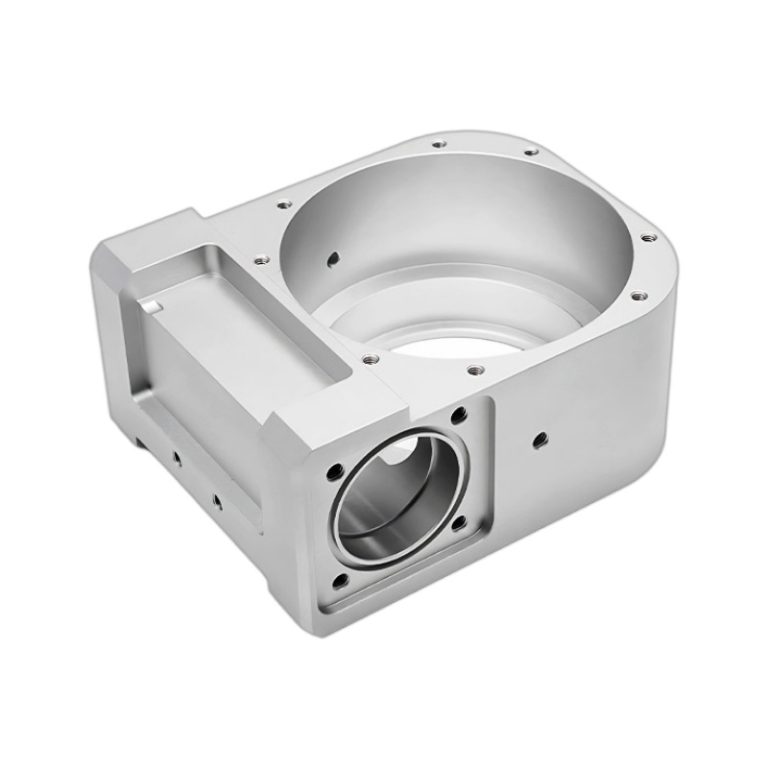
Introduction
A turbine blade spins at 15,000 RPM inside a jet engine. A hip implant must function flawlessly inside a human body for 20 years. A micro-component in a smartphone measures less than a millimeter. What connects these critical parts? All are produced through CNC machining—and the difference between success and failure lies in the skill behind the machine. CNC Mastery is not simply operating equipment. It is a deep understanding of how to transform raw material into precision components with accuracy measured in microns. This guide explores what CNC Mastery means, the skills it requires, and how it enables precision engineering across aerospace, medical, automotive, and electronics industries.
What Defines CNC Mastery?
Beyond Machine Operation
CNC Mastery is the combination of technical knowledge, practical skill, and process understanding that enables consistent production of high-precision components. It encompasses:
- Programming: Writing efficient, error-free code
- Machine operation: Setting up, running, and maintaining equipment
- Process planning: Selecting tools, speeds, and sequences
- Quality control: Verifying results and correcting deviations
A CNC Master is not just someone who can push buttons. They understand why a tool wears, why a part warps, and how to adjust parameters to achieve the desired result.
The CNC System
A CNC machine operates through a closed-loop system:
- Controller: The “brain” that reads the program and sends signals
- Servo-motors: Drive the machine axes with precise movements
- Feedback devices (encoders): Monitor actual position and confirm accuracy
How it works:
A program command—such as G01 X10 Y10 Z5 F100—tells the machine to move to specific coordinates at a defined feed rate. The controller sends signals to the motors. Encoders verify the position hundreds of times per second. Any deviation is corrected instantly.
This level of control eliminates the human error inherent in manual machining.
What Skills Define CNC Mastery?
Programming Proficiency
G-code and M-code are the languages of CNC. A master programmer understands:
| Code Type | Function | Example |
|---|---|---|
| G-code | Motion control | G01 (linear cut), G02 (clockwise arc), G03 (counter-clockwise arc) |
| M-code | Machine functions | M03 (spindle start), M08 (coolant on), M06 (tool change) |
Modern programming: CAD/CAM software generates toolpaths from 3D models. But a master understands the underlying code. They can optimize toolpaths that CAM software generates, reducing cycle time and improving finish.
Machine Operation Skills
Operating a CNC machine safely and efficiently requires:
- Setup: Loading workpieces, installing tools, establishing work coordinates
- Monitoring: Watching for tool wear, chip buildup, or unusual sounds
- Maintenance: Cleaning, lubrication, and basic troubleshooting
Example: Incorrect tool installation causes poor surface finish or tool breakage. A skilled operator verifies tool length offsets and runout before starting production.
Process Planning
The most efficient program is useless if the process is flawed. Process planning involves:
- Tool selection: Matching tool material, geometry, and coating to the workpiece material
- Parameter selection: Determining speeds and feeds that balance material removal with tool life
- Operation sequencing: Ordering operations to minimize setups and optimize chip evacuation
Example: Machining a part with holes, slots, and contours. A skilled planner decides whether to drill holes first (to relieve stress) or mill contours first (to maintain rigidity).
How Does CNC Mastery Achieve Precision?
Unparalleled Accuracy
The precision gap between traditional and CNC machining is substantial:
| Method | Typical Tolerance |
|---|---|
| Manual machining | ±0.5 mm |
| Standard CNC | ±0.01 mm |
| High-precision CNC | ±0.001 mm |
Electronics example: Micro-components for smartphones measure less than 1 mm. A tolerance of ±0.5 mm from manual machining would render them unusable. CNC machining achieves the ±0.01 mm required for proper function.
Aerospace example: Turbine blades require critical dimensions held to ±0.001 inches (0.025 mm) . CNC Mastery achieves this consistently, ensuring blade performance and engine efficiency.
Consistency Across Production
Precision is not just about achieving a tolerance once—it is about achieving it thousands of times.
Automotive case: A manufacturer producing 10,000 engine pistons needs every piston identical. Traditional methods struggle with operator variability. CNC-mastered processes hold size variation within ±0.005 mm across the entire production run.
Result: Engines run smoothly with reduced vibration, improved fuel efficiency, and longer service life.
Better-Fitting Assemblies
In aerospace, components are assembled into complex structures. A lack of consistency creates dangerous situations.
Example: Assembling wing sections requires gap tolerances below 0.02 mm. CNC-produced components fit together perfectly, ensuring structural integrity during flight.
What Real-World Applications Demonstrate CNC Mastery?
Aerospace: Turbine Blades
Turbine blades operate at extreme conditions:
- Temperatures up to 1,700°C (advanced engines)
- Rotational speeds up to 15,000 RPM
- Centrifugal forces exceeding 10,000 G
CNC Mastery enables:
- Complex aerodynamic shapes
- Cooling holes with precise angles and depths
- Tolerances of ±0.001 inches on critical dimensions
Performance impact: A study comparing traditional and CNC-manufactured blades found that performance variation among CNC-produced blades was reduced by 60% . This means:
- More stable engine operation
- Fewer vibrations
- Increased reliability
- Lower maintenance costs for airlines
Medical: Prosthetics and Implants
Prosthetics:
Using 3D scanning, the shape of a patient’s residual limb is captured. CAD creates a custom model. CNC machines produce a prosthetic that fits with ±0.5 mm precision in key areas.
Patient outcome: Amputees with CNC-made prosthetics reported a 30% increase in daily activity ability compared to those with conventionally made prosthetics.
Hip implants:
Made from titanium alloy, hip implants require complex surface geometries. CNC machining achieves ±0.05 mm precision, ensuring proper fit with bone structure.
Failure rates: CNC-made hip implants show 2–3% failure within five years, compared to 5–7% for implants made with less precise methods.
Surgical instruments:
Microsurgical forceps require tips shaped to sub-millimeter precision. CNC machining produces instruments that allow surgeons to perform complex procedures with greater accuracy, improving patient outcomes.
Automotive: Engine Components
Pistons, cylinder heads, and transmission components demand consistent precision across high volumes. CNC Mastery delivers:
- ±0.005 mm consistency across production runs
- Improved fuel efficiency (up to 10–15% in some engines)
- Reduced warranty claims
- Longer engine life
Electronics: Micro-Components
Smartphones, wearables, and medical electronics contain components measured in millimeters. CNC machining produces:
- Connectors with precise contact geometry
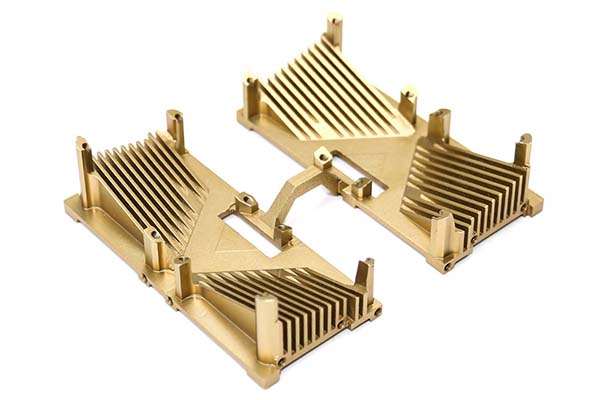
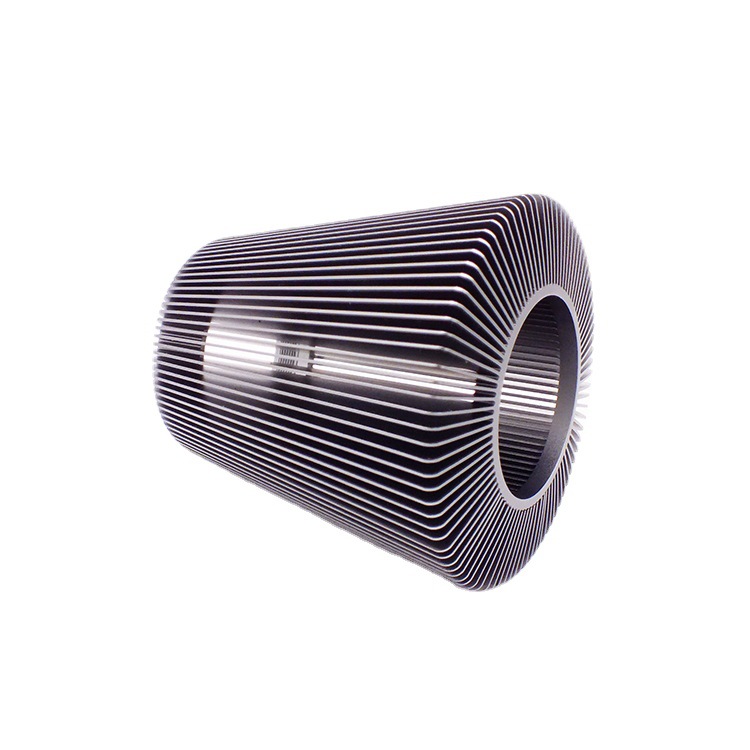
- Heat sinks with optimized fin structures
- Enclosures with tight sealing surfaces
What Does CNC Mastery Require from Manufacturers?
Investment in Equipment
High-precision CNC machines are essential. Key specifications:
- Positioning accuracy: ±0.001 mm or better
- Spindle speeds appropriate for materials
- Rigid construction to minimize vibration
- Thermal compensation to maintain accuracy during long runs
Investment in Training
Equipment alone does not create CNC Mastery. Skilled programmers and operators are essential. Training should cover:
- G-code and M-code fundamentals
- CAM software operation
- Tool selection and parameter optimization
- Machine setup and maintenance
- Quality control and inspection
Investment in Process
CNC Mastery is not a one-time achievement. It requires:
- Documented processes
- Regular calibration
- Continuous improvement
- Data collection and analysis
How Is CNC Mastery Evolving?
Automation and Lights-Out Manufacturing
Advanced CNC facilities run unattended through multiple shifts. Robotic loading systems feed raw material. In-process monitoring detects issues. The machine stops only when material runs out or a problem occurs.
Integration with Digital Manufacturing
CNC machines now connect to factory networks. Data on cycle times, tool wear, and quality metrics is collected and analyzed. Predictive maintenance schedules prevent unplanned downtime.
Additive and Hybrid Manufacturing
Some machines now combine CNC machining with additive processes. Parts are built up through 3D printing, then finished with precision machining—all in one setup.
A Real-World CNC Mastery Success
A medical device manufacturer needed 5,000 titanium spinal implants with:
- ±0.01 mm tolerances on mating surfaces
- Complex curved geometries for bone integration
- Surface finish Ra 0.8 μm for biocompatibility
Initial challenges:
- Inconsistent tolerances across batches
- Tool life averaging 30 parts per edge
- 15% scrap rate
After applying CNC Mastery principles:
- Program optimization reduced cycle time by 25%
- Toolpath refinement eliminated dwell marks
- Parameter adjustments extended tool life to 80 parts per edge
- In-process probing verified dimensions in real time
Results:
- Scrap rate dropped to 3%
- Tolerances held consistently
- Customer approved full production
- The manufacturer increased capacity by 40% without adding machines
Conclusion
CNC Mastery is the bridge between design intent and manufactured reality. It combines programming skill, machine operation expertise, and process planning knowledge to produce components with precision measured in microns. In aerospace, it enables turbine blades that withstand extreme conditions. In medical, it creates implants that improve patient outcomes. In automotive, it delivers consistent quality across millions of parts. As manufacturing demands continue to tighten—smaller features, tighter tolerances, higher volumes—CNC Mastery becomes not just an advantage, but a necessity. The companies that invest in equipment, training, and process will lead. Those that do not will fall behind.
FAQs
What is the difference between CNC machining and CNC Mastery?
CNC machining is the process of using computer-controlled machines to cut material. CNC Mastery is the deep understanding that enables optimal results—choosing the right tools, parameters, and sequences; programming efficiently; troubleshooting issues; and maintaining quality across production runs. Mastery transforms a machine from a tool into a competitive advantage.
Can CNC machines handle a wide variety of materials?
Yes. CNC machines handle metals (aluminum, steel, stainless, titanium, Inconel), plastics (acrylic, polycarbonate, PEEK, UHMWPE, nylon), composites (carbon fiber, fiberglass), and even wood. The key is matching tools, speeds, and feeds to the material. CNC Mastery includes understanding how each material behaves under cutting forces and adjusting parameters accordingly.
What tolerances can CNC machining achieve?
Standard CNC machining achieves ±0.01 mm (0.0004 inches). High-precision CNC equipment, combined with skilled programming and process control, achieves ±0.001 mm (0.00004 inches) or better. The achievable tolerance depends on part geometry, material, machine capability, and process stability.
What skills are required for CNC Mastery?
CNC Mastery requires programming proficiency (G-code, CAM software), machine operation skills (setup, monitoring, maintenance), process planning (tool selection, parameter optimization, operation sequencing), and quality control (inspection methods, statistical process control). It also requires problem-solving ability—diagnosing issues and making adjustments to maintain quality.
How is CNC Mastery impacting the medical device industry?
CNC Mastery enables the production of custom prosthetics that fit patients with ±0.5 mm precision, improving comfort and function. It produces hip and knee implants with complex surface geometries that integrate with bone, reducing failure rates from 5–7% to 2–3%. It creates surgical instruments with sub-millimeter precision, enabling more accurate procedures and better patient outcomes.
Contact Yigu Technology for Custom Manufacturing
At Yigu Technology, CNC Mastery is not just a goal—it is our practice. Our programmers, machinists, and engineers combine deep technical knowledge with hands-on experience to produce precision components across aerospace, medical, automotive, and industrial sectors. We invest in high-precision CNC equipment, continuous training, and robust quality systems. Whether you need complex geometries, tight tolerances, or high-volume consistency, we deliver results that meet the most demanding specifications. Contact us to discuss your precision engineering project.