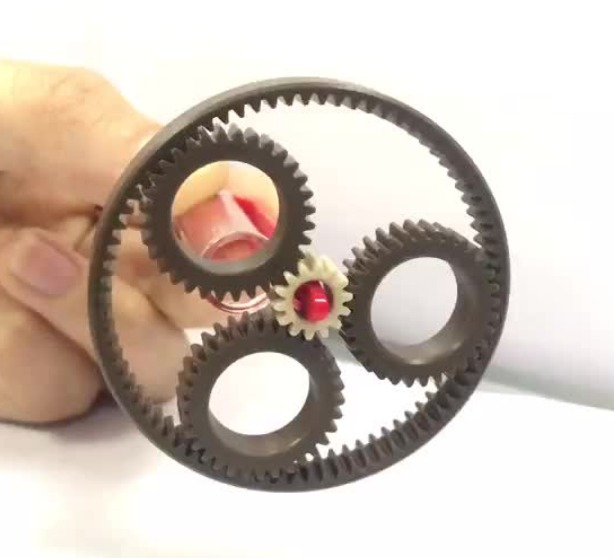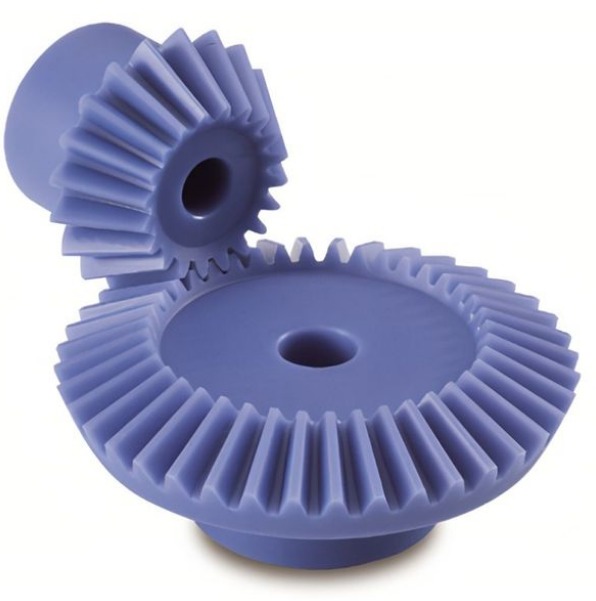
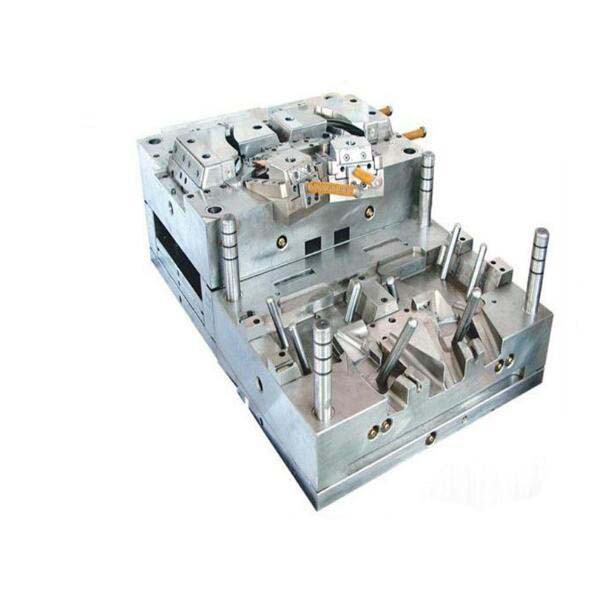
Gear manufacturing is not just about cutting teeth on metal. It is a精密 discipline that combines material science, precision machining, heat treatment, and continuous innovation. The manufacturers who excel—the mavericks—do not just follow standards. They push boundaries in material selection, process optimization, and design.
This guide takes you inside that world. You will learn how gears are made, what separates exceptional manufacturers from average ones, and how advanced technologies are reshaping the industry. Whether you are sourcing gears or simply curious about the process, this provides a clear view of what happens behind the scenes.
How Does Raw Material Selection Shape Gear Quality?
Material Types and Their Applications
The material chosen for a gear determines its limits. Different applications demand different properties.
| Material | Key Properties | Typical Applications |
|---|---|---|
| Steel (e.g., 4140, 8620) | High strength, wear resistance, heat-treatable | Automotive transmissions, industrial machinery, heavy equipment |
| Aluminum | Lightweight, corrosion-resistant, lower strength | Aerospace components, weight-sensitive applications |
| Plastics (Nylon, Acetal) | Self-lubricating, quiet operation, corrosion-proof | Small appliances, office equipment, medical devices |
| Powdered Metals | Cost-effective for high volume, good density | Automotive synchronizer hubs, pump gears |
| Exotic Alloys (Inconel, Titanium) | Extreme temperature resistance, corrosion resistance | Aerospace, nuclear, high-temperature industrial |
Steel remains the workhorse. Alloy steels like 4140 can be heat-treated to achieve surface hardness up to 60 HRC while maintaining a tough core. This combination handles high loads and impact.
Aluminum weighs about one-third as much as steel. In aircraft actuators and landing gear systems, every kilogram saved reduces fuel consumption. The trade-off is lower load capacity.
Plastics have transformed small gear applications. Nylon gears in printers and electric toothbrushes run quietly without lubrication. Acetal (POM) offers dimensional stability and low friction.
Why Material Quality Matters
Impurities or inconsistent composition cause premature failure. A steel gear with improper carbon content may have soft spots. Those soft spots wear faster. In one case, a gear manufacturer using off-spec steel saw failure rates climb from 0.5% to 8% within six months. The issue traced to a raw material supplier change that went unnoticed.
High-quality materials also ensure dimensional stability. A gear that expands or contracts with temperature changes will mesh poorly. Poor meshing creates vibration, noise, and accelerated wear.
What Machining Operations Create Gear Teeth?
Hobbing: Speed and Efficiency
Hobbing is the most common method for producing cylindrical gears. A hob—a cutting tool with helical teeth—rotates as it moves axially across the gear blank. The continuous cutting action creates gear teeth quickly.
Advantages:
- High production rate (50–200 gears per hour depending on size)
- Consistent tooth profiles
- Suitable for spur gears, helical gears, and worm gears
Limitations:
- Less effective for internal gears
- Requires dedicated tooling for each gear specification
In automotive transmission production, hobbing machines run 24 hours a day, producing thousands of gears daily. A single hob can cut 10,000–20,000 gears before needing replacement.
Milling: Precision for Complex Profiles
Gear milling uses a rotating multi-tooth cutter to form gear teeth. With CNC milling, complex profiles become achievable that hobbing cannot produce.
Advantages:
- Excellent for small batches and prototypes
- Can create custom tooth profiles
- Good for large gears (over 500 mm diameter)
Limitations:
- Slower than hobbing (5–20 gears per hour)
- Surface finish may require secondary operations
A manufacturer producing gears for custom racing transmissions uses CNC milling. Each gear set is unique—optimized for specific track conditions. Milling provides the flexibility they need.
Grinding: Achieving the Highest Precision
Grinding removes small amounts of material to achieve final dimensions and surface finish. It is the difference between a good gear and a great gear.
| Grinding Type | Application | Typical Tolerance |
|---|---|---|
| Form grinding | Complex profiles, high precision | ±0.002 mm |
| Profile grinding | Gear teeth flanks | ±0.003 mm |
| Continuous generation grinding | High-volume precision | ±0.005 mm |
In high-speed turbine applications, gear tolerances measured in microns determine success. A racing transmission uses ground gears to reduce friction. The smoother surface means less heat, longer life, and more power delivered to the wheels.
How Does Heat Treatment Transform Gear Performance?
Purpose of Heat Treatment
Heat treatment alters the internal structure of metal gears. The result is increased hardness, strength, and wear resistance. A properly heat-treated gear can last three to five times longer than an untreated gear under the same load.
The process changes the crystalline structure of the metal. Heating to specific temperatures transforms the microstructure. Controlled cooling locks in the desired properties.
Common Heat Treatment Methods
| Method | Process | Result | Best For |
|---|---|---|---|
| Quenching | Heat then rapid cooling (oil or water) | High hardness, increased brittleness | General-purpose gears needing surface hardness |
| Tempering | Reheat quenched gear to lower temperature | Reduced brittleness, improved toughness | Following quenching to balance hardness and toughness |
| Carburizing | Heat in carbon-rich environment; carbon diffuses into surface | Hardened case (0.5–2.0 mm deep), tough core | High-contact-stress applications like transmission gears |
| Induction hardening | Localized heating with electromagnetic field | Selective hardening of specific areas | Large gears, gears with non-hardened cores |
| Nitriding | Heat in nitrogen-rich atmosphere; forms hard surface layer | Very hard surface (up to 70 HRC), minimal distortion | Precision gears where dimensional stability is critical |
A wind turbine gearbox uses carburized gears. The hard surface withstands the constant contact stress of megawatt power transmission. The tough core absorbs shock loads from wind gusts. This combination delivers 20+ years of service life.
Case Study: Heat Treatment Failure
An industrial gearbox manufacturer experienced premature gear failures after three months of operation. Analysis showed inconsistent case depth on carburized gears—ranging from 0.3 mm to 1.2 mm on the same gear. The manufacturer had outsourced heat treatment to a low-cost provider without process controls. Switching to a certified heat treater with documented process monitoring eliminated the issue.
What Advanced Technologies Are Reshaping Gear Manufacturing?
CNC Machining: Precision and Repeatability
Computer Numerical Control (CNC) has revolutionized gear manufacturing. CNC machines execute programmed instructions with micron-level precision.
Impact on quality:
- Tolerances consistently within 0.005–0.010 mm
- Defect rates dropped from 5% to 1% in plants after CNC adoption
- Complex geometries produced repeatably
Impact on efficiency:
- Production time reduced by 30% in documented case studies
- Continuous operation with minimal intervention
- Quick changeover between gear types
A gear manufacturer we work with reduced their lead time from six weeks to ten days after upgrading to CNC hobbing and grinding equipment. The investment paid for itself in 18 months through reduced scrap and faster delivery.
Additive Manufacturing (3D Printing)
3D printing is emerging as a complementary technology. It offers capabilities traditional machining cannot match:
- Complex internal features: Cooling channels within gear bodies
- Lightweight structures: Lattice patterns reducing weight by 30–50%
- Rapid prototyping: Design iterations in days instead of weeks
- Custom geometries: One-off gears without tooling costs
Current limitations:
- Material properties less consistent than wrought or cast materials
- Production speed too slow for high volumes
- Cost per part higher than traditional methods
One aerospace company uses 3D-printed titanium gears for UAV prototypes. The gears include internal cooling channels that keep operating temperatures 15°C lower than conventional designs. For production volumes, they still use traditional manufacturing.
Automation and Industry 4.0
Modern gear manufacturing integrates sensors, data collection, and artificial intelligence:
- In-process monitoring: Sensors detect vibration, temperature, and tool wear in real time
- Predictive maintenance: Algorithms predict tool failure before it occurs
- Quality prediction: Process data predicts final gear quality without 100% inspection
A transmission plant reduced unplanned downtime by 40% after implementing predictive maintenance on their gear hobbing machines. They now replace cutters based on wear data rather than fixed schedules—extending tool life by 25%.
How Are Gear Designs Evolving?
Innovative Tooth Profiles
The involute tooth profile has dominated gear design for over a century. But new profiles offer advantages for specific applications.
| Profile | Advantage | Application |
|---|---|---|
| Involute | Standardized, well-understood, good all-around | General-purpose gears |
| Cycloidal | Reduced noise, smoother engagement | Precision instruments, robotics |
| Modified involute | Higher efficiency (up to 5% improvement) | High-speed transmissions |
| Asymmetric teeth | Higher load capacity in one direction | Helicopter transmissions, wind turbines |
A robotics company switched to cycloidal gears for their joint actuators. Noise levels dropped by 10 dB—a 50% perceived reduction—without changing materials or lubrication.
Application-Specific Optimization
Maverick manufacturers design gears for specific operating conditions, not generic requirements.
High-speed trains: Gears must handle speeds over 300 km/h while maintaining alignment. Engineers use advanced alloy steels with optimized tooth profiles to manage thermal expansion at high speeds.
Wind turbines: Gears face variable loads and remote locations. Designs incorporate robust case hardening, enhanced fatigue resistance, and condition monitoring interfaces. A 5 MW wind turbine gearbox weighs over 10 tons but must operate reliably for 20 years with minimal maintenance.
Medical devices: Gears in surgical tools must be sterilizable, biocompatible, and extremely precise. Plastic gears often serve here, but advanced applications use coated stainless steel or titanium.
Design for Manufacturability
The best gear designs consider manufacturing constraints. Features that look good on paper but cannot be manufactured cost-effectively create problems.
Design principles:
- Standard tooth profiles reduce tooling costs
- Avoid undercuts that require special cutters
- Specify realistic tolerances—tighter than needed drives cost
- Consider heat treatment distortion in dimensions
A manufacturer saved $50,000 annually by relaxing a non-critical tolerance from ±0.003 mm to ±0.010 mm. The looser tolerance was still adequate for the application but reduced grinding time by 40%.
What Sets a Maverick Manufacturer Apart?
Process Integration
Exceptional manufacturers control the entire process chain—from material selection to final inspection. They do not outsource critical steps like heat treatment to low-cost providers.
Integrated capabilities:
- In-house heat treatment with process controls
- Complete material testing
- Coordinate measuring machine (CMM) inspection
- Metallurgical laboratory for failure analysis
Engineering Partnership
Mavericks do not just take orders. They engage early in the design process, offering:
- Design for manufacturability reviews
- Material recommendations based on application
- Prototyping support before production tooling
- Failure analysis when problems occur
One client brought us a gear design with high failure rates. Our engineering review identified stress concentrations from sharp root radii. A minor design change—adding a larger fillet—increased gear life by 300% without changing materials or processes.
Continuous Improvement
The best manufacturers track key metrics and drive improvement:
- First-pass yield (percentage of gears passing inspection first time)
- Overall equipment effectiveness (OEE)
- Customer defect rate (parts per million)
- Lead time from order to delivery
A maverick gear manufacturer we know reduced their customer defect rate from 2,500 ppm to 180 ppm over three years through focused continuous improvement. They now command premium prices because customers trust their quality.
Conclusion
Gear manufacturing combines art and science. Material selection determines fundamental capability. Machining operations—hobbing, milling, grinding—shape the gear teeth with increasing precision. Heat treatment transforms the material to achieve required hardness and strength. Advanced technologies like CNC, additive manufacturing, and automation push the boundaries of what is possible.
The manufacturers who excel—the mavericks—integrate these elements into seamless processes. They invest in equipment and people. They partner with customers early in design. They measure and improve continuously. Choosing such a manufacturer means getting gears that perform reliably, last longer, and deliver value over the long term.
Frequently Asked Questions
What are the most common materials used in gear manufacturing?
Steel is most common for heavy-duty applications due to its strength and wear resistance. Alloy steels like 4140 and 8620 are widely used. Aluminum serves weight-sensitive applications. Plastics like nylon and acetal are used for low-load, quiet-operation applications. Exotic alloys serve aerospace and extreme-temperature applications.
How does heat treatment affect gear performance?
Heat treatment increases hardness, strength, and wear resistance. Properly treated gears withstand higher loads and last significantly longer. Methods include quenching (increases hardness), tempering (reduces brittleness), carburizing (hard case, tough core), and nitriding (very hard surface, minimal distortion). Each method is selected based on application requirements.
What is the difference between hobbing and milling gears?
Hobbing is a continuous cutting process ideal for high-volume production of cylindrical gears. It is fast and consistent. Milling uses a rotating cutter to form teeth, offering greater flexibility for complex profiles and small batches but at slower speeds. Many manufacturers use both—hobbing for volume, milling for specialty gears.
How precise can gear manufacturing be?
High-precision gear manufacturing achieves tolerances of ±0.002–0.005 mm. Grinding operations achieve the highest precision. CNC machining maintains consistent tolerances within microns. The required precision depends on the application—transmission gears typically need ±0.010–0.020 mm, while precision instruments may require ±0.002 mm.
Why are industry standards important in gear manufacturing?
Standards like AGMA (American Gear Manufacturers Association) and ISO ensure consistent quality, interchangeability, and safety. They define tooth profiles, tolerance classes, and testing methods. Using standardized gears allows components from different manufacturers to work together. In critical applications like aerospace and automotive, standards ensure reliability and safety.
Contact Yigu Technology for Custom Manufacturing
Need gears engineered for your specific application? At Yigu Technology, we combine precision manufacturing with engineering expertise. From material selection to heat treatment and final inspection, we control the entire process to deliver gears that perform.
Whether you need high-volume production or custom prototypes, we have the equipment and experience to meet your requirements. Contact us today to discuss your gear manufacturing needs.