Introduction
You have a product design. It needs to be lightweight yet strong. It must conduct heat efficiently or resist corrosion. Traditional prototyping materials may not meet these demands. Aluminum prototypes offer a solution. Aluminum combines a unique set of properties—low density, high strength-to-weight ratio, excellent thermal conductivity, and corrosion resistance—that make it ideal for testing and validating products across industries. This guide explains what aluminum prototypes are, how they are made, and how they solve common product development challenges.
What Is an Aluminum Prototype?
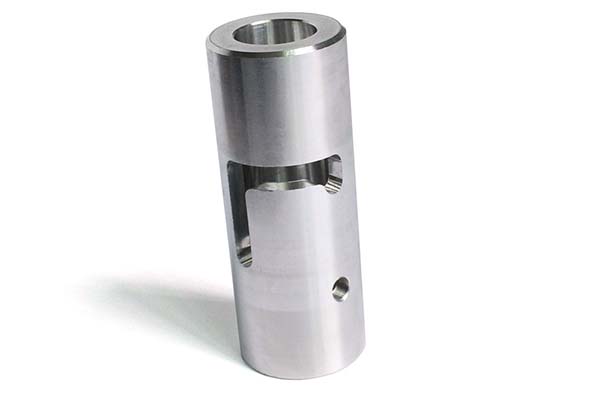
An aluminum prototype is a preliminary model or sample made primarily from aluminum or its alloys. It serves as a tangible representation of a design concept, allowing designers, engineers, and manufacturers to test, evaluate, and refine ideas before full-scale production.
In the product development process, aluminum prototyping follows the design phase. Once a design is developed in a 3D CAD environment, the next step is to bring this virtual concept to life as a physical prototype. This prototype is used for:
- Functional testing: Verify mechanical performance under load
- Form and fit verification: Ensure parts assemble correctly
- Aesthetic evaluation: Assess appearance and surface finish
How Are Aluminum Prototypes Made?
Several methods are available, each with advantages and trade-offs.
Traditional Manufacturing Methods
Casting
Casting involves pouring molten aluminum into a mold, allowing it to solidify, and then removing the mold.
Process flow:
- Pattern making: A replica of the final product is created from wood, plastic, or metal
- Mold preparation: The pattern is used to create a sand or metal mold
- Pouring: Molten aluminum (melting point ~660°C for pure aluminum) is poured into the mold cavity
- Solidification: Controlled cooling minimizes defects like shrinkage cavities
- Finishing: Trimming, sanding, and machining achieve final dimensions
Best for: Complex geometries, medium-to-high volume production. Cost-effective when mold costs are spread over multiple parts.
Machining
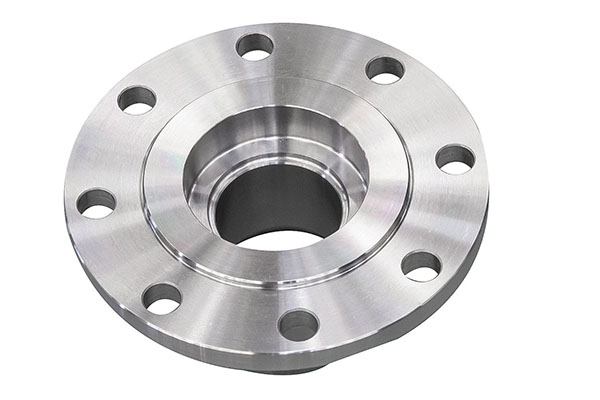
Machining removes material from a solid aluminum block using computer-controlled tools.
Process flow:
- Material selection: Bar, plate, or billet of aluminum
- CNC machining: CAD model converted to G-code; cutting tools remove material along multiple axes
- Finishing: Polishing, deburring, heat treatment as needed
Best for: High precision, small-batch or one-off prototypes. Achieves tight tolerances required for aerospace and medical applications.
| Method | Complexity | Precision | Cost (Small Batch) | Cost (Large Batch) |
|---|---|---|---|---|
| Casting | High | Moderate | High (mold cost) | Low (spread over volume) |
| Machining | Moderate (tool access) | High | Low–Moderate | High (material waste) |
Modern Additive Manufacturing
3D printing (additive manufacturing) builds aluminum prototypes layer by layer from metal powder.
Process flow:
- Model preparation: CAD model imported into 3D printing software
- Powder-bed fusion: A laser or electron beam selectively melts aluminum powder layer by layer
- Post-processing: Support removal, heat treatment, surface finishing
Advantages:
- Design freedom: Creates internal lattice structures for weight reduction while maintaining strength
- Rapid prototyping: One-off prototypes ready in hours or days—no molds or tooling
- Material efficiency: Material added only where needed; minimal waste
Disadvantages:
- Cost per unit: High for large-scale production compared to casting
- Mechanical properties: May differ from traditionally manufactured parts (porosity, grain structure)—though improving with technology
How Do Aluminum Prototypes Solve Industry Challenges?
Aluminum’s properties make it ideal for prototyping across industries.
Automotive Industry
Aluminum prototypes help reduce vehicle weight, improving fuel efficiency and performance.
Engine components:
- Engine blocks: Replacing cast iron with aluminum reduces weight by 30–40%. A typical V6 cast-iron block weighing 180 kg becomes 100–120 kg in aluminum. Every 10% weight reduction decreases fuel consumption by 6–8%.
- Pistons: Lower density enables higher engine speeds and reduced reciprocating mass, improving efficiency.
Body structures:
- Body panels: Aluminum hoods are up to 50% lighter than steel equivalents, with better corrosion resistance.
- Chassis components: Suspension arms and control arms benefit from aluminum’s strength-to-weight ratio, improving handling and ride comfort.
Aerospace Industry
Aluminum has been essential in aerospace for decades.
Aircraft wings:
- Alloys like 2024 (high strength-to-weight, fatigue resistance) and 7075 (high strength) are used in wing skins and spars. A 10% reduction in wing weight can increase range by 5–7%.
Spacecraft structures:
- Satellites: Aluminum structures reduce launch costs and withstand space environment—radiation, extreme temperatures.
- Fuel tanks: Lightweight aluminum tanks maximize propellant capacity while withstanding high pressure.
Electronics Industry
Aluminum prototypes excel where heat dissipation and structural integrity matter.
Heat sinks:
- Aluminum’s thermal conductivity (205 W/m·K) efficiently transfers heat from CPUs, GPUs, and power transistors. A well-designed heat sink can reduce CPU temperature by 10–20°C, ensuring stable operation.
Electronic enclosures:
- Lightweight, corrosion-resistant, and provides electromagnetic shielding. High-end smartphones and laptops use aluminum enclosures for aesthetics and protection.
What Factors Should You Consider When Choosing an Aluminum Prototype?
Selecting the right method and material requires balancing several factors.
Manufacturing Method
| If your priority is… | Choose… |
|---|---|
| Complex geometries, medium-high volume | Casting |
| High precision, small batch | CNC machining |
| Design freedom, rapid iteration | 3D printing (additive) |
| Production-grade material properties | CNC machining or casting |
Material Selection
Aluminum alloys offer different properties:
| Alloy | Properties | Applications |
|---|---|---|
| 6061 | Good strength, machinability, corrosion resistance | General structural, automotive, consumer products |
| 7075 | Very high strength, good fatigue resistance | Aerospace, high-stress components |
| 2024 | High strength-to-weight, fatigue resistance | Aircraft structures |
| A356 | Castability, good mechanical properties | Complex cast parts, automotive |
Cost and Timeline
- 3D printing: Fast (hours to days), low setup cost, higher per-unit cost
- CNC machining: Moderate (days to a week), moderate setup, precise
- Casting: Slower (1–3 weeks for molds), high setup cost, low per-unit at volume
How Does Yigu Technology Approach Aluminum Prototyping?
As a non-standard plastic and metal products custom supplier, Yigu Technology offers comprehensive aluminum prototyping services.
We Offer Multiple Methods
- CNC machining: Precision aluminum parts with tight tolerances
- 3D printing (SLM): Complex geometries, internal lattice structures
- Casting: For medium-volume functional prototypes
We Provide Material Expertise
Our engineers help you select the right aluminum alloy based on strength requirements, thermal needs, and corrosion resistance.
We Support Iteration
We work with you through multiple design iterations—from concept to functional testing to production-ready parts.
Conclusion
Aluminum prototypes solve critical product development challenges by combining lightweight properties with strength, thermal conductivity, and corrosion resistance. Whether you are developing automotive components to reduce fuel consumption, aerospace structures to increase range, or electronic enclosures to manage heat, aluminum offers proven solutions.
Choosing the right manufacturing method—casting for complex volumes, machining for precision, or 3D printing for design freedom—depends on your priorities. With the right partner, aluminum prototypes accelerate development, reduce risk, and bring better products to market.
Frequently Asked Questions
What are the main advantages of aluminum prototypes over other materials?
Aluminum offers a unique combination of lightweight (one-third the density of steel), high strength-to-weight ratio, excellent thermal conductivity (205 W/m·K), and corrosion resistance. It is also machinable, castable, and available in a range of alloys for specific applications.
Which manufacturing method is best for aluminum prototypes?
It depends on your priorities. CNC machining offers the highest precision and is ideal for small batches and functional testing. 3D printing (SLM) provides design freedom for complex geometries and internal structures. Casting is cost-effective for medium-to-high volumes with complex shapes. Each method has trade-offs in cost, lead time, and material properties.
What aluminum alloys are commonly used for prototyping?
6061: General-purpose, good machinability and corrosion resistance. 7075: Very high strength, used in aerospace and high-stress applications. 2024: High strength-to-weight, fatigue resistance for aircraft structures. A356: Casting alloy with good mechanical properties. Choose based on strength requirements, weldability, and application.
How does 3D-printed aluminum compare to machined aluminum?
3D-printed aluminum offers design freedom for complex geometries—internal lattice structures, conformal cooling channels—that are impossible with machining. However, machined aluminum typically achieves tighter tolerances and may have more consistent mechanical properties. Post-processing (heat treatment, HIP) improves 3D-printed properties. Choose based on geometry complexity and performance requirements.
Can aluminum prototypes be used for functional testing?
Yes. Aluminum prototypes from CNC machining or casting have mechanical properties very close to production parts and are suitable for functional testing under load, temperature, and fatigue. 3D-printed aluminum with proper post-processing also achieves production-grade properties for many applications.
Contact Yigu Technology for Custom Manufacturing
Ready to solve your product development challenges with aluminum prototypes? Yigu Technology offers CNC machining, 3D printing (SLM), and casting services for aluminum prototypes. Our engineers help you select the right alloy and manufacturing method for your application. Contact us today to discuss your project.