In modern manufacturing, processing capacity is the key carrier of the core competitiveness of enterprises, but most enterprises only stay in "what can be processed", but ignore core issues such as "how far can it be processed" and "how to stabilize output". This article will comprehensively disassemble the core elements of processing capabilities from basic definition to practical application to help you truly master this core manufacturing code.
1. The core of processing capabilities: definition and core indicators
The essence of processing capacity is the comprehensive ability of manufacturing enterprises to stably output workpieces that meet the requirements under the established equipment, technology and process, and its core revolves around the two dimensions of "accuracy" and "range".
1.1 Precision is king: the key to determining the quality of processing
Veteran practitioners know that machining accuracy, surface finish, and tolerance control are the core indicators of machining capabilities. For example, in precision component machining, the tolerance requirements for automotive engine pistons are typically within ±0.005mm, while critical components in the aerospace sector even need to be controlled at the micron level.
Common core machining methods directly affect accuracy performance:
- CNC machining ability: automatic and precise machining through program control is the basis of modern processing, and the repeated positioning accuracy of mainstream equipment can reach ±0.002mm;
- Precision machining capabilities: For high-precision scenarios, such as cutting edge processing of medical minimally invasive devices, the surface finish needs to reach Ra0.02μm.
- Five-axis machining capabilities: Solve complex surface machining problems, such as impellers and mold cavities, with more than 30% higher efficiency and 50% higher accuracy compared to traditional three-axis machining.
Real case: An aviation parts company used a five-axis linkage machining center to process titanium alloy blades, and improved the blade profile accuracy from ±0.01mm to ±0.003mm by optimizing tool paths and tolerance compensation, successfully meeting the qualification requirements of Boeing suppliers.
1.2 Range boundary: Hard limit of machining capacity
The "ceiling" of the machine is determined by the machining size range, the maximum workpiece size and the weight capacity. The device configuration of different enterprises directly delineates the service boundary:
| Device type | Typical maximum workpiece size | Weight capacity | Applicable scenarios |
| Small machining centers | 500×400×300mm | ≤50kg | Precision small parts, electronic components |
| Medium gantry milling machine | 3000×1500×800mm | ≤500kg | Auto parts, mold mold base |
| Large floor boring machine | 10000×5000×3000mm | ≤5000kg | Construction machinery base, machine tool bed |
Pro tip: When choosing a partner, you need to combine the actual size and weight of your own workpiece to avoid secondary processing or accuracy loss due to equipment limitations.
2. The cornerstone of processing capacity: equipment and technical support
Without excellent hardware and advanced technology, no matter how perfect the process is, it cannot be implemented. Equipment performance and technology iterations directly determine the upper limit of processing capacity.
2.1 Core equipment: the "hardware foundation" of machining capabilities
The performance parameters of mainstream processing equipment directly affect the processing effect:
- Machining center: integrating milling, drilling, and boring, spindle speed is usually 8000-24000rpm, positioning accuracy can reach ±0.001mm, well-known brands such as German DMG, Japanese Mazak;
- CNC machine tools: divided into lathes, milling machines, etc., the maximum machining diameter of the turning center can reach 500mm, and the feed rate is 0.001-500mm/min;
- Turning-milling composite machine tools: Realize multi-process integration, reduce the number of clamping, and increase machining efficiency by 40%, especially suitable for complex shaft parts.
Key figures: For every 10% increase in rigidity, machining vibrations can be reduced by 15% and surface finish can be increased by 20%, so choosing a high-rigidity machine is a prerequisite for precision machining.
2.2 Advanced technology: "software upgrade" of machining capabilities
Technological innovation drives breakthroughs in processing capabilities:
- High-speed machining: The spindle speed exceeds 20000rpm, and the material removal rate is increased by 3-5 times, suitable for lightweight materials such as aluminum alloy and carbon fiber;
- Ultra-precision machining: The accuracy reaches the nanometer level, used for the processing of optical lenses and semiconductor components, and the surface roughness can be as low as Ra0.01μm;
- Intelligent processing technology: Combined with IoT and data analysis, real-time monitoring of the processing process can be realized, reducing the scrap rate by more than 25%.
3. Materials and processes: the "adaptability test" of processing capabilities
The ability to handle different materials and cope with complex processes is an important reflection of processing capabilities, and it is also the key to distinguishing between ordinary manufacturers and high-quality manufacturers.
3.1 Material processing range: from ordinary metals to special materials
Quality machining capabilities should cover a wide range of material types:
- Metal processing capabilities: including aluminum alloys (easy to machine, suitable for mass production), stainless steel (strong toughness, special tools required), titanium alloys (high strength, processing temperature needs to be controlled below 300°C), superalloys (such as Inconel, used in aero engines, extremely difficult to process);
- Non-metal processing capabilities: covering engineering plastics (such as PEEK), composite materials (carbon fiber reinforced resin), ceramics, etc., among which composite processing needs to solve the problems of delamination and burrs.
Experience sharing: When machining titanium alloy, tungsten and cobalt tools are used, the cutting speed is controlled at 30-50m/min, and the feed rate is 0.1-0.2mm/r, which can effectively avoid tool wear and workpiece deformation.
3.2 Complex process response: Overcome processing problems
The processing capabilities for special structures directly reflect the technical strength:
- Deep hole machining: A hole with a diameter-to-diameter ratio of more than 10:1 is a deep hole, and gun drilling or BTA drilling technology needs to be used to ensure the straightness and surface roughness of the hole.
- Thin-walled parts processing: For parts with a wall thickness of less than 1mm, high-speed cutting + rigid clamping should be used to avoid vibration and deformation;
- Complex surface machining: Relying on five-axis machining + CAD/CAM software programming, such as mold cavity machining, it is necessary to control the surface fitting error within 0.005mm.
4. Quality control: the "guarantee system" of processing capacity
Stable processing capacity must be supported by a perfect quality control system, otherwise no matter how high the equipment accuracy is, it cannot ensure the consistency of mass production.
4.1 Detection ability: real-time control of processing accuracy
- Online measurement: Through the probe equipped with the machine tool, the dimension is detected in real time during the processing process, and the deviation is automatically compensated to reduce the scrap rate;
- Coordinate inspection: the core equipment of offline inspection, the measurement accuracy can reach ±0.001mm, used for first article inspection and batch sampling inspection;
- Statistical Process Control (SPC): By analyzing processing data, identifying process fluctuations, and warning potential problems in advance, the process capability index Cpk ≥ 1.33.
Formal enterprises need to have a complete quality system certification:
- Basic certification: ISO 9001 for general manufacturing;
- Industry-specific certifications: AS9100 (aerospace), IATF 16949 (automotive industry);
- Traceability system: Through the first article inspection, full inspection report, and batch traceability, ensure that each workpiece can be checked and traced.
Case study: After passing IATF 16949 certification, an auto parts company implemented full-process SPC control, increasing the CPK of key processes from 1.0 to 1.67, and reducing the customer complaint rate by 60%.
5. Production efficiency: "actual performance" of processing capacity
The processing ability is not only reflected in "being able to do it well", but also in "being able to do it efficiently", especially in different batch productions.
5.1 Batch processing capabilities: Coping with different production needs
- Small-batch trial production: quickly respond to R&D needs, change time ≤ 2 hours, suitable for new product development;
- Small and medium-sized batch production: batch of 50-5000 pieces, balancing efficiency and cost, stable production cycle;
- Mass production: ≥ batch of 10,000 pieces, it is necessary to optimize the production line layout to achieve automatic loading and unloading, and reduce the processing time of a single piece by more than 30%.
5.2 Manufacturing flexibility and supply chain integration
- Rapid prototyping: Combine 3D printing with CNC machining to shorten sample lead times to 3-7 days;
- One-stop processing: Provide full-process services from design optimization, process planning to finished product delivery, reducing customer communication costs;
- Supply Chain Integration: Seamless collaboration with material suppliers and heat treatment manufacturers reduces delivery times by 20%.
6. Industry application: "scene landing" of processing capacity
The demand for processing capacity varies significantly among different industries, and high-quality manufacturers need to provide customized solutions for the industry.
6.1 Application requirements in key industries
| industry | Core processing needs | Key indicators |
| Aerospace | Titanium alloy, superalloy processing, complex curved surfaces | Accuracy ±0.005mm, AS9100 certified |
| Car | High volume of parts with high consistency requirements | Cpk≥1.33, IATF 16949 certified |
| medical | Precision minimally invasive instruments, biocompatible materials | Surface Ra≤0.02μm, ISO 13485 certified |
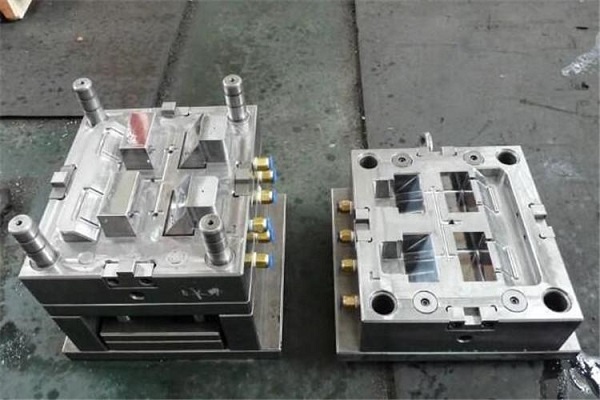
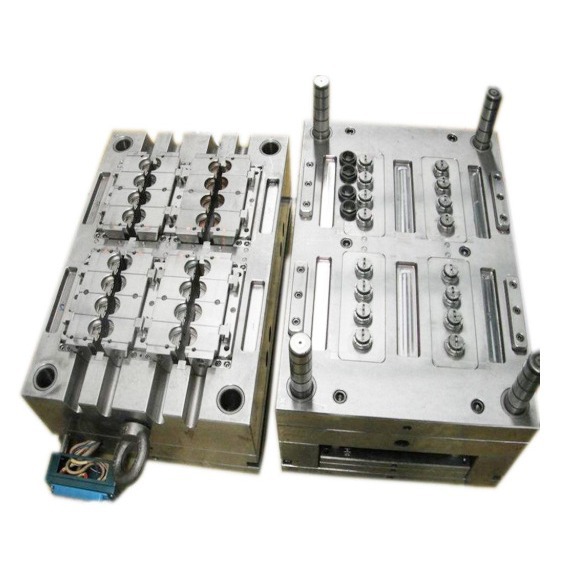
| mold | Complex cavities, high hardness materials | Surface accuracy ±0.003mm, machining hardness HRC60+ |
6.2 Successful cases: Practical verification of processing capabilities
A mold manufacturer provided a solution for a mobile phone shell company: using a five-axis machining center to process the mold cavity, combined with high-speed cutting technology, shortened the mold processing cycle from 15 days to 7 days, and increased the mold life from 500,000 to 1 million times, helping customers reduce the unit product cost by 15%.
7. Yigu Technology's view
The core competitiveness of processing capabilities is essentially the comprehensive embodiment of "precision stability + material adaptability + efficiency controllability". In the context of manufacturing upgrading, relying solely on equipment upgrades can no longer form barriers, and it is necessary to create differentiated capabilities through technological innovation, process optimization and quality system construction. Yigu Technology always believes that the improvement of processing capacity should focus on customer needs, from "capable of processing" to "able to deliver products that meet the needs of the scene accurately, efficiently and stably", which is the key for enterprises to gain a foothold in the fierce competition.
8. FAQ
- Q: How to judge whether an enterprise's processing capacity meets the needs?
A: Focus on three cores: equipment accuracy parameters (such as positioning accuracy, repeat positioning accuracy), quality system certification (compliance with industry-specific standards), and similar product cases (whether there is successful experience with the same material/process).
- Q: What are the main advantages of five-axis machining capacity compared to three-axis?
A: The core advantage is the ability to process complex surfaces, which can reduce the number of clamping times (reduce positioning errors) and improve the machining efficiency by more than 30%, especially suitable for complex parts in aerospace, mold and other industries.
- Q: What capabilities do manufacturers need to pay attention to for the processing of difficult-to-machine materials (such as titanium alloys and superalloys)?
Answer: It is necessary to confirm whether the manufacturer has special tools, cooling systems (such as high-pressure cooling), experience in process optimization, and whether it has testing equipment and cases for related material processing.
- Q: How to ensure the stability of processing capacity in mass production?
Answer: The key is whether SPC statistical process control is implemented, whether there is a complete equipment maintenance system, and whether there is online detection and automatic compensation capabilities, which are the core guarantees of mass production consistency.