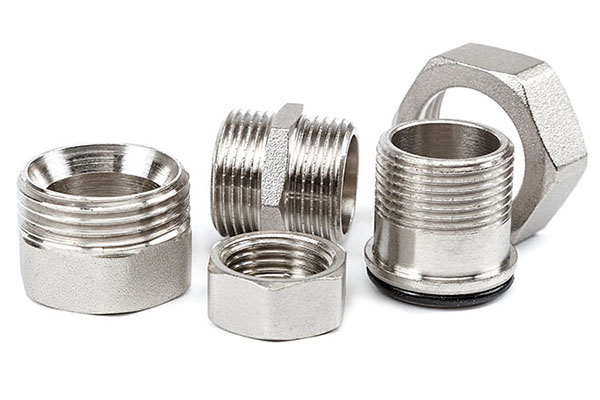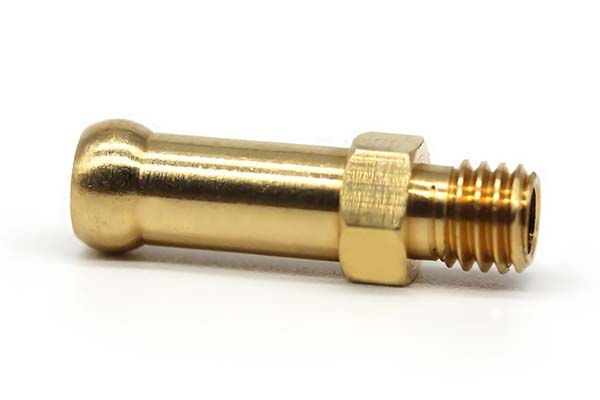
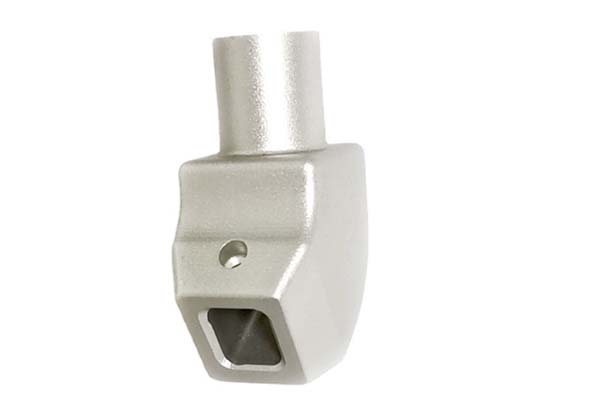
1. What is Proto Type Machining? Basic concepts and core processes
(1) The essence of prototype processing: the "touchstone" of product development
Are you struggling with "whether it can be implemented" and "whether the performance meets the standard" after product design? Proto type machining is the key to solving these questions – it is the process of translating a design into a physical prototype that paves the way for mass production by quickly prototyping the design rationality and functional feasibility. Unlike mass production, prototype processing focuses more on "validation" and "optimization", which is the core link in product development to reduce risk and shorten the cycle.
(2) From design to finished product: dismantling the whole process of prototype development
Senior engineers know that a standardized process is a prerequisite for prototype success, and the complete prototype development process consists of 5 key steps:
- Requirements definition: Clarify the purpose of the prototype (such as functional testing, appearance display), performance indicators and cost budget;
- Design modeling: Draw 3D models through CAD for machining software, reserve machining allowances and assembly gaps;
- Process selection: Choose suitable processes such as CNC prototyping and 3D printing according to material and precision requirements;
- Prototype production: rely on equipment to complete the processing, and carry out preliminary quality inspection simultaneously;
- Test optimization: Through actual working condition testing, iteratively adjust the design scheme until it meets mass production requirements.
Real-life example: When a consumer electronics company developed wireless headphones, it verified the appearance and grip with 3D printing in the first round, tested the sound quality transmission with CNC machining functional prototypes in the second round, and verified the assembly efficiency through small-batch production in the final round, ultimately shortening the time-to-market by 40%.
2. What are the core technologies of Proto Type Machining? Process comparison and selection
(1) Classification of mainstream technologies: additive vs. subtractive, each has its own merits
The core technologies of prototype processing can be divided into two categories, and the applicable scenarios of different processes vary significantly, for example:
| Process type: | Represents technology | Advantages: | Disadvantages | Applicable scenarios |
| Additive Manufacturing | 3D printing prototyping | Rapid prototyping, complex structure friendly, low cost | Limited precision and average material strength | Proof of concept, appearance prototype, low-volume customization |
| Subtractive Manufacturing | CNC machining for prototypes | High accuracy (±0.005mm) and wide material adaptation | The processing cycle of complex structures is long | Functional prototypes, pre-production validation, high-precision parts |
| Assistive technology | rapid tooling | Shorten the mold development cycle and reduce costs | The mold life is short | Small batch production (100-1000 pieces) |
(2) In-depth analysis of key processes: how to choose?
- CNC Prototype Machining: As the preferred choice for industrial-grade prototypes, computer-controlled tools cut materials, which can process various materials such as metals and engineering plastics. It is especially suitable for functional prototypes, such as engine parts prototypes in the automotive industry, which need to withstand high temperatures and pressures, and CNC machined aluminum alloy prototypes can accurately restore mechanical properties.
- 3D printing prototypes: In recent years, they have become extremely popular, with photosensitive resin, PLA, nylon and other materials available, and the printing speed is fast (simple parts can be completed in 4-8 hours). Ideal for proof-of-concept prototypes, such as prototypes of enclosures for medical devices, to quickly iterate on exterior designs.
- Rapid tooling technology: The key to connecting prototypes and mass production, and achieving low-volume production by reversing the prototype to make simple molds. An appliance company used rapid tooling technology to produce 500 prototypes of washing machine control panels, costing only one-third of traditional molds.
3. How to match materials and applications? Proto Type Machining's Selection Guide
(1) Material selection: match on demand to avoid "one-size-fits-all"
Prototype material selection directly affects prototype performance and test results, and common materials and applicable scenarios are as follows:
- Plastic Prototyping:
- Advantages: light weight, low cost, low processing difficulty;
- Representative materials: ABS (impact resistant, suitable for shells), PC (high temperature resistance, suitable for electronic components), POM (wear resistance, suitable for gears and other transmission parts);
- Applicable industries: consumer electronics, home appliances, toys.
- Metal Prototyping:
- Advantages: high strength, good thermal conductivity, stable precision;
- Representative materials: aluminum alloy (lightweight, automotive/aerospace), stainless steel (corrosion resistance, medical equipment), titanium alloy (high strength, high-end equipment);
- Applicable industries: automotive, aerospace, medical.
Professional advice: If the prototype is used for "functional testing", it is necessary to give priority to the material that is consistent with the mass production material; If you only use it for "appearance display", you can choose to reduce costs with low-cost alternative materials.
(2) Prototype types and application scenarios: targeted development
Prototypes for different purposes have very different processing requirements:
- Functional prototypes: The core focus is on performance standards, and prototyping tolerances and mechanical properties need to be strictly controlled, such as the joint prototype of an industrial robot, the tolerance needs to be controlled within ±0.01mm;
- Concept prototype: focus on appearance and structure display, appropriately relax accuracy requirements, and give priority to ensuring the molding speed;
- End-use Part Prototyping: It needs to fully comply with mass production standards, including materials, processes, surface treatments, etc., such as mobile phone body prototypes, which need to be anodized to achieve a mass-produced appearance.
4. What are the core advantages of Proto Type Machining? Industry application and value embodiment
(1) Three irreplaceable advantages
- Reduce risks: detect design defects in advance through prototype testing to avoid significant losses in the mass production stage (according to statistics, prototype verification can reduce the product failure rate by 60%);
- Shorten cycle time: Rapid prototyping technology can shorten the product development cycle by 30%-50%, especially suitable for rapid iteration of technology products.
- Flexible iteration: Support small-batch design adjustments without large-scale modifications to the production line, adapting to custom part prototyping (custom part prototyping) needs.
(2) Application cases in key industries
- Automotive Prototyping: When developing battery packs, new energy vehicle companies test heat dissipation performance through CNC machined metal prototypes, and 3D printed interior parts to verify assembly space, greatly improving mass production reliability.
- Aerospace Prototyping: Satellite component prototypes need to meet lightweight and high-strength requirements, and titanium CNC prototyping is the core choice, with an accuracy of up to ±0.003mm;
- Medical Device Prototyping: Surgical device prototypes need to pass biocompatibility testing, and plastic 3D printed prototypes can quickly complete clinical trial adaptation.
- Consumer Electronics Prototyping: The appearance prototypes of mobile phones, headphones and other products mostly use 3D printing + surface spraying technology to quickly respond to market aesthetic needs.
5. How to optimize the design? Key considerations for Proto Type Machining
(1) Design principle: take into account the feasibility and performance of processing
At the heart of the prototype design guidelines is Design for Manufacturing (DFM), with key takeaways including:
- Avoid complex internal corners: The radius of the internal corners is ≥ 0.5mm, reducing CNC tool interference and reducing machining difficulty;
- Reasonable tolerance setting: According to the process selection of tolerance range, CNC machining can be set to ±0.01mm, 3D printing is recommended ≥±0.1mm;
- Reserve the machining reference: set a clear positioning surface to ensure the processing accuracy;
- Simplified assembly structure: Split complex parts to avoid excessive costs caused by integrated machining.
(2) Surface treatment and precision control
- Surface finish prototyping: According to the application, the process can be selected by spraying and electroplating, and the functional prototype can be anodized (metal) and polished (plastic).
- Precision control: Factors affecting accuracy include equipment accuracy, material shrinkage, tool wear, etc., it is recommended to calibrate through multiple trial cuts, and key dimensions are detected by coordinate measuring instruments.
Experience sharing: When designing a gear prototype, a mechanical engineer once solved the problem by adjusting the size of the CAD model (reserving 0.2% shrinkage) and choosing high-precision CNC machining when designing a gear prototype that the bite gap was too small, and then adjusted the size of the CAD model (allowing 0.2% shrinkage) and selected high-precision CNC machining – this is the practical value of DFM principles.
6. Yigu Technology's views
Proto Type Machining is no longer a "simple sample", but a core enabling link in the whole process of product development. From proof-of-concept to mass production, its value lies in "trial and error with the lowest cost, iterations with the highest efficiency". In the future, with the improvement of additive manufacturing material performance and the development of intelligent CNC machining, prototype processing will be faster, more accurate, and low-cost, especially in the field of customized production and high-end equipment, which will become the key to the core competitiveness of enterprises. For developers, mastering the process selection, material matching and design optimization skills of prototype processing can seize the opportunity in product innovation.
7. FAQ
- What is the core difference between prototype machining and mass production?
Answer: Prototype processing focuses on "verification and iteration", with small batches, high flexibility, and cost priority lower than effectiveness. Mass production focuses on "efficiency and cost", with large batches, high standardization, and the need to optimize production line adaptation.
- Which is more cost-effective, 3D printed prototypes or CNC prototypes?
Answer: Simple structure, small batch (≤ 10 pieces) choose 3D printing, low cost and fast speed; For complex structures, high-precision requirements, or metal materials, CNC machining is more cost-effective in the long run.
- What is the typical lead time for prototype machining?
A: 1-3 days for 3D printed prototypes, 3-5 days for CNC plastic prototypes, 5-7 days for CNC metal prototypes, and 7-15 days for rapid tooling small batch production (depending on part complexity and manufacturer capacity).
- How to choose a prototype machining service provider?
A: Priority should be given to equipment accuracy, material adaptation capabilities, and industry case experience, and whether DFM design consulting should be provided to avoid rework due to unreasonable design.