Introduction
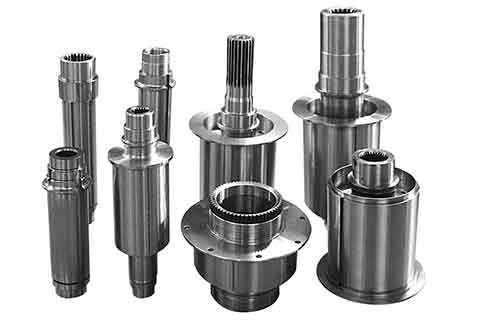
Shaft parts are the core components of mechanical transmission systems. They are widely used in motors, automobiles, machine tools, and other equipment. Their processing quality directly affects the operation accuracy and stability of the entire machine. For practitioners in machining, mastering efficient shaft machining techniques is crucial.
According to industry statistics:
- 35% of shaft part defect rates are due to improper material selection
- 28% from unreasonable parameter settings
- 22% related to tool wear
This article shares practical machining techniques across seven core dimensions—material selection, tool choice, parameter settings, pre-processing preparation, process monitoring, post-processing, and troubleshooting—backed by real cases and data to help you improve efficiency and product qualification rates.
1. Understand Material Properties
Common Material Types
| Material | Core Features | Applications |
|---|---|---|
| 45 steel | Medium carbon; moderate strength; good machinability; low cost | Transmission shafts, gear shafts in general machinery |
| 40Cr | Alloy steel; excellent strength and toughness after quenching/tempering | Auto gearbox shafts, machine tool spindles |
| 20CrMnTi | Carburizing steel; high surface hardness; good core toughness | High-speed precision drive shafts (e.g., motor shafts) |
| Stainless steel 304 | Corrosion resistance; tough; slightly poor machinability | Food machinery, chemical equipment shaft parts |
How Materials Affect Processing
Material properties directly determine machining difficulty and process selection:
| Material | Machinability | Recommended Approach |
|---|---|---|
| 45 steel | Good | High-speed cutting with standard carbide tools |
| Stainless steel 304 | Poor—prone to sticking; high cutting temperature | Special coated tools; optimized cutting parameters |
Case: A machine shop processing 304 stainless steel shafts initially used standard tools. Tool wear was too rapid; efficiency was only 2 pieces/hour. After switching to coated carbide tools and optimizing parameters, efficiency increased to 8 pieces/hour.
2. Choose the Right Tools
Tool Types and Selection
Shaft machining primarily uses turning and grinding:
| Tool Type | Application | Recommended Tools |
|---|---|---|
| Turning tools | Carbon/alloy steel | Carbide cylindrical turning tools (e.g., CCMT09T304) |
| Stainless steel | PCD-coated turning tools—reduces sticking | |
| Grinding tools | Precision shaft finishing | Cubic boron nitride (CBN) grinding wheels—high hardness, wear resistance |
Tool Wear and Maintenance
Tool wear directly causes surface roughness deterioration and dimensional deviation.
| Wear Indicator | Action |
|---|---|
| Small chip on cutting edge (>0.1 mm) | Replace or sharpen immediately |
| Obvious tool marks on machined surface | Replace or sharpen immediately |
Maintenance practices:
- Store tools properly to avoid edge damage
- Check tool runout before use—ensure ≤0.005 mm
3. Determine Machining Parameters
Cutting Speed and Feed Rate
Parameters must be precisely set based on material properties.
| Material | Cutting Speed (m/min) | Feed Rate (mm/r) |
|---|---|---|
| 45 steel shaft (Ø50 mm, carbide tool) | 120–150 | 0.15–0.20 |
| 40Cr alloy shaft | 100–120 | 0.15–0.20 |
Parameter setting mistakes:
- Blindly increasing cutting speed → rapid tool wear
- Excessive feed rate → poor surface roughness
Depth of Cut
Follow the principle: large depth for roughing; small depth for finishing.
| Operation | Depth of Cut |
|---|---|
| Roughing | 2–3 mm—removes excess material quickly |
| Finishing | 0.1–0.3 mm—ensures machining accuracy |
Case: Machining an 80 mm diameter 40Cr shaft:
- Roughing: 2.5 mm depth → 40% efficiency increase
- Finishing: 0.2 mm depth → roundness error controlled within 0.003 mm
4. Pre-Processing Preparation
Workholding Fixture Selection and Setup
Fixture selection should ensure positioning accuracy and clamping stability:
| Workpiece Type | Fixture | Notes |
|---|---|---|
| Short shaft | Three-jaw chuck | High positioning accuracy; easy operation |
| Long shaft | Three-jaw chuck + tailstock center | Reduces deformation during machining |
Clamping guidelines:
- Clamping force should be moderate—excessive force deforms workpiece; insufficient force causes loosening
- For slender shafts (length/diameter >10): use elastic jaws; clamping force 15–20 MPa; support with center frame to prevent bending
Machining Environment Optimization
| Factor | Recommendation | Impact |
|---|---|---|
| Temperature | 20±2°C | Prevents thermal deformation of machine and workpiece |
| Vibration | Anti-vibration pads | Reduces impact from surrounding equipment |
Case: A precision shaft processing plant optimized environment control—dimensional error fluctuation reduced from ±0.01 mm to ±0.005 mm.
5. Monitor the Machining Process
Real-Time Monitoring Techniques
| Monitoring Method | Normal Range | Action |
|---|---|---|
| Spindle vibration | ≤0.2 mm/s | Stop machine when abnormal |
| Cutting zone temperature | Carbon steel: 200–300°C; Stainless steel: 300–400°C | Use infrared thermometer |
Identify and Solve Machining Problems
| Problem | Characteristics | Solutions |
|---|---|---|
| Workpiece vibration | Corrugated surface; abnormal cutting sound | Reduce cutting speed; increase feed rate; add center frame support |
| Tool sticking | Metal adhesion on cutting edge; surface scratches | Increase cutting fluid supply; use coated tools |
| Dimensional deviation | Measured dimensions don’t match drawing | Check tool wear; recalibrate machine coordinate system |
6. Post-Processing and Inspection
Surface Treatment Technology
| Shaft Type | Treatment | Specification |
|---|---|---|
| General shafts | Polishing; deburring | Remove burrs and tool marks |
| Precision shafts | Grinding finishing | Surface roughness ≤Ra 0.8 μm |
| High-wear shafts (gearbox, etc.) | Carburizing + quenching | Surface hardness HRC 58–62 |
Dimensional and Tolerance Inspection
| Inspection | Method | Tolerance |
|---|---|---|
| Shaft diameter | Calipers, micrometers | ±0.01 mm |
| Roundness, cylindricity | Dial indicator | ≤0.005 mm |
| Precision shafts | CMM (Coordinate Measuring Machine) | Full dimensional verification |
7. Common Problems and Solutions
Common Faults
| Fault | Cause | Solution |
|---|---|---|
| Slender shaft bending after machining | Radial cutting forces; internal stress | Reverse cutting method; aging treatment after processing |
| Shaft shoulder end face not perpendicular to axis | Improper clamping; tool angle | End face toggle top clamping; adjust tool angle to ensure edge fits end face |
Effectiveness
Through these measures, fault incidence can be reduced by more than 70%.
Conclusion
Efficient shaft machining results from multi-link collaborative optimization:
- Material properties: 45 steel (good machinability), 40Cr (high strength), 20CrMnTi (carburizing), 304 stainless (corrosion-resistant)—match material to application
- Tool selection: Carbide for carbon/alloy steel; PCD-coated for stainless; CBN grinding wheels for finishing
- Parameters: Cutting speed 100–150 m/min; feed 0.15–0.20 mm/r; depth: 2–3 mm roughing, 0.1–0.3 mm finishing
- Pre-processing: Proper fixturing (three-jaw chuck + tailstock for long shafts); environment control (20±2°C; anti-vibration)
- Process monitoring: Vibration ≤0.2 mm/s; temperature 200–400°C based on material
- Post-processing: Surface finish to Ra 0.8 μm; CMM inspection for precision shafts
- Troubleshooting: Reverse cutting + aging for slender shafts; end face toggle top for perpendicularity
As precision manufacturing advances, shaft machining requirements for precision and efficiency will continue to increase. Continuously optimizing processes and accumulating practical experience is key to enhancing core competitiveness.
FAQs
How to effectively avoid bending and deformation when machining slender shafts?
Three core measures:
- Use three-jaw chuck + tailstock center + center frame combination to enhance support stability
- Select reverse cutting method to reduce radial cutting force impact on shaft bending
- Perform aging treatment after processing to eliminate internal stress and prevent subsequent deformation
How to choose cutting fluid for shaft machining of different materials?
| Material | Cutting Fluid |
|---|---|
| Carbon steel, alloy steel | Emulsion—balances cooling and lubrication |
| Stainless steel | Extreme pressure oil—enhances lubricity; reduces sticking |
| Superalloys | Synthetic cutting fluid—excellent high-temperature cooling performance |
What may cause surface roughness of shaft parts to not meet standards?
Four main reasons:
- Tool wear—cutting edge not sharp
- Feed rate too high—cutting traces too deep
- Insufficient cutting fluid—dry cutting occurs
- Machine tool spindle vibration too high
Check: tool status; adjust parameters; optimize cutting fluid supply; overhaul machine tool.
How to ensure dimensional consistency when machining shaft parts in batches?
Recommended practices:
- Use automatic clamping equipment (hydraulic chuck) to reduce manual clamping errors
- Regularly calibrate coordinate system and tool compensation parameters
- Check key dimensions every 50 pieces processed
- Use special tooling fixtures to ensure consistent workpiece positioning
Contact Yigu Technology for Custom Manufacturing
At Yigu Technology, we specialize in precision shaft machining for automotive, industrial machinery, and aerospace applications. With 15 years of experience, advanced CNC turning and grinding capabilities, and ISO 9001 certification, we deliver shafts with tolerances to ±0.005 mm and surface finishes to Ra 0.8 μm.
Our expertise includes material selection (45 steel, 40Cr, 20CrMnTi, stainless), tool optimization, and quality control (CMM inspection). Contact us today to discuss your shaft machining project.