Introduction
Nylon has emerged as a game-changing material in 3D printing. Its unique combination of strength, flexibility, and durability makes it ideal for applications that other materials can't handle.
From aerospace components that must withstand extreme stress to automotive parts that endure constant vibration, nylon delivers. It's strong enough for functional prototypes, durable enough for end-use parts.
But what makes nylon so special? How do different 3D printing technologies work with it? And where is it making the biggest impact?
At Yigu technology, we've printed thousands of nylon parts for clients across industries. This guide explores nylon's properties, the technologies that use it, and the applications pushing manufacturing forward.
What Makes Nylon a Game-Changer in 3D Printing?
Strength and Durability
Nylon offers outstanding mechanical properties that set it apart from other 3D printing materials.
Tensile strength: Up to 80 MPa in some 3D-printed formulations. Compare to:
- PLA: 40-60 MPa
- ABS: 20-40 MPa
This high tensile strength allows nylon parts to withstand substantial pulling forces—ideal for load-bearing applications.
Impact resistance: Nylon can endure impacts of up to 50 Joules without major damage. ABS typically fails at 20-30 Joules.
Fatigue endurance: Nylon withstands over 100,000 cycles of dynamic loading at 50% of tensile strength before failure. Traditional plastics may fail after only a few thousand cycles.
This combination makes nylon perfect for:
- Aerospace components under extreme stress
- Automotive parts subject to vibration
- Mechanical components with repeated loading
Chemical and Abrasive Resistance
Nylon's stable molecular structure provides inherent chemical resistance. The amide bonds resist attack from most chemicals.
Chemical resistance test: Nylon parts showed no degradation after 24 hours immersion in:
- Acetone
- Ethanol
- Gasoline
This makes nylon suitable for:
- Chemical storage containers
- Pipelines and valves
- Industrial equipment
Abrasive resistance: Nylon has a coefficient of friction of 0.2-0.4—lower than many materials. Gears and bearings printed in nylon operate smoothly with reduced wear.
Real example: Nylon rollers in a conveyor system last significantly longer than other materials, reducing maintenance and replacement frequency.
Lightweight and Dimensional Stability
Nylon has a low density—typically 1.14 g/cm³.
| Material | Density (g/cm³) |
|---|---|
| Nylon | 1.14 |
| PLA | 1.24 |
| Aluminum alloy | 2.7 |
In aerospace, weight reduction is crucial. A nylon component can be up to 50% lighter than an aluminum equivalent while maintaining sufficient strength.
Water absorption: Less than 1% under normal conditions. This maintains dimensional stability—critical for:
- Automotive engine covers
- Interior parts
- Precision components
What 3D Printing Technologies Work with Nylon?
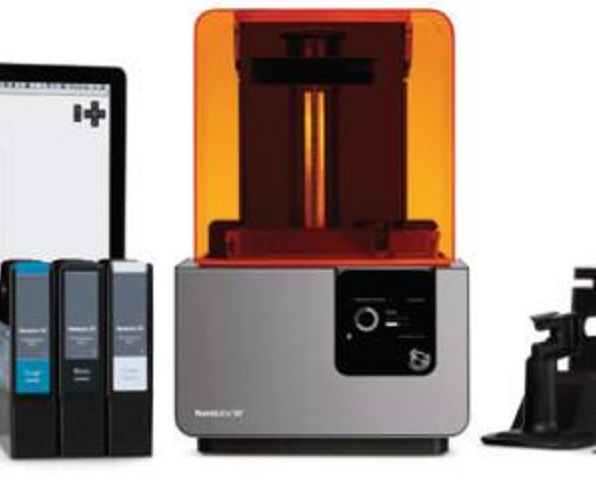
Selective Laser Sintering (SLS)
SLS uses a high-power laser—typically CO₂—to sinter nylon powder.
How it works:
- Powder bed is heated close to nylon's melting point
- Laser scans cross-section, melting powder particles
- Melted particles bond, creating a solid layer
- Platform lowers, new powder spreads, process repeats
Advantages:
- Complex geometries: Internal channels, lattice structures—no problem
- No supports: Unsintered powder provides natural support
- Excellent properties: Tensile strength up to 70 MPa
- Accuracy: ±0.2 mm typical
Best for: Functional prototypes, end-use parts, complex geometries
Fused Deposition Modeling (FDM)
FDM extrudes nylon filament through a heated nozzle.
How it works:
- Nylon filament feeds into heated extruder
- Nozzle heats filament to melting point
- Molten nylon deposits layer by layer
- Layers cool and bond
Advantages:
- Cost-effective: Desktop printers from a few hundred dollars
- Accessible: Easy to learn, widely available
- Material flexibility: Nylon 6, Nylon 12, and more
Limitations:
- Lower accuracy than SLS
- Supports needed for overhangs
- Slower for complex geometries
Best for: Prototypes, small-batch production, educational use
Multi-Jet Fusion (MJF)
MJF is an emerging technology showing great promise for nylon.
How it works:
- Powder bed (like SLS)
- Inkjet arrays spray fusing agent (where to fuse) and detailing agent (for surface finish)
- Heating element fuses powder in desired areas
- Process repeats layer by layer
Advantages:
- Speed: Up to 10 times faster than SLS
- Surface finish: Excellent, with accuracy up to ±0.1 mm
- Properties: Good mechanical performance
Best for: Production parts, applications needing speed and finish
Technology Comparison
| Technology | Accuracy | Speed | Cost | Best For |
|---|---|---|---|---|
| SLS | ±0.2 mm | Medium | High | Complex geometries, functional parts |
| FDM | ±0.3-0.5 mm | Slow | Low | Prototypes, education, small batches |
| MJF | ±0.1 mm | Fast | High | Production, speed-critical applications |
Where Is Nylon 3D Printing Used?
Aerospace
Airbus explores 3D-printed nylon components for aircraft:
- Interior panels: Lighter than aluminum equivalents
- Brackets: Complex geometries, reduced weight
- Ducting systems: Optimized airflow paths
Weight savings: Replacing aluminum panels with nylon can reduce weight by up to 30% . For a medium-sized aircraft, this leads to fuel savings of 5-8% over its lifespan.
Automotive
Ford uses nylon 3D printing for:
- Rapid prototyping: Engine components like intake manifolds—development time from months to weeks
- Interior parts: Customized dashboards, door handles—more ergonomic, more appealing
Customer satisfaction: Manufacturers using nylon for interior components report 20% increase in satisfaction scores related to interior design.
Mechanical Manufacturing
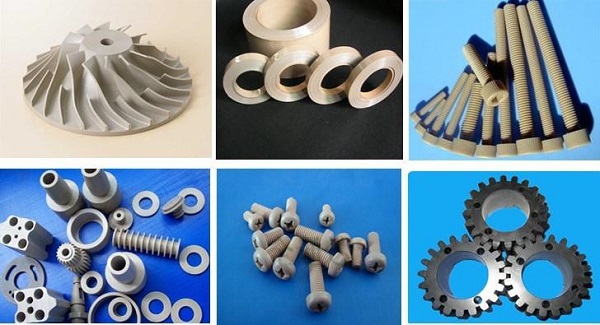
Nylon gears and bearings offer:
- Wear resistance: Excellent friction properties
- Self-lubricating: Reduced maintenance
- Noise reduction: Quieter operation than metal
Real example: A mechanical engineering company found 3D-printed nylon gears in a conveyor system had 1.5x longer service life than traditional metal gears, with 30% less noise.
Consumer Products
Customized accessories:
- Phone cases: Custom-fit, personalized designs
- Tablet stands: Tailored to specific devices
- Headphone holders: Ergonomic, functional
Market growth: Demand for customized 3D-printed nylon electronics accessories growing at 25% per year.
Fashion
Designers push boundaries:
- Avant-garde clothing: Complex geometric patterns impossible with traditional methods
- Footwear: Adidas uses 3D-printed nylon soles customized to individual foot shape
Consumer response: 80% of users who tried 3D-printed nylon-soled shoes reported improved comfort.
Sustainability
Nylon 3D printing reduces waste:
- On-demand production: No overproduction
- Recyclability: Nylon can be recycled
- Material efficiency: Additive process uses only what's needed
Yigu Technology's Perspective
At Yigu technology, we've seen nylon transform what's possible for our clients:
Strength enables function. Clients who need parts that actually work—not just look good—choose nylon. Gears, bearings, brackets, housings—nylon delivers.
Complexity is free. With SLS and MJF, internal channels, lattice structures, and organic shapes are routine. Designs that can't be machined become possible.
Technology choice matters. We guide clients to the right process:
- SLS for complex geometries, functional parts
- FDM for prototypes, small batches
- MJF for production, speed-critical applications
Applications we serve:
- Aerospace components needing lightweight strength
- Automotive parts requiring durability
- Mechanical components for demanding environments
- Consumer products with customized designs
- Fashion items pushing creative boundaries
Nylon isn't the answer for everything. But for applications needing strength, durability, and complexity, it's often the best choice.
Conclusion
Nylon innovations are pushing the boundaries of 3D printing through:
- Exceptional properties: Strength up to 80 MPa, impact resistance to 50 Joules, fatigue endurance over 100,000 cycles
- Chemical and abrasive resistance: Stable in solvents, low friction coefficient
- Lightweight: Density 1.14 g/cm³—up to 50% lighter than aluminum
- Dimensional stability: Water absorption <1%
Technologies leveraging nylon:
- SLS: Complex geometries, functional parts
- FDM: Accessible, cost-effective prototyping
- MJF: Fast production, excellent finish
Applications across:
- Aerospace: Weight savings of 30% , fuel efficiency gains
- Automotive: Rapid prototyping, customized interiors
- Mechanical: Gears with 1.5x longer life
- Consumer: Customized products growing at 25% annually
- Fashion: 80% improved comfort with custom soles
Nylon has transformed from a niche material to a manufacturing workhorse. Its unique combination of properties makes it indispensable for applications where other materials fall short.
The innovations continue—new formulations, better processes, wider applications. Nylon will keep pushing the boundaries of what's possible in 3D printing.
FAQ
What makes nylon better than PLA for 3D printing?
Nylon offers superior strength, impact resistance, and durability. Tensile strength up to 80 MPa vs. 40-60 MPa for PLA. Impact resistance to 50 Joules vs. 2-5 Joules for PLA. Nylon also handles chemicals better and has lower friction. PLA is easier to print and cheaper—great for prototypes, but nylon wins for functional parts.
Can nylon 3D printed parts be used outdoors?
Yes, with considerations. Nylon has good chemical resistance and withstands temperature fluctuations. However, it absorbs moisture (though <1% under normal conditions). For outdoor applications, consider nylon with UV stabilizers or protective coatings.
What's the strongest 3D printing technology for nylon?
SLS (Selective Laser Sintering) produces the strongest nylon parts, with tensile strength up to 70 MPa. The sintering process creates excellent layer bonding, and the absence of supports allows optimal orientation. MJF also produces strong parts with good surface finish.
How do I choose between SLS, FDM, and MJF for nylon?
- SLS: Choose for complex geometries, functional parts, no supports needed
- FDM: Choose for prototypes, small batches, cost-sensitive applications
- MJF: Choose for production parts, speed-critical applications, excellent surface finish
Is nylon 3D printing expensive?
Cost varies by technology:
- FDM: Most affordable—desktop printers from $500, filament $50-100/kg
- SLS: Higher cost—industrial printers $50,000+, powder $100-200/kg
- MJF: Similar to SLS—premium for speed and finish
For the value it delivers in functional parts, nylon is cost-effective.
Can nylon be recycled?
Yes. Nylon is a thermoplastic—it can be melted and reformed. Unused powder in SLS and MJF is often recycled (mixed with fresh powder). Printed parts can be ground and reused, though properties may degrade. This makes nylon a more sustainable choice for many applications.
Contact Yigu Technology for Custom Manufacturing
Ready to leverage nylon 3D printing for your project? Yigu technology specializes in custom manufacturing with all major 3D printing technologies and materials.
We offer:
- Free quotes within 24 hours—just send your CAD file
- Technology selection—matching process to requirements
- Material expertise—choosing the right nylon formulation
- Printing—on industrial equipment with strict quality control
- Post-processing—finishing to your specifications
- Production runs—from prototypes to small batches
Contact us to discuss your project. Tell us what you're making and what it needs to do. We'll help bring your design to life.