Introduction
You have heard the term "3D printing" for years. Maybe you have even used a desktop printer yourself. But additive manufacturing goes far beyond hobbyist machines. It is a suite of technologies that build parts layer by layer from digital files—creating geometries impossible with traditional methods, using materials from plastics to advanced metals. Yet with so many processes, materials, and applications, it can be overwhelming. Which technology should you use for your project? What materials are available? How do you overcome the challenges? This guide answers these questions and provides a comprehensive overview of 3D additive manufacturing—what it is, how it works, and how you can use it effectively.
What Is 3D Additive Manufacturing?
Definition and Core Concept
3D additive manufacturing (AM) is the industrial production name for 3D printing. It refers to processes that create three-dimensional objects by adding material layer by layer based on a digital model. This contrasts with traditional subtractive manufacturing (cutting away material) or formative manufacturing (molding or casting).
The basic workflow:
- Create a 3D digital model using CAD software
- Convert the model to a printable format (typically STL)
- Slice the model into thin layers using slicing software
- Print the object layer by layer
- Post-process as needed
The "additive" nature means material goes only where needed. Complex internal features? No problem. Customization? Each part can be different without tooling changes.
Why Additive Manufacturing Matters
AM has moved from prototyping to production. Its importance grows because it enables:
- Geometric freedom: Shapes impossible to machine or mold
- Mass customization: Each part unique without cost penalty
- Supply chain simplification: Digital inventory, print on demand
- Lightweighting: Lattice structures reducing weight while maintaining strength
- Reduced waste: Material efficiency compared to subtractive methods
What Are the Main 3D Printing Technologies?
Different technologies serve different needs. Here is a comprehensive overview:
| Technology | Working Principle | Typical Materials | Key Strengths | Common Applications |
|---|---|---|---|---|
| Fused Deposition Modeling (FDM) | Extrudes melted thermoplastic filament layer by layer | PLA, ABS, PETG, Nylon, Polycarbonate | Low cost, large parts, wide material choice | Prototypes, jigs, fixtures, hobbyist projects |
| Stereolithography (SLA) | UV laser cures liquid photopolymer resin | Photopolymer resins | High precision, smooth surface finish | Jewelry patterns, dental models, detailed prototypes |
| Digital Light Processing (DLP) | Projects entire layer images onto resin | Photopolymer resins | Faster than SLA for many parts | High-volume prototypes, consumer goods |
| Selective Laser Sintering (SLS) | Laser sinters powder particles together | Nylon, TPU, some metals | No supports needed, durable parts | Functional prototypes, end-use parts |
| Selective Laser Melting (SLM) | Laser fully melts metal powder | Stainless steel, titanium, aluminum | Dense metal parts, complex geometries | Aerospace, medical implants, automotive |
| Electron Beam Melting (EBM) | Electron beam melts metal powder in vacuum | Titanium, cobalt-chrome | High-temperature capability, low oxidation | Aerospace components, orthopedic implants |
| Binder Jetting | Deposits binder on powder, then sinters | Stainless steel, bronze, sand, ceramics | Fast, large build volumes, no supports | Metal parts, sand molds, full-color models |
| Direct Energy Deposition (DED) | Melts wire or powder as deposited onto substrate | Metal wires and powders | Large parts, repair capability, multi-material | Aerospace repair, large components, cladding |
| Material Extrusion | Extrudes material through nozzle (broader than FDM) | Thermoplastics, composites, biomaterials | Versatile, material variety | Custom furniture prototypes, large-scale printing |
| Powder Bed Fusion | Heat source fuses powder in a bed (includes SLS, SLM, EBM) | Metal powders, polymers | High complexity, good mechanical properties | Production parts, medical, aerospace |
Fused Deposition Modeling (FDM)
How it works: A thermoplastic filament feeds into a heated nozzle. The nozzle melts the material and deposits it layer by layer on a build platform. The printer moves in X and Y axes for each layer, then the platform lowers for the next layer.
Strengths:
- Low equipment cost
- Wide material selection
- Large build volumes possible
- Simple operation
Weaknesses:
- Visible layer lines
- Anisotropic strength
- Support structures needed for overhangs
Best for: Rapid prototyping, jigs and fixtures, large parts, low-cost production
Real-world example: A furniture designer uses a large-format FDM printer to create full-scale prototypes of chairs. Each iteration costs material only—no tooling, no waiting.
Stereolithography (SLA)
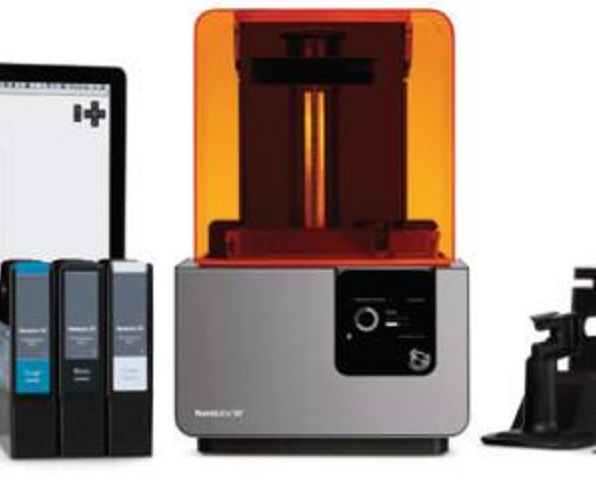
How it works: A UV laser traces each layer on the surface of liquid photopolymer resin. The resin solidifies where the laser hits. The build platform lifts, and fresh resin flows under the cured layer.
Strengths:
- Exceptional surface finish
- High detail and accuracy
- Smooth parts ready for display or casting
Weaknesses:
- Resin handling requires care
- Parts can be brittle
- Limited build volume compared to FDM
Best for: Jewelry patterns, dental models, master patterns, visual prototypes
Real-world example: A dental lab scans patient teeth, designs crowns digitally, and prints them in biocompatible resin. Each crown fits perfectly because it's based on actual patient anatomy.
Selective Laser Sintering (SLS)
How it works: A laser scans across a bed of powder, sintering particles together. The unsintered powder supports overhangs, eliminating support structures. After each layer, a fresh layer of powder spreads.
Strengths:
- No support structures needed
- Durable, functional parts
- Good material properties
Weaknesses:
- Equipment expensive
- Surface finish rough, needs post-processing
- Powder handling requires care
Best for: Functional prototypes, end-use parts, complex geometries
Real-world example: An automotive company prints ductwork for a prototype vehicle using SLS nylon. The parts are strong enough for functional testing and complex enough to route air exactly where needed.
Metal Printing Technologies
SLM (Selective Laser Melting) builds dense metal parts by fully melting powder with a laser. Applications include:
- Aerospace brackets and engine components
- Medical implants (titanium)
- Automotive performance parts
EBM (Electron Beam Melting) uses an electron beam in vacuum, ideal for titanium and high-temperature alloys.
Binder Jetting for metals prints quickly, then sinters parts to full density. Lower cost than SLM for many applications.
DED builds large parts and repairs existing components. A turbine blade with tip wear gets new material added via DED, then machined back to spec.
What Materials Are Used in Additive Manufacturing?
Thermoplastics
PLA (Polylactic Acid) :
- Renewable source (corn starch, sugarcane)
- Biodegradable under industrial conditions
- Easy to print, low temperature
- Brittle, low heat resistance
- Best for: Prototypes, educational models, decorative items
ABS (Acrylonitrile Butadiene Styrene) :
- Strong, durable, impact resistant
- Higher temperature resistance
- Requires heated bed, ventilation
- Best for: Functional parts, automotive components, electronics enclosures
PETG :
- Combines ease of printing with strength
- Good chemical resistance
- Slightly flexible
- Best for: Mechanical parts, food containers
Nylon (Polyamide) :
- Strong, durable, wear resistant
- Some flexibility
- Absorbs moisture—needs dry storage
- Best for: Gears, bearings, functional parts
Polycarbonate (PC) :
- Very strong, heat resistant
- Tough, impact resistant
- Difficult to print—high temperature, requires enclosure
- Best for: Engineering applications, protective gear
Photopolymers (Resins)
Standard resins: General purpose, good detail, can be brittle
Tough/durable resins: Impact resistant, engineering properties
Flexible resins: Rubber-like elasticity
Castable resins: Burn clean with minimal ash for investment casting
Biocompatible resins: Safe for skin/tissue contact, medical applications
High-temperature resins: Withstand elevated temperatures
Clear resins: Optical transparency for light guides
Metal Powders
Stainless steel (316L, 17-4PH): Corrosion resistant, strong, general purpose
Titanium (Ti-6Al-4V): High strength-to-weight, biocompatible, aerospace and medical
Aluminum (AlSi10Mg, Scalmalloy): Lightweight, good thermal conductivity
Cobalt-chrome: Wear resistant, high-temperature stability, dental and aerospace
Inconel (625, 718): Extreme environment resistance, high-temperature strength
Tool steels (H13, Maraging): Molds, dies, high-wear applications
Advanced Materials
Ceramics: High temperature resistance, chemical stability, dental and aerospace applications
Composites: Carbon fiber reinforced, glass fiber reinforced—high strength-to-weight
Biodegradable materials: Beyond PLA, materials designed for medical implants that degrade over time
Graphene-enhanced filaments: Improved electrical and mechanical properties for specialized applications
Where Is Additive Manufacturing Used?
Aerospace
Aerospace demands lightweight, complex parts. AM delivers:
- GE Aviation prints fuel nozzles as single parts instead of 20-piece assemblies. Weight down 25%, durability up 5x.
- Airbus uses 3D printed brackets and cabin components, saving weight and fuel.
- Rocket engines use printed combustion chambers with complex cooling channels.
Medical
Customization saves lives:
- Implants: Hip replacements, spinal cages, cranial plates printed from patient scans
- Prosthetics: Custom sockets, affordable hands from organizations like E-nable
- Surgical guides: Patient-specific tools for precise implant placement
- Anatomical models: Surgeons practice on replicas before operating
Automotive
Speed matters:
- Prototyping: Iterate designs in days instead of months
- Tooling: Printed jigs and fixtures reduce assembly time
- Small-batch production: Custom and low-volume parts
- Spare parts: Digital inventory for legacy vehicles
Construction
3D printed buildings are real:
- Walls printed using concrete extrusion
- Houses completed in days instead of months
- Custom designs without formwork costs
Consumer Goods
Personalization drives value:
- Eyewear: Frames matching individual face measurements
- Footwear: Custom midsoles for runners
- Jewelry: Intricate designs impossible to cast
- Phone cases: Personalized with names or designs
Fashion and Jewelry
Art meets technology:
- Jewelry masters printed in castable resin
- Direct metal printing in precious metals
- Garments with complex, flexible structures
- Accessories impossible to create traditionally
Food Printing
Emerging applications:
- Chocolate printed into intricate shapes
- Customized nutrition for specific dietary needs
- Restaurant presentations with unique designs
What Are the Advantages of Additive Manufacturing?
Design Freedom
Complexity costs nothing in AM. A part with internal lattice weighs less than a solid part but maintains strength. Cooling channels follow curves instead of drilling straight lines. Organic shapes emerge from CAD without tooling constraints.
Customization
Each part can be different. Medical implants match patient anatomy. Consumer products reflect individual preferences. Spare parts print on demand without inventory.
Reduced Waste
Traditional machining can waste 90% of material. AM uses only what goes into the part—sometimes 95% material utilization. Unused powder in powder bed systems recycles.
Rapid Prototyping
From design to physical part in hours. Iterate daily instead of monthly. Find problems early when changes are cheap. Test multiple variations before committing.
Supply Chain Simplification
Digital inventory replaces physical stock. Need a part? Download and print locally. No warehouses. No shipping delays. No obsolescence.
Lightweighting
Lattice structures and topology optimization remove material where not needed. Aerospace parts shed grams that save thousands in fuel over their lifetime.
What Are the Challenges?
High Costs
Industrial equipment costs hundreds of thousands to millions. Materials—especially metal powders—cost more than traditional stock. Post-processing adds labor. For high volumes, traditional methods remain cheaper.
Limited Material Choices
While growing, the material palette is still smaller than traditional manufacturing. Some alloys aren't available in powder form. Properties can differ from wrought equivalents.
Post-Processing Requirements
Printed parts rarely go straight to use:
- Support removal
- Surface finishing (sanding, polishing)
- Heat treatment (stress relief, annealing)
- Machining critical surfaces
- Inspection
Each step adds time and cost.
Scalability Issues
Printing is slow. A part that injection molds in seconds might take hours to print. For millions of parts, traditional manufacturing wins. For complex or customized parts in lower volumes, AM is competitive.
Quality Assurance
Layer-by-layer construction can introduce defects:
- Porosity
- Layer delamination
- Residual stress
- Dimensional variation
Process control and inspection are critical, especially for regulated industries.
What Software and Design Tools Drive AM?
CAD Software
Create the digital model:
- SolidWorks, Fusion 360: Engineering-focused, parametric design
- Blender: Organic modeling, free and powerful
- Tinkercad: Beginner-friendly, browser-based
- Rhino: Complex surfaces, jewelry design
Slicing Software
Convert STL to printer instructions:
- Cura: Free, widely used, extensive settings
- PrusaSlicer: Excellent defaults, active development
- Simplify3D: Paid, advanced control
- Materialise Magics: Industrial, repair tools
Simulation Software
Predict print outcomes before printing:
- Ansys Additive: Simulate thermal behavior, distortion
- Simufact: Metal AM process simulation
- Netfabb: Build preparation, simulation
Design for Additive Manufacturing (DfAM)
New design principles:
- Consolidate assemblies into single parts
- Optimize for no supports
- Use lattices for weight reduction
- Design for powder removal
- Orient for strength where needed
Learning DfAM unlocks AM's full potential.
How Does Yigu Technology Approach Additive Manufacturing?
As a non-standard plastic and metal products custom supplier, Yigu Technology treats AM as one tool in a broader manufacturing toolbox. We match process to application.
Our Experience in Action
Aerospace: A client needed titanium brackets with complex internal features. Traditional machining impossible. We printed them via SLM. Weight reduced 30% compared to original design. All passed flight qualification.
Medical: A surgeon requested patient-specific surgical guides for a complex procedure. We printed five guides in biocompatible resin from CT data. The surgery proceeded faster, with better outcomes.
Automotive: A prototype engine needed custom intake manifolds. We printed them in SLS nylon for functional testing. Design iterations happened weekly instead of monthly.
Matching Process to Need
Our engineers evaluate:
- Required precision and surface finish
- Mechanical demands
- Production volume
- Timeline
- Budget
If AM fits, we use it. If traditional methods serve better, we recommend them.
Material and Technology Range
We maintain capabilities across multiple AM technologies and materials. This range lets us match technology to application precisely.
Conclusion
3D additive manufacturing has evolved from prototyping novelty to production reality. Its ability to create complex geometries, customize each part, and reduce waste makes it invaluable across industries—from aerospace to medicine to consumer goods.
Understanding the landscape helps you choose wisely:
- FDM for large, low-cost parts
- SLA/DLP for detail and surface finish
- SLS for durable, support-free polymer parts
- Metal printing for production-grade metal components
- DED for large parts and repairs
- Binder jetting for cost-effective metal production
Materials continue to expand. Costs continue to drop. Speeds continue to increase. The technology's trajectory points toward wider adoption and new applications.
But AM doesn't replace traditional manufacturing. It complements it. Smart manufacturers use both—AM for complexity and customization, traditional methods for volume and economy.
For designers and engineers, the message is clear: learn AM, design for its strengths, and combine it with other methods for optimal results. The future of manufacturing belongs to those who master all the tools.
Frequently Asked Questions
Q1: What is the difference between 3D printing and additive manufacturing?
They are essentially the same technology. "3D printing" is the common term, especially for consumer and hobbyist applications. "Additive manufacturing" is the industrial term used in professional and production contexts. The processes are identical.
Q2: Which 3D printing technology is best for metal parts?
It depends on your needs. SLM offers high precision and density for small, complex parts. Binder jetting is faster and lower cost for medium volumes. DED handles large parts and repairs. EBM works well for titanium and high-temperature alloys.
Q3: How strong are 3D printed parts compared to traditionally manufactured ones?
Properly printed and post-processed parts match or exceed traditionally manufactured ones. Metal parts can achieve wrought properties. Polymer parts can approach injection-molded strength. Orientation and process parameters affect properties.
Q4: Is 3D printing expensive?
For prototyping and low volumes, it's often cheaper than traditional methods because no tooling is required. For high volumes, traditional manufacturing is more economical. The breakeven point depends on part complexity, material, and quantity.
Q5: What materials cannot be 3D printed?
Most engineering materials are now printable in some form, but availability varies. Some exotic alloys lack powder forms. Very high-temperature materials may exceed printer capabilities. Wood, stone, and other natural materials cannot be printed directly, though composite filaments exist.
Q6: How accurate is 3D printing?
Accuracy ranges from ±0.1 mm for high-end systems to ±0.5 mm for typical FDM. Industrial metal printers achieve tolerances of ±0.02–0.05 mm. Post-processing machining can achieve even tighter tolerances on critical features.
Q7: What is the largest object that can be 3D printed?
Practical limits expand constantly. Large-format FDM printers produce objects meters in size. Construction-scale printers print entire buildings. For industrial metal parts, DED systems handle meter-scale components. "How large?" is increasingly answered by "How large do you need?"
Contact Yigu Technology for Custom Manufacturing
Ready to explore 3D additive manufacturing for your project? At Yigu Technology, we combine deep technical knowledge with practical manufacturing experience. Our team helps you select the right technology and materials, optimize designs for printability, and deliver quality parts on schedule.
Visit our website to see our capabilities. Contact us today for a free consultation and quote. Let's build the future together.