Introduction
Quality machined products are the result of a deliberate engineering process that balances material selection, manufacturing technology, geometric precision, and economic considerations. From a simple aluminum spacer to a complex titanium aerospace bracket, successfully sourcing these parts requires moving beyond simple price comparisons. It means understanding the intricate relationship between design, manufacturing capability, and final application. This guide provides a comprehensive framework for specifying and procuring quality machined products . You will learn what defines machined products, compare material options, understand multi-axis machining capabilities, break down cost drivers, and evaluate suppliers—empowering you to make informed decisions and ensure reliable, value-driven components.
What Exactly Qualifies a Part as a Machined Product?
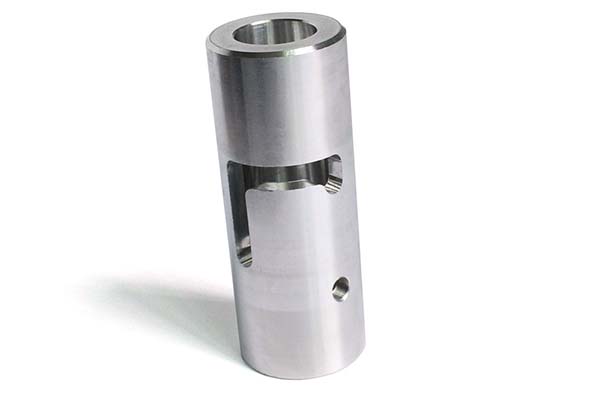
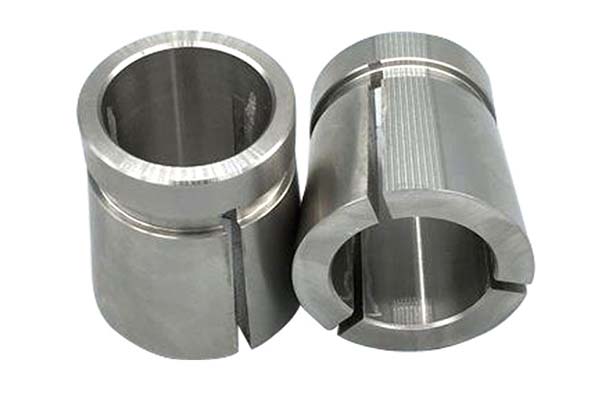
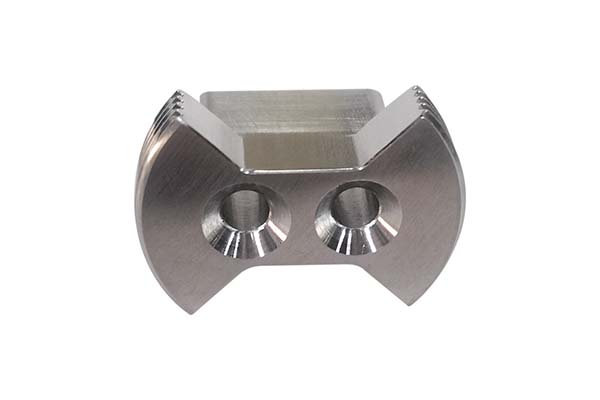
A machined product is any component whose final form is achieved primarily through subtractive manufacturing processes. Material is systematically removed from a solid workpiece using controlled machine tools.
| Aspect | Characteristic |
|---|---|
| Starting form | Solid, homogeneous blank—billet, bar, rod, or plate of wrought metal or plastic |
| Process | Cutting tools on CNC machines follow programmed toolpaths |
| Hallmark characteristics | High dimensional accuracy, excellent surface finishes, superior material properties (no porosity), design flexibility for low to medium volumes without expensive tooling |
Example: A critical valve body for a hydraulic system starts as a solid aluminum or steel block. CNC machines create precise internal bores, threading, sealing surfaces, and port connections—features impossible to cast with required tolerances and surface integrity.
Which Engineering Metals See the Highest Demand?
Material selection is the first critical decision, driven by part function, operating environment, and budget.
| Material Category | Common Alloys | Key Properties | Typical Applications |
|---|---|---|---|
| Aluminum | 6061-T6, 7075-T6, 2024 | Lightweight, good strength-to-weight, excellent machinability, naturally corrosion-resistant | Aerospace frames, automotive parts, electronics, prototypes |
| Stainless Steel | 304, 316, 17-4 PH | High strength, excellent corrosion resistance, heat-treatable | Medical instruments, food processing, marine hardware, chemical valves |
| Mild/Carbon Steel | 1018, 1045, A36 | High strength, toughness, low cost | Machine frames, gears, shafts, structural brackets |
| Tool Steel | D2, A2, O1 | Extreme hardness, wear resistance | Molds, dies, cutting tools, gauges, high-wear jigs |
| Titanium | Ti-6Al-4V (Grade 5) | Exceptional strength-to-weight, biocompatible, excellent corrosion resistance | Aerospace components, medical implants, high-performance automotive |
Case in Point: Material-Driven Redesign
A semiconductor test fixture manufacturer used stainless steel 304 for a critical probe head. Its electrical conductivity caused signal interference. Switching to Titanium Grade 2 solved the interference issue—providing necessary strength with significantly lower electrical conductivity. The machining partner’s titanium expertise was key to the successful switch.
How Do 3-, 4-, and 5-Axis Processes Compare?
The number of axes a CNC machine can move simultaneously defines its capability, the complexity of parts it can produce, and cost-efficiency for a given geometry.
| Axis Configuration | How It Moves | Best For / Advantages | Limitations |
|---|---|---|---|
| 3-Axis | Tool moves linearly in X, Y, Z | Prismatic parts; most common, cost-effective for plates, brackets, simple molds | Cannot machine complex curves or undercuts without manual re-fixturing—adds time, potential error |
| 4-Axis | Adds one rotary axis (A-axis); workpiece spins | Cylindrical parts; features around circumference in one setup (cam profiles, radial holes) | Limited for complex 3D contours; ideal for rotational parts with added features |
| 5-Axis | Adds second rotary axis (B or C); tool approaches from any angle | Complex, organic geometries (impellers, turbine blades, fluid manifolds); single-setup machining guarantees perfect alignment | Highest machine cost, advanced programming skills, higher hourly rate |
Choosing the Right Process:
- Simple mounting bracket with holes and pockets: 3-axis mill —perfect, most economical.
- Driveshaft needing keyway and cross-drilled holes: 4-axis mill or lathe with live tooling —ideal.
- Orthopedic bone implant with complex, patient-specific curves: 5-axis simultaneous machining —only practical choice.
What Achievable Tolerances and Surface Finishes Should You Expect?
Setting realistic expectations for precision is crucial for function and cost management.
Machining Tolerances
| Tolerance Level | Value | Application |
|---|---|---|
| Standard | ±0.005 inches (±0.13 mm) | Most commercial components; non-critical dimensions |
| Precision | ±0.001 inches (±0.025 mm) | Critical features; routine in capable shops |
| High-precision | ±0.0005 inches (±0.0127 mm) or tighter | Specialized processes and environments; 5–10× more expensive than ±0.005" |
Surface Finish (Ra)
| Finish (Ra) | Description |
|---|---|
| 125 µin | Rough, as-machined |
| 63 µin | Standard machined; visible tool marks |
| 32 µin | Good machined; smooth to touch |
| 16 µin | Fine; sealing surfaces, bearing fits |
| <8 µin | Grinding/polishing; high-performance bearings, optics, hydraulic seals |
What Are the True Cost Drivers in Machined Products?
Understanding what you pay for enables smarter design and sourcing decisions.
| Cost Component | Description |
|---|---|
| Material cost | Raw stock; exotic alloys (titanium, Inconel) or large blocks are significant line items |
| Setup & Programming (NRE) | CAD/CAM programming, custom fixtures, First Article Inspection (FAI)—amortized over batch size |
| Machine time (cycle time) | Largest variable cost; determined by geometry, number of setups, tools required, material machinability, tolerances, finishes |
| Batch size | Unit cost drops dramatically as quantity increases; cost for 10 parts dominated by setup; cost for 1,000 parts dominated by material and cycle time |
Design Tip for Cost Saving: Add a radius to internal corners instead of leaving them sharp—allows standard tools and faster machining. Avoid unnecessarily tight tolerances.
How Can Secondary Processes Extend Product Life?
Secondary (post-) processing defines long-term performance and durability.
| Process | Description | Key Benefit |
|---|---|---|
| Heat treatment | Heating and cooling metal to alter microstructure | Increases hardness, strength, toughness; case hardening creates wear-resistant surface over tough core |
| Anodizing (aluminum) | Electrochemical process grows protective oxide layer | Dramatically improves corrosion/wear resistance; Type II for color, Type III hard coat for extreme wear |
| Plating | Electro-depositing thin layer of another metal (chrome, nickel, zinc) | Chromium: hard decorative finish; Nickel: corrosion resistance; Zinc: low-cost corrosion barrier |
| Powder coating | Spraying electrostatically charged powder, curing into solid layer | Superior decorative finish, corrosion protection; more durable than liquid paint |
| Passivation (stainless) | Chemical bath removes free iron; enhances natural oxide layer | Maximizes corrosion resistance without changing dimensions; critical for medical and food-grade parts |
What Should Buyers Evaluate When Selecting Suppliers?
Choose a partner, not just a quote. Look beyond price to these key capabilities.
| Factor | What to Look For |
|---|---|
| Technical capability & equipment | Right machines for your part (3-axis, 5-axis, turning); age and condition; examples of similar work |
| Quality systems & metrology | Documented Quality Management System (ISO 9001); inspection tools (calipers, CMM, optical comparator); verifiable proof of quality |
| Engineering support (DfM) | Proactive feedback to optimize design for cost, quality, manufacturability—sign of a true partner |
| Communication & project management | Clear timelines; proactive updates; manages expectations reliably |
| Cultural fit & stability | Organized, professional; low employee turnover; site visit reveals operational discipline |
Conclusion
Sourcing quality machined products requires understanding core principles: material selection (aluminum, stainless steel, titanium, carbon steel), multi-axis machining capabilities (3-axis for simple parts, 5-axis for complex geometries), and realistic tolerances (standard ±0.005 inches; precision ±0.001 inches; high-precision ±0.0005 inches). Cost drivers include material, setup/programming (amortized over batch size), machine time (largest variable), and batch size. Secondary processes—heat treatment, anodizing, plating, powder coating, passivation—extend product life. Supplier evaluation should focus on technical capability, quality systems (ISO 9001, CMM inspection), engineering support (DfM feedback), and communication. With this framework, you can navigate from concept to finished part with confidence—ensuring components that deliver both performance and value.
FAQs
What is the main difference between CNC machining and 3D printing for prototypes?
CNC machining is subtractive (carving from solid block). Best for functional prototypes needing exact material properties, strength, and smooth surface finish of final production parts. 3D printing (additive) builds layer by layer. Best for form and fit prototypes, highly complex organic shapes, and speed—but often uses different (usually weaker) materials.
How do I prepare files to get an accurate quote for machined products?
Provide: 1) A 3D CAD model in neutral format like STEP (.stp) or IGES (.igs)—defines geometry. 2) A 2D engineering drawing (.pdf)—specifies critical dimensions, tolerances, materials, surface finishes, and special notes. The drawing is the legal specification; the 3D model is reference geometry.
What is a “fair” lead time for custom machined parts?
Simple to moderately complex parts in common materials: 1–3 weeks (includes material ordering, programming, machining, inspection). Highly complex 5-axis parts, exotic materials, or secondary processing: 3–6 weeks. Rush services available at premium.
Are there minimum order quantities (MOQs) for machined parts?
Typically no. CNC machining’s key advantage is low-to-no MOQ—order a single prototype or ten parts. Cost per part is higher for very small quantities because fixed setup costs spread over fewer units. Unit cost becomes significantly more economical as batch size increases.
Contact Yigu Technology for Custom Manufacturing
At Yigu Technology , we are your dedicated partner for high-quality machined products. Our 3-axis, 4-axis, and 5-axis CNC equipment achieve tolerances as tight as ±0.0005 inches . We work with aluminum, stainless steel, carbon steel, tool steel, and titanium. Our comprehensive in-house finishing and quality inspection department—including CMM inspection —ensures full control over timing and quality. From the initial design review, we provide Design for Manufacturability (DfM) feedback to optimize your part for efficient production.
Ready to source quality machined products with confidence? Contact Yigu Technology today for a free consultation and quote. Let us help you transform your design into a reliable, high-performance component.