Introduction
You've got a design. You're ready to print. But when the quotes come back, they're all over the place. One service says $50. Another says $200. And you have no idea which one is right.
Welcome to the confusing world of 3D printing pricing.
Here's the truth: 3D printing costs aren't magic. They follow predictable rules. Once you understand what drives them, you can estimate accurately, compare quotes intelligently, and make smart decisions about whether to print in-house or outsource.
For businesses, this matters directly to the bottom line. A product that costs too much to print won't sell. A prototype that blows your budget kills future projects.
For hobbyists, it means staying within budget and avoiding surprises.
Let's break down exactly what goes into 3D printing costs, how to calculate them, and how to spot hidden expenses before they surprise you.
What Are the Main Components of 3D Printing Costs?
Every 3D printed part has costs built into it. Some are obvious. Some hide until the bill arrives.
Material Costs: What You're Actually Printing With
The material itself is usually the easiest cost to calculate. But prices vary wildly depending on what you're using.
| Material Type | Approximate Cost per Kilogram |
|---|---|
| PLA | $20 – $50 |
| ABS | $30 – $60 |
| PETG | $35 – $70 |
| Nylon | $50 – $100 |
| Resin (standard) | $100 – $500 |
| Aluminum powder | $200 – $1,000 |
| Stainless steel powder | $300 – $1,500 |
| Titanium powder | $1,000 – $5,000 |
PLA is the budget king. A small keychain might use a few cents worth. That's why hobbyists love it.
Resins cost more because they're formulated for precision. Dental models, jewelry patterns, and high-detail prototypes justify the price.
Metal powders sit at the top. Titanium can hit $5,000 per kilogram. But when you need a part that's strong, light, and biocompatible, there's no substitute.
To calculate material cost for a specific part:
- Find the part's volume from your slicer software
- Multiply by material density (most slicers do this automatically)
- Multiply by your cost per gram/kilogram
A part weighing 50 grams in PLA at $30/kg costs $1.50 in material. Simple.
Equipment Costs: The Machine Behind the Magic
Printers aren't free. Even if you own one, the cost of buying and maintaining it should factor into what you charge or what you expect to pay.
| Printer Type | Approximate Price Range |
|---|---|
| FDM Desktop | $200 – $5,000 |
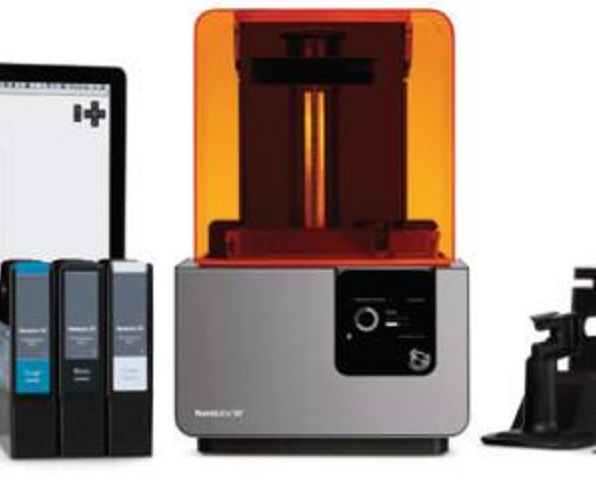
| SLA Desktop | $1,000 – $10,000 |
| FDM Industrial | $5,000 – $50,000 |
| SLA Industrial | $10,000 – $200,000 |
| SLS | $50,000 – $500,000+ |
| DMLS (Metal) | $100,000 – $1,000,000+ |
A $300 Ender 3 can produce amazing prints. But it's slower and less precise than a $5,000 industrial machine. That precision costs money.
To calculate equipment cost per part:
- Estimate the printer's usable lifespan in hours (many professionals use 3,000-5,000 hours for desktop machines)
- Divide purchase price by total hours = hourly machine cost
- Multiply by print time for your part
A $3,000 printer rated for 3,000 hours costs $1 per hour to run. A 10-hour print adds $10 in equipment cost.
Labor Costs: The Human Element
Someone has to make this happen. Even automated printers need humans.
Model preparation takes time. Creating a custom design might require hours of CAD work. Professional 3D modelers charge $30-$100 per hour. A complex part could cost $600-$3,000 just in design before printing starts.
Printer operation requires setup, monitoring, and unloading. Even with automation, an operator might spend 30 minutes per job. At $15-$25 per hour, that's $7.50-$12.50 in labor.
Post-processing is the hidden time sink. Removing supports, sanding, polishing, painting—all take time. A detailed SLA print might need 2-3 hours of post-processing. At $20/hour, that's $40-$60 added to the part cost.
Overhead Costs: The Stuff You Don't See
These costs sneak up on new businesses.
Facility space costs money. A small 3D printing studio might pay $1,000-$3,000 monthly rent, plus $200-$500 for utilities, plus $100-$300 for insurance. Spread across your monthly print volume, that adds up.
Energy consumption matters for long prints. A desktop FDM printer draws 100-200 watts. An industrial SLS machine can draw several kilowatts. At $0.15 per kWh, a 24-hour industrial print could cost $10+ just in electricity.
Maintenance and repairs keep printers running. Desktop machines might need $100-$300 annually in replacement parts. Industrial systems can cost thousands per year for specialized technicians.
Software licensing adds up. Professional tools like Autodesk Netfabb run $500-$1,500 per year. Free options exist but may lack advanced features.
How Do Different Technologies Affect Pricing?
Not all 3D printing is created equal. The technology you choose drives costs in different ways.
FDM: Low Entry, Moderate Quality
Cost profile: Low equipment cost, low material cost, moderate labor
FDM wins on affordability. A desktop printer for $300. Filament for $30/kg. But surface finish suffers, and precision tops out around ±0.1-0.4mm.
For simple prototypes and non-aesthetic parts, FDM is hard to beat on price. But if you need smooth surfaces or tight tolerances, the savings disappear into post-processing labor.
SLA: Precision Comes at a Price
Cost profile: Moderate equipment, high material, high labor
SLA delivers 25-micron layers and glass-smooth surfaces. But resin costs 5-10x more than filament. Printers cost more. Post-processing requires washing and curing stations plus significant labor.
For jewelry, dental applications, and anything that needs to look injection-molded, SLA justifies its cost. For simple parts, it's overkill.
SLS: The Functional Parts Specialist
Cost profile: High equipment, moderate material, moderate labor
SLS prints durable nylon parts without supports. Complex geometries become practical. But industrial SLS machines start at $50,000 and climb fast. Powder handling is messy. Surface finish is grainy.
For production parts that need to function, SLS delivers value. For one-off prototypes, the entry cost is steep.
Metal Printing: The Heavy Lifter
Cost profile: Extremely high equipment, extremely high material, specialized labor
Metal printers cost $100,000 to over $1 million. Titanium powder runs $1,000-$5,000 per kilogram. Post-processing requires heat treatment and support removal.
For aerospace brackets, medical implants, and industrial tooling where nothing else works, metal printing is worth it. For anything else, look elsewhere.
What Part Characteristics Drive Cost?
Complexity Isn't Free—But It's Cheaper Than You Think
Here's where 3D printing gets interesting.
In traditional manufacturing, complexity costs money. Complex shapes require complex tooling, multiple setups, skilled operators. Cost rises exponentially with complexity.
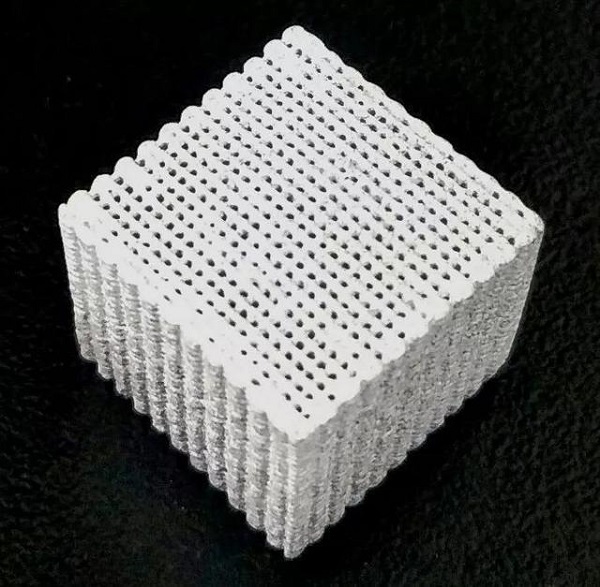
In 3D printing, complexity costs much less. A simple cube and an intricate lattice structure of the same volume take similar time and material. The machine doesn't care.
But extreme complexity still adds cost:
- Fine details require slower printing and smaller nozzles
- Overhangs need supports (more material, more post-processing)
- Internal channels may need special drainage considerations
Size Matters Directly
Larger parts cost more. Simple math.
Material usage scales with volume. Double the dimensions of a cube, and you use 8x the material.
Print time scales similarly. A 10-hour print costs more than a 1-hour print.
The relationship is roughly linear: bigger part = more cost.
Quantity Changes the Equation
Single-unit production carries all setup costs on one part. Design time, machine setup, post-processing—all allocated to one item. Cost per unit is highest here.
Batch production spreads fixed costs. Printing 10 identical parts at once uses the same machine setup as printing one. Cost per unit drops.
But 3D printing doesn't enjoy the massive economy of scale that injection molding does. The cost curve flattens, but doesn't plummet.
Case Study: How a Jewelry Business Mastered 3D Printing Costs
Let's look at a real example.
GlimmerGems is a small jewelry business that adopted 3D printing for custom designs. They faced the same cost questions every business does.
Their Initial Cost Breakdown
Material: Resin at $200 per liter. Small pendants used 5-10ml ($1-$2). Elaborate pieces used 20-30ml ($4-$6).
Equipment: Mid-range SLA printer at $3,000, plus $500 annual maintenance. Over 3 years producing 1,000 pieces, equipment cost per piece = $4.50.
Labor:
- Design: $50/hour × 2-3 hours per model = $100-$150 per model. Spread over 50 pieces = $2-$3 per piece.
- Printing: 1-2 hours per batch, operator at $20/hour = $2-$4 per piece.
- Post-processing: 1-2 hours per piece at $20/hour = $20-$40 per piece.
Overhead: Studio rent $1,000, utilities $200, insurance $100 = $1,300 monthly. At 100 pieces per month = $13 per piece.
Total cost per piece: $42.50 to $70.50 depending on size and complexity.
Their Cost-Reduction Strategies
Material optimization: Switched suppliers for 20% lower resin cost. Saved $0.20-$1.20 per piece.
Printer efficiency: Optimized settings to reduce print time by 20%. Saved $0.40-$0.80 per piece in labor.
Bulk purchasing: Bought resin in larger quantities for 10% volume discount. Further reduced material costs.
Results: Total cost per piece dropped 15-20%. Sales volume increased 30% within a year as they offered more competitive pricing.
How Can You Estimate 3D Printing Costs Accurately?
The Basic Formula
Total Cost = Material + (Machine Hourly Rate × Print Hours) + (Labor Hourly Rate × Labor Hours) + Overhead Allocation
Break it down:
- Material cost = part weight × material cost per gram
- Machine cost = (printer price ÷ total lifetime hours) × print hours
- Labor cost = (design hours + setup hours + post-processing hours) × hourly rate
- Overhead = total monthly overhead ÷ monthly part volume
Use Available Tools
Online calculators can help. Many 3D printing services offer instant quotes from uploaded models. Use them as benchmarks even if you're printing in-house.
Slicer software estimates material usage and print time automatically. Those numbers are reliable starting points.
Watch for Hidden Costs
- Failed prints – Not every print succeeds. Factor in a 10-20% waste rate for complex parts.
- Support material – Supports use material and require removal time.
- Finishing supplies – Sandpaper, paint, sealants add up.
- Shipping – If you're selling, shipping costs matter.
What Does Yigu Technology Recommend for Cost Management?
At Yigu Technology, we've helped hundreds of clients navigate 3D printing costs. Here's our advice:
Know your break-even point. Calculate what each part actually costs to produce. Then decide whether in-house printing or outsourcing makes sense for your volume.
Match technology to requirements. Don't use SLA where FDM works. Don't use metal where plastic works. Every technology has its place.
Optimize designs for printing. Small changes—wall thickness, orientation, support reduction—can dramatically affect cost. Review designs with manufacturing in mind.
Track real data. Keep records of actual material usage, print times, and labor hours. Use that data to refine future estimates.
Be transparent with customers. If you're selling printed parts, explain what drives costs. Customers appreciate honesty and become more reasonable when they understand.
Conclusion: Mastering 3D Printing Costs
3D printing costs aren't a mystery. They follow predictable patterns driven by materials, equipment, labor, and overhead.
Understanding these components lets you:
- Estimate accurately before printing
- Compare service quotes intelligently
- Decide between in-house and outsourcing
- Price your products profitably
- Identify opportunities for cost reduction
The technology keeps advancing. Printers get faster. Materials improve. Costs trend downward. But the fundamental factors remain the same.
Master them, and you'll never be surprised by a 3D printing bill again.
Frequently Asked Questions
What's the cheapest 3D printing technology for small-scale production?
FDM is typically the most cost-effective for small-scale production. Desktop printers cost $200-$500, and PLA filament runs $20-$30 per kilogram. For parts that don't require high precision or smooth surfaces, FDM delivers the lowest cost per part.
How do I calculate material cost for a specific part?
Most slicer software estimates material usage in grams or kilograms. Multiply that weight by your cost per gram. For example, if your slicer shows 50g and filament costs $30/kg, material cost = ($30 ÷ 1000) × 50 = $1.50.
Are there hidden costs in 3D printing I should know about?
Yes. Post-processing labor often surprises new users. Support removal, sanding, and finishing can take hours. Failed prints waste material and time. Software licensing and maintenance add up. Always factor these into your estimates.
Does printing multiple parts at once save money?
Usually yes. Setup costs spread across multiple parts. Many printers can run unattended, so labor cost per part drops. Material costs remain the same per part, but machine time is used more efficiently.
How much should I charge for 3D printed products?
A common rule: material cost × 2-3 plus labor. But research your market. Simple keychains might sell for $10-$15. Complex custom engineering parts can command $100-$500. Know what customers in your niche expect to pay.
Contact Yigu Technology for Custom Manufacturing
Need help understanding what your 3D printing project should cost? At Yigu Technology, we provide transparent pricing and honest advice.
Whether you're prototyping a new design or planning production runs, we'll help you choose the most cost-effective approach. Contact us today to discuss your project. Let's make sure you get the best value for your manufacturing dollar.