Introduction
Manufacturing companies today face real pressure. Customers want products faster. They want things made just for them. Supply chains keep breaking. Traditional manufacturing wasn't built for this world.
Think about how we've always made things. You design a part. You make a mold. That takes weeks and costs thousands. Then you produce thousands of identical parts. Great if you need thousands. Terrible if you need ten, or if you discover a design flaw after the mold is made.
3D printing flips this model. No molds. No minimum quantities. You design digitally and print directly. A part that took weeks now takes days. A design change costs nothing.
But here's what most articles miss: 3D printing isn't one thing. It's dozens of technologies, hundreds of materials, and thousands of applications. Some are perfect for your needs. Others will waste your time and money.
This guide cuts through the noise. You'll learn which technologies actually work for industrial production, what materials solve real engineering problems, and how companies like GE and Volkswagen use 3D printing today. Let's start with the machines themselves.
Which 3D Printing Technology Fits Your Parts?
Material Extrusion: The Reliable Workhorse
Fused Deposition Modeling (FDM) is what most people imagine when they hear "3D printing." A nozzle melts plastic filament and lays it down layer by layer.
For industrial work, forget desktop machines. Industrial FDM systems print with ULTEM and PEEK - engineering thermoplastics that handle heat and chemicals. These materials survive in aircraft interiors and medical sterilization equipment.
Modern dual-extrusion heads solve a huge problem: supports. One nozzle prints your part. The other prints dissolvable material for overhangs. Drop the finished part in water, supports disappear. No manual picking at fragile features.
Best for: large prototypes, jigs, fixtures, low-volume production
Vat Photopolymerization: When Precision Matters
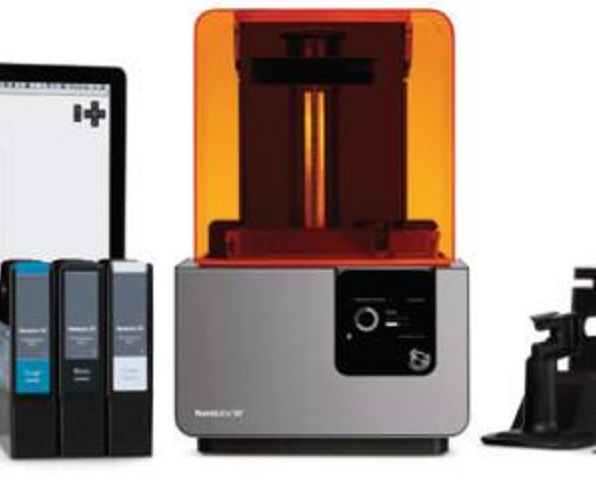
Stereolithography (SLA) and Digital Light Processing (DLP) use light to cure liquid resin into solid parts. The results look and feel like injection-molded plastic.
Continuous Liquid Interface Production (CLIP) changed the game here. Traditional SLA pulls parts out of resin, waits for resin to flow back under the part, then repeats. CLIP maintains a liquid interface and cures continuously. It prints 25-100x faster than old methods.
Dental labs love this. A single digital scan becomes a perfect crown in hours, not days. Electronics companies print custom housings with snap-fits that actually work the first time.
Best for: detailed prototypes, dental/medical models, jewelry patterns
Powder-Bed Fusion: Metal Parts That Actually Work
This is where 3D printing becomes real manufacturing.
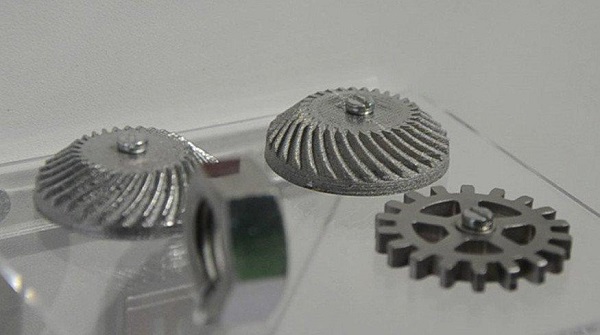
Selective Laser Melting (SLM) and Direct Metal Laser Sintering (DMLS) spread a thin layer of metal powder. A laser melts exactly where the part needs material. Another powder layer. Another melt. Repeat until done.
The metals are the same ones machinists use: titanium Ti64, Inconel 718, stainless steel 316L. The parts come out fully dense - no porosity, no weakness.
Modern machines run multiple lasers. Four or eight lasers working together boost throughput by 300-400%. That's production-scale runs of aerospace brackets and turbine blades.
For polymers, Multi Jet Fusion (MJF) from HP prints nylon 12 and glass-filled materials at 80-micron layers. Strong parts. Fast production. Automotive companies use it for assembly tools and spare parts.
Best for: production metal parts, complex geometries, functional polymer parts
Directed Energy Deposition: Fixing Big Stuff
Laser Metal Deposition (LMD) and Electron Beam Melting (EBM) work differently. They deposit material onto an existing surface while melting it in place.
This is repair technology. A turbine blade wears down over time. Traditional method: replace it (expensive). LMD method: add new material exactly where it's missing, then machine back to spec. Saved blades. Saved money.
EBM runs in a vacuum with high temperatures. That makes it ideal for titanium parts that need exceptional mechanical properties - think rocket nozzles and spacecraft components.
Best for: repairs, large structures, high-performance titanium
Hybrid Manufacturing: Print Then Machine
5-axis hybrid CNC-AM centers combine additive and subtractive in one machine. Print near-net-shape, then machine to final tolerances without moving the part.
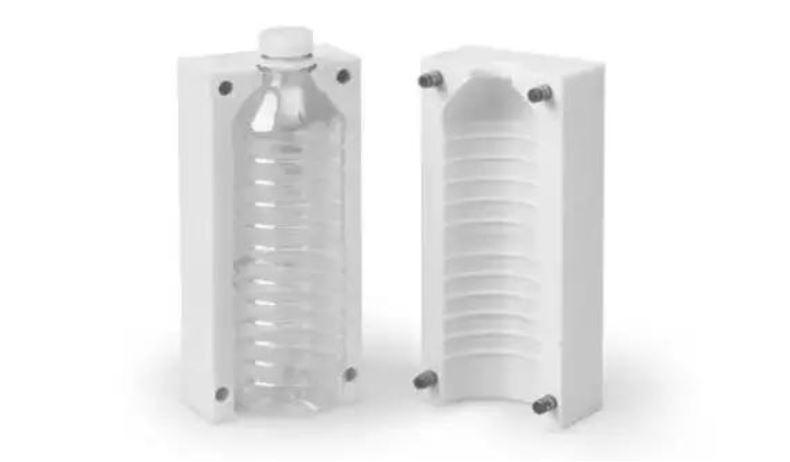
For conformal cooling molds, this cuts lead time by up to 50%. The additive part creates cooling channels that follow the mold shape exactly. The machining part ensures perfect fit and finish.
Best for: complex tooling, parts needing both complexity and precision
What Materials Can You Actually Print?
Engineering Polymers: Beyond Basic Plastic
PEEK and PEKK are the superstars here. Continuous use above 250°C. Chemical resistance that laughs at oils and solvents. Strength that replaces metal in many applications.
Add carbon fiber to these polymers and things get interesting. Carbon-fiber reinforced PEEK weighs less than aluminum but approaches its strength. UAV frames. Aerospace brackets. Oil and gas downhole tools. All lighter, all tough enough.
Nylon 12 (PA12) with glass fill is the workhorse for powder-bed systems. Good strength. Good chemical resistance. Good surface finish. Volkswagen prints over 100,000 custom tools annually from this material.
Metals: Real Strength for Real Parts
Stainless steel 316L resists corrosion. Marine parts use it. Medical implants use it. Food processing equipment uses it.
Titanium Ti64 balances strength and weight perfectly. Aerospace brackets. Racing components. Orthopedic implants. Where every gram matters, titanium wins.
Inconel 718 handles extreme heat. Turbine blades. Exhaust systems. Rocket engine parts. At 700°C, it still holds its strength.
Cobalt-chrome offers biocompatibility and wear resistance. Orthopedic devices. Dental frameworks. Anything that moves against bone or tissue.
Sustainable Options: Less Waste
The industry is moving toward recycled powders. BASF now offers recycled nylon 12 for powder-bed systems. Metal powder suppliers reclaim and reuse unmelted powder from builds.
Bio-compatible resins enable surgical guides and hearing aids printed directly for patients. Conductive inks open doors for printed electronics - antennas embedded in structures, sensors printed during manufacturing.
How Fast Can Production-Scale Machines Go?
Industrial 3D printing hardware has evolved fast. Here's what production machines do now:
Multi-laser metal printers like the EOS M 400-4 run four lasers simultaneously. Build volume: 400x400x400mm. Per-part costs drop by 30% for high-volume runs. More lasers means more parts per day.
Large-format additive systems like the Cincinnati Inc. BAAM print parts up to 6x10x3 feet. Architectural facades. Automotive tooling. Boat molds. Things you couldn't imagine printing five years ago.
Automated build-plate changers keep machines running 24/7. One build finishes, the plate swaps automatically, next build starts. Minimal downtime. Maximum output.
In-situ monitoring sensors watch every layer. AI defect detection from companies like 3D Systems spots problems immediately. Scrap rates drop by up to 40%. No more printing bad parts for hours before discovering an issue.
Does Software Matter as Much as Hardware?
Yes. Maybe more.
Generative Design: Let Computers Find Better Shapes
Generative design tools like Autodesk Fusion 360 don't just model what you imagine. They explore thousands of possibilities based on your requirements.
Give it: "I need a bracket that holds 500 pounds, mounts to these three points, and weighs under 2 pounds."
The software generates organic-looking structures that mimic nature. Bone-like lattices. Branching supports. Shapes no human would design but that use 50% less material while meeting all requirements.
Build Simulation: Predict Before You Print
Metal printing gets hot. Really hot. Parts expand, contract, and sometimes warp.
Build simulation software from companies like Simufact predicts thermal distortion before you waste powder and time. It simulates layer-by-layer heating and cooling. Shows where problems will occur. Lets you adjust design or orientation to prevent them.
No simulation means trial-and-error. Expensive trial-and-error.
MES Integration: Track Everything
For aerospace and medical, traceability isn't optional. You must know every detail about every part.
Manufacturing execution system (MES) integration connects printers to production tracking. Real-time data from design to delivery. Which machine printed it. Which powder batch. Which operator. Which settings. All recorded automatically.
Digital twins mirror physical parts in software. Simulate performance under real conditions. Predict maintenance needs. Extend service life.
What Are Companies Actually Making?
Aerospace: Fewer Parts, Less Weight
GE Aviation prints fuel nozzles for LEAP engines. Traditional method: 20 parts welded together. 3D printing method: 1 part. Weight down by 25%. Strength up. Production time down.
The cooling channels inside these nozzles follow paths impossible to machine. Better cooling means longer life. Longer life means fewer engine overhauls.
Medical: Custom-Fit Implants
Titanium Ti64 spinal implants printed exactly for each patient. Surgeons get perfect fit. Patients get better outcomes.
PEEK cranial plates replace skull sections removed during surgery. Printed from CT scans, they match the missing bone exactly. No shaping during surgery. Less time under anesthesia. Faster recovery.
Automotive: Tools Fast, Parts When Needed
Volkswagen uses MJF to print over 100,000 custom tools annually. Assembly jigs. Fixtures. Handling aids. Lead time: weeks to days. Cost: fraction of traditional fabrication.
When a new model launches, tools are ready immediately. No waiting. No production delays.
Oil & Gas: Surviving Extreme Conditions
Inconel 718 downhole tools face extreme pressure, temperature, and corrosion. Traditional manufacturing struggles with the complex internal channels these tools need.
3D printing creates those channels easily. Tools perform better. Last longer. Fail less often.
What Post-Processing Do Parts Really Need?
Printed parts aren't finished parts. Post-processing matters.
Hot Isostatic Pressing (HIP)
Metal parts from powder-bed fusion have microscopic porosity. Tiny voids that could grow into cracks under stress.
HIP applies high temperature and high pressure in an inert gas chamber. Voids collapse. Material densifies fully. Fatigue resistance increases dramatically.
For turbine blades and structural aerospace components, HIP is non-negotiable.
Surface Finishing
Vapor smoothing treats polymer parts with chemical vapor. Surfaces melt slightly and flow together. Layer lines disappear. Finish approaches injection-mold quality.
CNC machining brings critical features to final tolerances. Holes drilled exactly. Surfaces flattened. Threads cut. Five-axis systems handle complex geometries that would require multiple setups traditionally.
Inspection
3D scanning compares printed parts to digital models. Every dimension verified. Every feature checked.
CT scanning looks inside. Finds internal voids. Verifies internal channels are clear and correctly shaped. For medical implants and safety-critical parts, this matters.
Conclusion
3D printing isn't replacing all manufacturing. That was never the point.
The point is doing things you couldn't do before. Parts with internal cooling channels that follow any path. Brackets that weigh 50% less but carry the same load. Implants that fit one specific patient perfectly. Tools ready in days instead of weeks.
The technology keeps improving. Faster machines. Better materials. Smarter software. Lower costs. More applications.
For companies facing pressure to move faster, customize more, and waste less, 3D printing isn't just interesting. It's becoming essential.
FAQ
What's the difference between prototyping and production 3D printing?
Prototyping uses FDM or SLA with standard materials to validate designs quickly and cheaply. Production printing requires industrial technologies like SLM or MJF with high-performance materials (PEEK, titanium) that meet mechanical and regulatory standards for end-use parts.
How do I choose between metal and polymer 3D printing?
Metal (SLM, DMLS) works for high-strength, heat-resistant parts like aerospace components and medical implants. Polymers (FDM, MJF) excel in lightweight, complex parts at lower cost, such as automotive jigs and electronics housings.
What post-processing steps are non-negotiable for industrial parts?
For metals: support removal, heat treatment (HIP for critical parts), and CNC machining of critical surfaces. For polymers: support removal, vapor smoothing for finish, and dyeing or painting as needed. Metrology (3D scanning, CT inspection) ensures quality for both.
Can 3D printed metal parts replace machined parts?
Yes, for many applications. Printed Inconel 718 matches or exceeds forged properties. Printed titanium Ti64 meets aerospace standards. The key is proper process control and post-processing.
How much does industrial 3D printing cost?
Equipment ranges from $50,000 for small polymer systems to $1M+ for large metal printers. Per-part costs depend on volume, material, and complexity. For low volumes, it's often cheaper than traditional methods. For high volumes, traditional usually wins on cost per part.
Contact Yigu Technology for Custom Manufacturing
Yigu Technology bridges the gap between prototyping and production. We combine selective laser melting for metal components with multi-jet fusion for complex polymer parts. Our team works with PEEK, titanium, stainless steel, and carbon-fiber composites daily. Whether you need aerospace brackets, medical implants, or production tools, we deliver precision parts fast. [Contact Yigu Technology] to discuss your project and discover how 3D printing can solve your manufacturing challenges.