Choosing the right plastic injection molding partner can make or break your product. It's a decision that impacts your production costs, final product quality, market launch timeline, and ultimately, your business reputation. This guide cuts through the noise, providing a practical, step-by-step framework used by industry veterans to vet and select a factory that aligns with your project's specific technical needs, budget, and quality expectations. We'll move from understanding why this choice is so critical, to the tangible factors you must evaluate, ensuring you forge a partnership built for success.
Why Does Choosing the Right Injection Molding Factory Matter So Much?
You might think all molding shops with the right machine can make your part. The reality is far different. The factory you select becomes an extension of your own product development and manufacturing team. Their decisions directly influence your bottom line and your brand's integrity. A misstep here can lead to catastrophic product failure, costly delays, and strained customer relationships.
Can the Wrong Factory Drain Your Budget Through Inefficiency?
Absolutely. Cost-efficiency in injection molding isn't just about the lowest price per part. It's about the total cost of ownership. An inexperienced or poorly equipped factory might quote a low initial price but cost you more in the long run.
- Hidden Costs of Poor Design for Manufacturability (DFM): A skilled factory provides comprehensive DFM feedback. They might suggest slight wall thickness adjustments, optimal gate locations, or draft angle improvements that prevent molding issues, reduce material use, and speed up cycle times. A factory that just "runs the part" as-is could lead to high scrap rates, excessive tooling wear, and constant debugging.
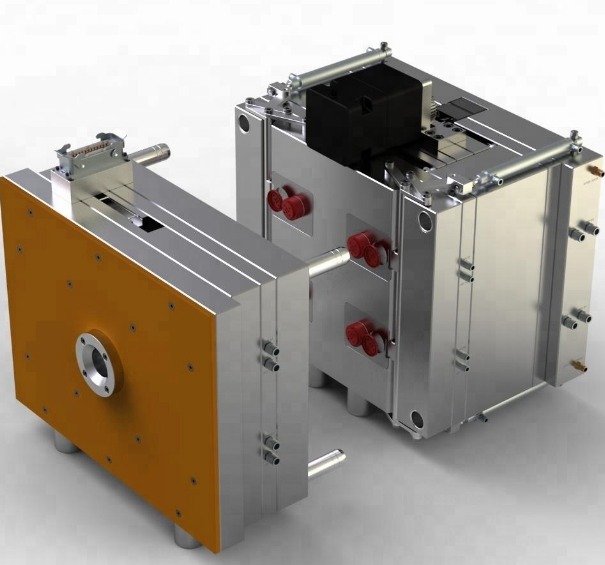
- The Tooling Investment Trap: Cheap tooling often equals expensive production. A factory cutting corners on mold steel quality, cooling channel design, or maintenance will produce a tool that fails prematurely, requires constant repairs, and yields inconsistent parts. The cost of retooling or endless fixes far exceeds investing in a robust mold from the start.
- Material Waste and Yield: Precise process control minimizes scrap. A factory with outdated machines and minimal monitoring can have shockingly low yield rates, meaning you pay for plastic that ends up in the recycle bin.
How Does Factory Choice Directly Impact Your Product's Quality?
Quality assurance is systemic. It's woven into the factory's culture, equipment, and processes. Your chosen partner's quality systems are your first and last line of defense against defective products reaching your customers.
- Consistency is King: Modern, well-maintained all-electric or hybrid injection molding machines offer superior repeatability compared to old hydraulic machines. This means the 10,000th part is identical to the 1st.
- Measurement and Validation: Does the factory have the necessary metrology equipment—CMMs, optical comparators, CT scanners—to verify critical dimensions, not just with calipers? Can they provide First Article Inspection (FAI) reports and Statistical Process Control (SPC) charts as proof of stable, capable production?
- Real-World Case: The Medical Component Failure. A startup needed a small, clear polycarbonate component for a diagnostic device. They chose a low-cost factory that lacked cleanroom molding experience and rigorous drying procedures. The parts had internal voids and stress marks, causing light refraction errors. The entire first production run was rejected, delaying FDA submission by months. The cost of rework and delay dwarfed the initial "savings."
Will Your Timeline Suffer with an Unprepared Partner?
Production cycle time is about more than just the machine's cycle speed. It encompasses the entire timeline from approved design to parts on your dock. Delays at the molding stage cascade, jeopardizing product launch dates and marketing campaigns.
- Tooling Lead Time & Management: A factory with in-house tool design and machining capabilities can often build and iterate on molds faster than one outsourcing everything. Their expertise also predicts and prevents tooling delays.
- Production Scheduling & Scalability: Can they handle your initial low-volume pilot run efficiently, then seamlessly ramp up to full-scale production? Factories that specialize in either prototyping or mass production may struggle with the transition.
- Supply Chain Reliability: A professional factory manages its raw material resin supply chain to prevent shortages. They also have robust post-molding operations (assembly, ultrasonic welding, painting) in-house or with trusted partners, preventing logistical bottlenecks.
What Are the Key Factors to Vet When Selecting a Factory?
Moving from theory to practice, here is a structured evaluation checklist. Don't just ask for a quote; ask for evidence.
Do They Have Proven Experience and Specific Expertise?
Look for demonstrable experience, not just years in business. Expertise is often niche.
- Ask for Case Studies: Request examples of projects similar to yours in material type, part complexity, industry, and volume. A factory great at high-volume PET preforms may not be the best fit for low-volume, tight-tolerance PEEK medical parts.
- Industry Certifications Matter: For regulated industries, certifications are non-negotiable. Look for ISO 13485 (medical devices), IATF 16949 (automotive), or ISO 9001 (general quality management). These are audited standards, not just marketing claims.
- Evaluate Their Engineering Team: The initial dialogue is a test. Are their engineers asking insightful DFM questions? Do they understand mold flow analysis and its implications? Their questions reveal their depth.
Is Their Equipment Modern and Capable of Meeting Your Tolerances?
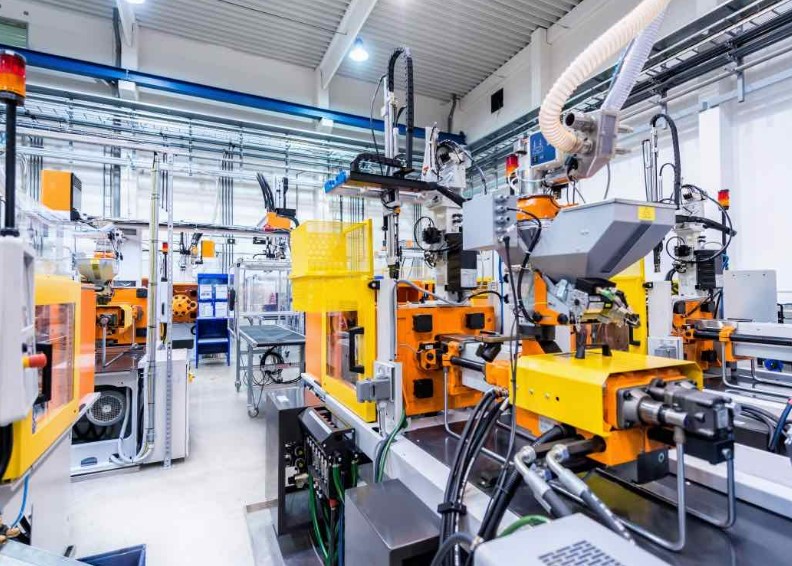
The machine park tells a story. Match the technology to your part's requirements.
| Your Part Requirement | Critical Factory Equipment/Feature to Look For |
|---|---|
| High Precision / Tight Tolerances | All-electric injection machines (for repeatability), cleanroom environments, high-precision molds. |
| Transparent or Optical Parts | Machines with dedicated screw/barrel for clear materials, validated drying systems, dust-controlled areas. |
| Multi-Material or Overmolding | Multi-shot injection molding machines or rotary table presses. |
| Micro-Molding or Miniature Parts | Specialized micro-injection machines (shot weights <1g). |
| High-Volume Production | High-cavitation molds, automated part handling & vision inspection systems. |
What Does Their Quality Assurance System Actually Look Like?
Go beyond the certificate. Ask for their quality control workflow.
- Incoming Material Check: How do they verify resin grade and lot?
- In-Process Control: Do operators perform regular dimensional and visual checks? Is there SPC data on critical dimensions you can review?
- Final Inspection: What is the Acceptable Quality Level (AQL) sampling plan? What equipment is used for final sign-off?
- Documentation: Will they provide material certifications, FAI reports, and compliance certificates (e.g., FDA, ROHS) with each shipment?
How Transparent and Fair is Their Cost Structure?
Seek cost-effectiveness, not just low cost. A transparent quote builds trust.
- A detailed quote should break down: Tooling cost (with steel grade specified), piece-part price at various volumes, any setup fees, and payment terms.
- Understand the drivers: The quote is based on cycle time estimation, material cost, cavitation (number of parts per cycle), and overhead. A good partner will explain these.
- Case Study: The Automotive Lever. An automotive supplier needed a nylon lever. Factory A quoted 20% less than Factory B. Factory B's quote included a mold flow analysis fee, recommended a higher-grade stainless steel for the core pins due to abrasive glass-filled nylon, and proposed an 8-cavity mold for better long-term efficiency. Factory A's cheaper tool failed after 50,000 cycles. Factory B's tool lasted over 1 million. The lowest initial cost created the highest total cost.
Can They Handle Your Volume, Both Now and in the Future?
Production capacity is about capability and commitment.
- Ask about current capacity utilization. A factory running at 100% capacity may struggle with your timelines.
- Discuss their shift patterns. Can they run 24/7 if needed for your project?
- Inquire about their supply chain for secondary operations. If your part needs metal inserts, printing, or assembly, can they manage it, or will you be forced to coordinate multiple vendors?
Will Communication Be Clear and Proactive?
Communication and customer service are the glue. You need a responsive project manager, not just a sales contact.
- Test their responsiveness during the quoting phase.
- Clarify the primary point of contact for technical issues vs. logistical updates.
- Establish preferred communication channels and update schedules. Will you get weekly progress reports during tooling? Regular SPC data during production?
- A factory that communicates problems early (e.g., "We see a sink mark issue; here are three solutions") is more valuable than one that hides issues until a deadline is missed.
FAQ
What is the most important factor when choosing an injection molder?
There's no single factor. The most critical element is finding a factory whose core capabilities, expertise, and business model align with your specific project needs—be it material, precision, volume, or industry certification. A perfect match for a simple consumer item may be a terrible fit for a life-critical component.
Should I always choose the factory with the lowest quote?
Almost never. The lowest quote often carries the highest risk. It can indicate inexperience, hidden costs, subpar tooling, or a lack of critical quality controls. Evaluate the Total Cost of Ownership (TCO), which includes tooling longevity, part yield, and the cost of delays or failures.
How do I verify a factory's quality claims?
Ask for proof. Request sample parts from a similar project, review their quality manual and SPC charts, and if the order is substantial, insist on an audit or facility tour (virtual or in-person). Certificates on the wall are a start; documented processes are the real evidence.
What questions should I ask during the initial consultation?
- "Can you walk me through your DFM process for a part like this?"
- "What is your typical process for validating a new mold?"
- "How do you handle deviations or non-conforming parts during production?"
- "Can you provide references from clients with similar projects?"
When is it better to use a domestic (U.S.) factory vs. an overseas one?
Choose a domestic factory when IP protection, tight communication loops, rapid iteration, shorter shipping timelines, and lower minimum order quantities (MOQs) are priorities. Choose an overseas factory primarily when unit cost at very high volumes is the absolute dominant factor, and you have the internal resources to manage longer lead times, potential communication gaps, and more complex logistics.
Contact Yigu Technology for Custom Manufacturing.
Navigating the selection process requires time and technical insight. If you're looking for a U.S.-based partner that embodies the principles outlined above—proven expertise in complex projects, state-of-the-art equipment, and a transparent, collaborative approach—let's discuss your project.
Yigu Technology specializes in high-precision, engineering-grade plastic injection molding, from prototyping through full-scale production. Our team provides in-depth DFM analysis, robust tooling built for longevity, and stringent quality control processes suitable for demanding applications in medical, automotive, and consumer electronics.
Reach out today for a confidential consultation and a detailed project review. We'll help you determine the most efficient and reliable path to manufacturing your product.