Introduction
In mechanical engineering, the quest for components that combine precision and durability never ends. Plastic worm gears have emerged as a remarkable solution. These screw-and-wheel systems quietly power everything from automotive windows to surgical robots—delivering accuracy and long-lasting performance. This guide explores how plastic worm gears work, why they excel in precision applications, and how to select the right materials and designs for your needs.
What Are Plastic Worm Gears?
Basic Structure and Function
A worm gear system consists of two components:
- Worm: A screw-like gear with helical threads
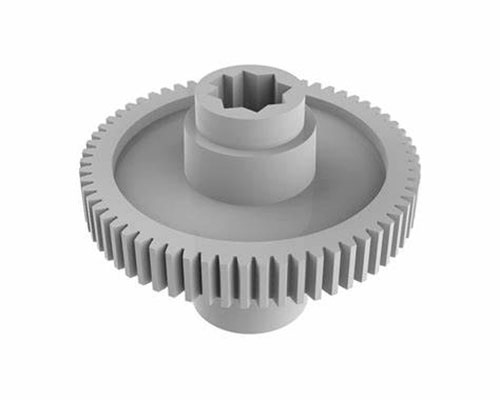
- Worm wheel: A gear with teeth that mesh with the worm
When the worm rotates, its threads push against the worm wheel's teeth, transferring motion and power. The worm typically drives the wheel, but the reverse is often self-locking—the wheel cannot drive the worm. This feature is valuable in applications requiring holding position without power.
Why Use Plastic Instead of Metal?
Plastic worm gears offer several advantages over metal:
| Property | Plastic Worm Gears | Metal Worm Gears |
|---|---|---|
| Weight | Up to 50% lighter | Heavy |
| Cost | Lower production cost | Higher production cost |
| Noise | Quiet operation | Can be noisy |
| Corrosion | High resistance | Susceptible to rust |
| Lubrication | Often self-lubricating | Usually required |
Why Is Precision the Core Advantage?
High-Precision Transmission
Modern injection molding achieves tolerances as tight as ±0.05 mm for plastic worm gears. This dimensional accuracy ensures smooth, consistent meshing between worm and wheel.
Backlash—the play between meshing teeth—can be controlled to 0.01–0.03 degrees in well-designed plastic worm systems. Compare this to metal worm gears, where manufacturing irregularities and wear often result in higher backlash.
Low backlash is critical in applications requiring repeatable motion. In optical tracking systems, even slight deviation causes inaccurate targeting or image distortion. Plastic worm gears enable smooth, precise movement of optical components.
Precise Motion Control in Applications
Robotics: A robotic arm on a microelectronics assembly line uses plastic worm gears in its joints. The arm moves with sub-millimeter precision, accurately placing tiny components onto circuit boards. The lightweight plastic also reduces energy consumption—essential for battery-powered robots.
3D Printers: The print head moves along X, Y, and Z axes with precision measured in microns. Plastic worm gears in the gantry system ensure filament deposits exactly where needed. When printing a delicate model—like an insect's wings—this precision reproduces fine details accurately.
How Do Plastic Worm Gears Compare to Other Gear Types?
| Gear Type | Typical Tolerance | Typical Backlash |
|---|---|---|
| Plastic Worm | ±0.05 mm | 0.01–0.03 degrees |
| Spur | ±0.1–0.2 mm | 0.05–0.1 degrees or more |
| Bevel | ±0.08–0.15 mm | 0.03–0.08 degrees |
Plastic worm gears achieve tighter tolerances and lower backlash than spur or bevel gears in typical applications. This makes them the preferred choice when precision motion control is paramount.
What Materials Are Used?
| Material | Key Properties | Best For |
|---|---|---|
| POM (Acetal) | High stiffness, low friction, excellent dimensional stability | Precision applications, small-scale machinery |
| Nylon (PA) | Excellent wear resistance, high strength, moderate impact resistance | Moderate loads, vibration-prone environments |
| ABS | Good impact resistance, easy to mold, cost-effective | Less demanding applications where cost is primary |
Material Selection Guide
| If you need… | Choose… |
|---|---|
| Maximum precision, dimensional stability | POM (Acetal) |
| Wear resistance, moderate loads | Nylon (PA) |
| Impact resistance, cost-effectiveness | ABS |
| High temperature (>150°C) | High-performance plastics (PEEK, etc.)—at higher cost |
What Are the Key Advantages?
High Reduction Ratios
Worm gears achieve high reduction ratios in a compact package. A single-stage worm gear can achieve ratios from 5:1 to 100:1—far higher than spur or helical gears in one stage.
Self-Locking Capability
When designed with appropriate lead angles, worm gears are self-locking. The worm can drive the wheel, but the wheel cannot drive the worm. This is valuable in:
- Elevators and hoists: Hold load without brake engagement
- Positioning systems: Maintain position without power
- Actuators: Prevent back-driving from external forces
Smooth, Quiet Operation
Plastic's natural damping properties absorb vibration. Meshing engagement is gradual—the worm tooth slides into contact rather than impacting. This results in significantly quieter operation than metal spur or bevel gears.
Corrosion Resistance
Plastic worm gears resist moisture, chemicals, and humidity. In automotive wiper systems—exposed to rain and road salts—plastic gears outlast metal alternatives. A study found vehicles with plastic worm gears in wiper systems had 30% lower failure rates over five years compared to metal-based systems.
What Are the Limitations?
Temperature Sensitivity
Most common plastics have continuous use limits:
- POM: 100–120°C
- Nylon: 80–100°C (higher for specialty grades)
- ABS: 80–100°C
Above these temperatures, materials soften, lose strength, and may deform. For high-temperature applications, specialized plastics (PEEK, etc.) are available but at higher cost.
Lower Load Capacity
Plastic worm gears cannot match the torque capacity of hardened steel. For heavy-duty industrial applications with extreme loads, metal remains necessary.
Wear Considerations
While modern engineering plastics wear well, plastic worm gears can experience wear over time—especially under continuous high-load operation. Proper material selection and lubrication extend service life.
Where Are Plastic Worm Gears Used?
Automotive Industry
Power windows: Plastic worm gears enable smooth, quiet window movement. In a typical sedan, the mechanism may operate thousands of cycles over the vehicle's life. Plastic gears withstand this repetition without significant wear.
Windshield wipers: Gears in the wiper motor transmission provide torque and precise motion control. They resist moisture and vibration, ensuring reliable operation in all weather conditions.
Electronics Industry
Printers: In paper-feeding mechanisms, plastic worm gears ensure smooth, consistent paper movement—preventing jams. Quiet operation matters in office environments.
Cameras and projectors: Focusing and zooming mechanisms rely on plastic worm gears for precise, repeatable motion. In a DSLR camera, these gears allow photographers to focus accurately and quickly.
Industrial Equipment
Conveyor systems: Plastic worm gears provide precise speed control and positioning.
Packaging machinery: Corrosion resistance suits washdown environments.
Medical Devices
Surgical robots: Precision motion control is essential for delicate procedures. Plastic worm gears enable smooth, accurate movement.
Diagnostic equipment: Reliable positioning over thousands of cycles.
How Do You Maintain Precision and Durability?
Proper Lubrication
While many plastics are self-lubricating, appropriate lubricants can further reduce friction and wear. Use synthetic lubricants compatible with plastics—avoid petroleum-based products that may cause swelling or degradation.
Environmental Control
Keep operating temperature within the material's recommended range. Avoid exposure to excessive moisture or corrosive substances that degrade plastic over time.
Regular Inspection
Check for signs of wear:
- Tooth deformation or rounding
- Surface roughness or pitting
- Unusual noise during operation
Early detection allows replacement before failure affects system performance.
Yigu Technology's Perspective
At Yigu Technology, we see plastic worm gears as a critical solution for precision-driven applications. Their ability to deliver high reduction ratios, self-locking capability, and quiet operation—all in a lightweight, corrosion-resistant package—makes them invaluable.
We recently worked with a medical robotics company developing a surgical positioning system. Requirements were demanding:
- ±0.02 mm positioning accuracy
- Self-locking to maintain position without power
- Sterilizable materials for operating room use
- Quiet operation for patient comfort
We supplied custom POM worm gears with optimized tooth profiles. The gears achieved the required precision, provided reliable self-locking, and operated silently. The medical device passed regulatory testing and is now in clinical use.
Our approach combines:
- Material expertise to match properties to application demands
- Precision manufacturing with tight tolerance control
- Collaborative design to optimize for performance and manufacturability
We are committed to helping customers leverage plastic worm gears' unique advantages while managing their limitations.
Conclusion
Plastic worm gears unleash power through their unique combination of precision, durability, and functional advantages. They achieve tolerances as tight as ±0.05 mm and backlash as low as 0.01–0.03 degrees—surpassing many other gear types in precision applications. Their high reduction ratios, self-locking capability, and quiet operation make them ideal for automotive, electronics, industrial, and medical applications. While limitations in temperature and load capacity exist, advances in materials and manufacturing continue to expand their capabilities. When selected with care—matching material to application requirements, optimizing design, and maintaining proper operating conditions—plastic worm gears deliver reliable, long-lasting performance.
FAQ About Plastic Worm Gears
What are the common materials for plastic worm gears?
POM (acetal) offers high stiffness, low friction, and dimensional stability—ideal for precision applications. Nylon (PA) provides wear resistance and strength for moderate loads. ABS offers impact resistance at lower cost for less demanding applications.
Can plastic worm gears be used in high-temperature environments?
Most common plastics have limits: POM: 100–120°C, nylon: 80–100°C, ABS: 80–100°C. Above these, materials soften and lose properties. High-performance plastics like PEEK withstand up to 200–250°C but cost significantly more.
How do I maintain precision and durability of plastic worm gears?
Use compatible synthetic lubricants to reduce friction. Keep operating temperature within material limits. Avoid moisture and corrosive substances. Inspect regularly for wear signs—tooth deformation, surface roughness, or unusual noise—and replace before failure.
What is the advantage of self-locking in worm gears?
Self-locking means the worm can drive the wheel, but the wheel cannot drive the worm. This holds position without power—critical in elevators, hoists, positioning systems, and actuators where back-driving would cause unsafe or unintended movement.
Contact Yigu Technology for Custom Manufacturing
Need plastic worm gears tailored to your precision application? Yigu Technology provides custom manufacturing of plastic worm gears—from material selection and design optimization to precision injection molding. Contact us today to discuss your project.