Introduction
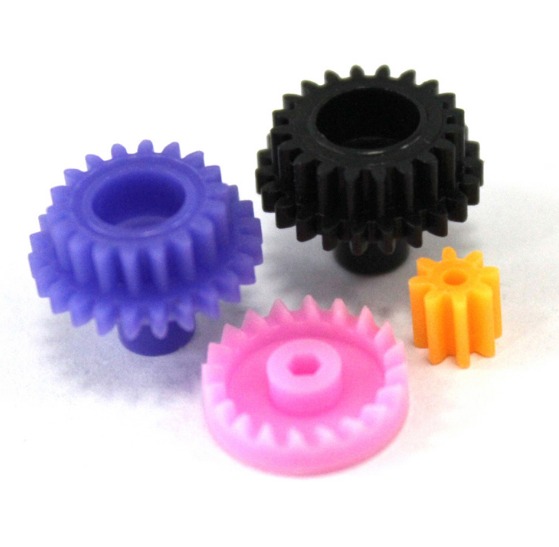
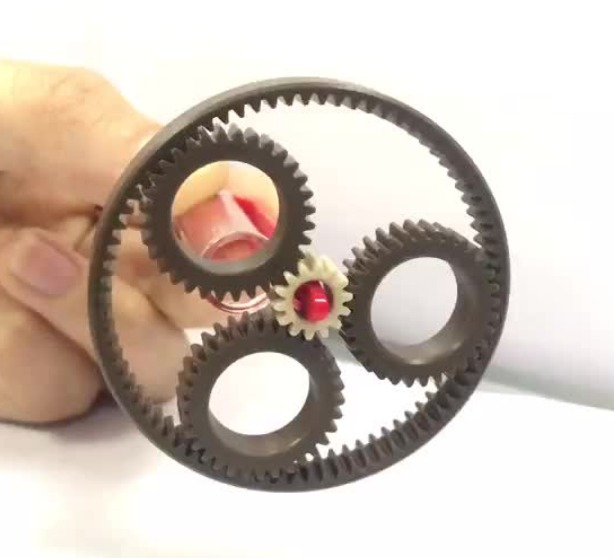
Gears are everywhere. They transfer power and motion in your car, your printer, your kitchen blender. For decades, metal gears dominated these applications. But times have changed. Nylon gears have emerged as a serious alternative, offering advantages that metal simply cannot match.
Why the shift? Nylon is a synthetic polymer with unique properties. It is lightweight, self-lubricating, and corrosion-resistant. It runs quieter than metal. It often lasts longer in challenging environments. And in many cases, it costs less.
Engineers across industries—automotive, consumer electronics, industrial machinery—are choosing nylon gears for new designs. But are they right for your application? This article covers everything you need to know: properties, applications, limitations, and selection criteria. By the end, you will know whether nylon gears belong in your next project.
What Makes Nylon Gears Unique?
How Do Low Friction and Self-Lubrication Help?
Nylon has a coefficient of friction in the range of 0.15–0.30, depending on the grade and conditions. Compare this to steel gears, which typically run at 0.6–1.0 without lubrication.
This low friction means nylon gears require little or no external lubrication in many applications. Benefits include:
- Simplified system design
- Reduced maintenance
- No risk of lubricant leakage or contamination
- Lower energy consumption
A study comparing nylon and metal gears in a small conveyor system found that nylon gears reduced energy consumption by 30% due to lower friction. The wear rate was also significantly lower. Some nylon gears lasted up to five times longer than metal counterparts under identical conditions.
Low friction also means quieter operation. In household appliances and office equipment, noise reduction is a major selling point.
How Chemically Resistant Are They?
Nylon gears resist many common chemicals. They withstand exposure to:
- Dilute acids (up to 50% sulfuric acid)
- Alkalis (up to 40% sodium hydroxide)
- Salts
- Many organic solvents
- Oils and greases
In chemical processing plants, nylon gears operate in pumps, mixers, and valves where metal gears would corrode. Their chemical resistance extends service life and reduces replacement frequency.
For food processing applications, nylon gears can run without external lubrication. This eliminates the risk of lubricant contamination—a critical safety factor.
How Dimensionally Stable Are They?
Dimensional stability is essential for consistent gear meshing. If gear dimensions change unpredictably, backlash increases, wear accelerates, and failure becomes likely.
Standard nylon has a relatively high coefficient of thermal expansion. But modern manufacturing techniques and additives address this. Glass-filled nylon, for example, has thermal expansion up to 50% lower than unfilled nylon.
Well-designed nylon gears maintain shape and size within tight tolerances—typically ±0.05 to ±0.10 mm, depending on manufacturing process and gear size.
This stability enables use in precision applications like robotics and optical equipment, where small dimensional changes can affect system performance.
Where Are Nylon Gears Used?
In the Automotive Industry
Nylon gears appear throughout modern vehicles. Their light weight, durability, and quiet operation make them valuable.
Engine auxiliary systems use nylon gears in water pumps. These gears withstand high engine compartment temperatures and exposure to coolant chemicals. Lower friction reduces energy draw, improving fuel efficiency.
Transmission systems incorporate nylon gears in valve bodies, where they control hydraulic fluid flow. Chemical resistance is critical here—transmission fluid must not degrade the gear material. Replacing metal gears with nylon can reduce transmission component weight by up to 30%, improving fuel economy and vehicle handling.
Interior mechanisms rely on nylon gears for:
- Power window systems
- Seat adjusters
- Sunroof motors
Quiet operation matters here. A power window with nylon gears moves smoothly and silently. Metal gears often produce rattling sounds that reduce passenger comfort.
In Consumer Electronics
Consumer electronics demand smaller, lighter, quieter components. Nylon gears deliver.
Hard disk drives use nylon gears in actuator mechanisms that position read-write heads. Precision is critical. Dimensional stability within tight tolerances ensures accurate head positioning. Any deviation could cause misalignment and data loss.
Household appliances like blenders, mixers, and food processors use nylon gears in motor-driven transmissions. Self-lubricating properties eliminate maintenance needs. Noise reduction makes appliances more pleasant to use. A nylon-gear blender runs significantly quieter than a metal-gear model.
Portable electronics—smartphones, tablets, digital cameras—use nylon gears in:
- Camera lens zoom mechanisms
- Sliding device mechanisms
- Small actuation systems
Light weight is a major advantage. Every gram matters in portable devices that users carry all day.
In Industrial Machinery
Industrial environments demand durability. Nylon gears handle high loads, continuous operation, and chemical exposure.
Conveyor systems use nylon gears in drive units and idler pulleys. High wear resistance withstands continuous motion and abrasive forces. In food processing plants, nylon gears operate in moist, dirty environments without corroding. Self-lubrication eliminates lubricant contamination risks—critical for food safety.
Mixers and agitators transfer high torque from motors to mixing blades. High-strength nylon grades and glass-filled reinforcements handle these loads. Chemical resistance matters in mixers handling corrosive substances.
Printing presses use nylon gears in paper-feeding mechanisms and ink-transfer systems. Smooth operation and low noise ensure consistent paper feeding and high-quality printing. Noisy gears could disrupt printing and cause registration errors.
What Are the Limitations?
Nylon gears have temperature limits. Standard nylon operates continuously from -40°C to 120°C. Above 120°C, nylon softens. Dimensional changes occur. Strength drops.
For high-temperature applications, special grades exist. Some high-temperature nylons withstand 150–180°C for short periods. But if your application involves sustained high heat, consider alternative materials like PEEK or metal.
Nylon absorbs moisture. In humid environments, nylon can absorb up to 2–3% water by weight. This causes slight dimensional swelling. For precision applications in variable humidity, account for this change or use moisture-resistant grades.
Strength at high loads is lower than metal. For extreme torque requirements, reinforced nylon or metal may be necessary.
How Do You Select the Right Nylon Gear?
What Load and Speed Factors Matter?
Load requirements determine the nylon grade needed. For high-torque applications, choose:
- High-strength nylon grades
- Glass-filled nylon (up to 30–50% glass fiber)
- Reinforced formulations
Rotational speed affects stability needs. Higher speeds demand better dimensional stability to avoid vibrations. Glass-filled nylon performs well here.
What Environmental Factors Matter?
Temperature: Standard nylon works from -40°C to 120°C. For higher temperatures, specify high-temperature-resistant grades.
Humidity: If moisture exposure is significant, consider moisture-resistant formulations or account for swelling in design tolerances.
Chemical exposure: Match the nylon grade to the specific chemicals present. Most standard grades resist dilute acids, alkalis, and oils. For aggressive chemicals, verify compatibility.
What Precision Requirements Matter?
For precision-motion applications—robotics, optical equipment, hard disk drives—select gears with tight manufacturing tolerances. Look for:
- Injection-molded gears with consistent dimensions
- Post-molding finishing if needed
- Quality control documentation
What Does Yigu Technology Offer?
Yigu Technology specializes in custom nylon gear manufacturing. Our advantage lies in material expertise and advanced manufacturing techniques.
We help customers:
- Select the right nylon grade for their application
- Optimize gear design for manufacturability
- Achieve tight dimensional tolerances
- Scale from prototypes to production volumes
Our team works with standard nylon, glass-filled grades, and high-temperature formulations. We use precision injection molding and strict quality control to ensure every gear meets specifications.
Conclusion
Nylon gears offer a compelling combination of advantages. They are lightweight, self-lubricating, chemically resistant, and quieter than metal gears. They reduce energy consumption and maintenance requirements.
But they are not universal. Temperature limits, moisture absorption, and lower strength at extreme loads mean they are not the right choice for every application.
The key is matching the gear to the application. Consider load, speed, temperature, chemical exposure, and precision requirements. Select the appropriate nylon grade and manufacturing process.
When selected correctly, nylon gears deliver reliable, long-lasting performance at lower cost than metal alternatives. They are revolutionizing motion control across industries—and they might be the right choice for your next project.
FAQ
What are the main advantages of nylon gears over metal gears?
Nylon gears offer weight reduction—up to 40% in some applications. They are more cost-effective due to lower raw material and manufacturing costs. They provide excellent corrosion resistance in humid or chemical environments. They operate more quietly and have self-lubricating properties, reducing maintenance needs.
How to select the right nylon gear for my application?
Consider load requirements—high torque applications may need glass-filled nylon. Consider rotational speed—higher speeds demand better dimensional stability. Consider environment—temperature, humidity, and chemical exposure all affect material selection. Consider precision needs—tight tolerance applications require high-quality manufacturing processes.
Can nylon gears be used in high-temperature environments?
Standard nylon operates continuously from -40°C to 120°C. Above this range, properties degrade. High-temperature-resistant nylon grades can withstand 150–180°C for short periods. For sustained high-temperature operation, consider alternative materials like PEEK or metal.
Contact Yigu Technology for Custom Manufacturing
Need custom nylon gears for your application? Yigu Technology specializes in precision gear manufacturing. We work with standard nylon, glass-filled grades, and high-temperature formulations. Our engineering team helps you select the right material and design for optimal performance. Contact us today to discuss your project requirements.