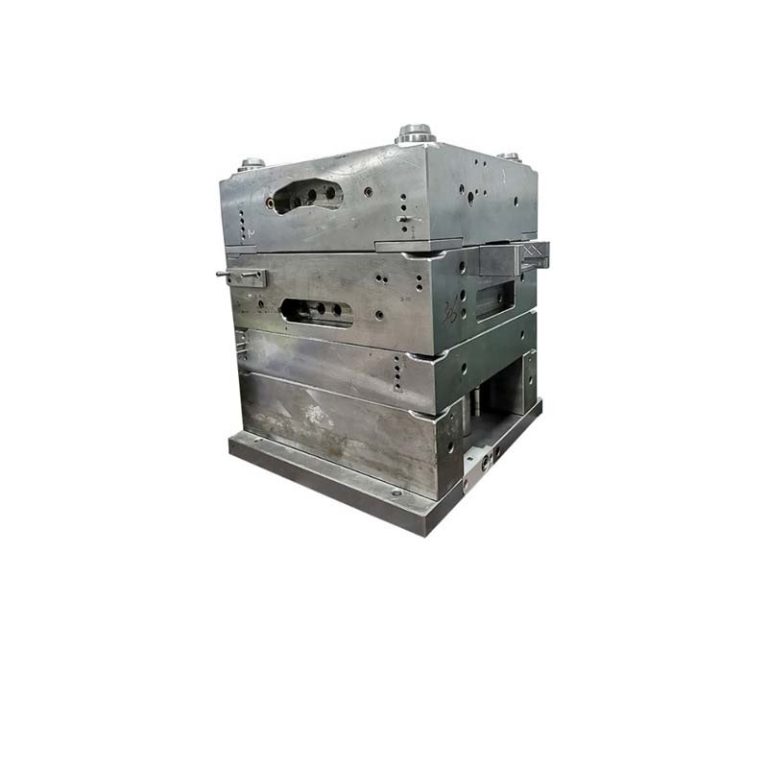
Introduction
Look closely at a modern smartphone, a life-saving medical device, or an electric vehicle. Hidden inside are components so small you’d need a microscope to see them—yet they’re essential to how these products function. These tiny parts are made through micro molding.
Micro molding isn’t simply downsizing traditional injection molding. It’s a specialized discipline that requires fundamentally different approaches to material selection, mold design, and process control. Parts can be smaller than a grain of sand, with features measured in microns—one micron is 1/1000th of a millimeter, or about 1/70th the width of a human hair.
At Yigu Technology, we’ve developed deep expertise in micro molding, producing components for medical devices, electronics, and automotive systems. In this guide, we’ll explore what micro molding is, how it works, where it’s used, and what it takes to succeed in this demanding field.
What Exactly Is Micro Molding?
Micro molding is a manufacturing process that produces extremely small, high-precision thermoplastic parts. It uses specialized injection molding machines and precision molds to create components with:
- Microscopic dimensions: Parts often measure under 1mm, with features in the micron range
- Tight tolerances: Sub-micron accuracy (±0.1 microns or better)
- Complex geometries: Intricate channels, thin walls, and fine details
Key Characteristics
| Characteristic | Typical Specifications |
|---|---|
| Part size | From a few millimeters down to microns |
| Feature size | Features as small as 1–10 microns possible |
| Tolerances | ±0.1 microns in advanced applications; ±50–100 microns in common production |
| Wall thickness | Can be under 0.1mm |
To put this in perspective: a human hair is about 70 microns in diameter. Micro-molded parts can be smaller than that—with features that would be invisible to the naked eye.
How Does Micro Molding Differ from Standard Injection Molding?
While the basic principles are the same, micro molding demands entirely different approaches.
| Factor | Standard Molding | Micro Molding |
|---|---|---|
| Part size | Centimeters to meters | Millimeters to microns |
| Shot size | Grams to kilograms | Milligrams to fractions of a gram |
| Mold precision | ±0.01–0.05mm | ±0.001–0.01mm (or better) |
| Injection speed | Moderate | Extremely fast (to fill tiny cavities before cooling) |
| Material behavior | Bulk properties dominate | Surface effects and micro-rheology matter |
| Equipment | Standard machines | Specialized micro molding machines with ultra-precise controls |
The challenge: In micro molding, the ratio of surface area to volume is enormous. Heat transfer happens almost instantly. The plastic solidifies in fractions of a second—meaning injection must be extremely fast and precisely controlled.
What Are the Key Process Considerations?
Success in micro molding requires mastering several critical factors.
Material Selection
Not all plastics work well at micro scales. The material must:
- Flow readily into tiny cavities
- Maintain properties despite high shear rates
- Exhibit consistent shrinkage (even small variations cause dimensional issues)
Common materials for micro molding include:
| Material | Why It Works |
|---|---|
| LCP (Liquid Crystal Polymer) | Excellent flow, high strength, low shrinkage |
| PEEK | High temperature resistance, biocompatible, good flow |
| PC | Good flow, optical clarity |
| COC/COP (Cyclic Olefin Copolymer/Polymer) | Excellent optical properties, low autofluorescence for medical |
| POM (Acetal) | Good flow, dimensional stability |
| Silicone | Biocompatible, flexible (requires specialized LSR molding) |
Real-world example: A medical device company needed micro-molded fluidic channels with diameters under 50 microns. COC was selected because of its excellent flow characteristics and optical clarity, allowing real-time monitoring of fluid flow during testing.
Mold Design
The mold is the heart of any micro molding operation. Micro molds require:
- Ultra-precision machining: Using EDM (electrical discharge machining), micro-milling, or lithography-based techniques
- Proper venting: Even tiny trapped air pockets cause incomplete filling
- Uniform temperature control: Small temperature variations cause warpage at micro scales
- Optimized gate design: Gates must be positioned to fill the cavity uniformly
Gate sizes: In micro molding, gates may be as small as 0.05–0.2mm—smaller than the diameter of a human hair.
Process Control
Micro molding demands tighter process control than standard molding.
| Parameter | Why It Matters |
|---|---|
| Injection speed | Extremely high speeds (often > 200 mm/s) to fill before freezing |
| Melt temperature | Must be precisely controlled; small variations affect flow |
| Mold temperature | Often higher than standard molding to maintain flow |
| Shot size accuracy | Measured in milligrams; even tiny variations cause defects |
Equipment: Micro molding machines use specialized screws and barrels designed for shot sizes as small as 0.01 grams. Some use piezoelectric injection units for faster response and more precise control than hydraulic or electric systems.
Where Is Micro Molding Used?
Micro molding serves industries where miniaturization meets precision.
Medical Devices
Medical applications demand both tiny sizes and absolute reliability.
| Application | Why Micro Molding |
|---|---|
| Drug delivery systems | Micro-molded valves, housings, and flow controls for insulin pens, inhalers |
| Diagnostic devices | Micro-fluidic chips for point-of-care testing |
| Implantable devices | Housings for pacemakers, neurostimulators, drug pumps |
| Surgical instruments | Micro-forceps, endoscopic components |
Success story: A leading medical device company used micro molding to develop a new insulin pen. Micro-molded flow-control valves and needle hubs reduced the pen’s size by 30% while improving dosage accuracy. Patients carried a smaller, more convenient device—and got more precise medication delivery.
Another example: Micro-fluidic chips for infectious disease detection integrated sample pre-treatment, mixing, and detection on a chip the size of a fingernail. Channels as narrow as 10 microns enabled testing with minute sample volumes, reducing both time and cost.
Electronics
The drive toward smaller, more powerful electronics makes micro molding essential.
| Application | Why Micro Molding |
|---|---|
| Connectors | Micro-pins with 0.1mm diameters, 0.2mm pitches |
| Sensor housings | Protective enclosures for MEMS sensors |
| Camera components | Lens barrels, spacers, holders |
| Battery components | Insulators, spacers, connectors |
Success story: A smartphone manufacturer needed connectors for high-speed data transfer. Micro molding produced connectors with pins 0.1mm thick and pitches of 0.2mm. These connectors saved space inside the phone while improving data transfer speed by 50% over previous generations.
Wearables example: A smartwatch brand used micro-molded sensor housings that reduced overall watch weight by 15% while protecting delicate heart rate and activity sensors. The result: a more comfortable device that maintained accurate tracking.
Automotive
Electric and autonomous vehicles rely on micro-molded components.
| Application | Why Micro Molding |
|---|---|
| Battery management | Connectors, insulators, cooling channel components |
| Sensors | Housings for lidar, radar, cameras |
| ADAS components | Micro-connectors, optical components |
Success story: An electric vehicle manufacturer used micro-molded connectors for battery cell connections. The connectors had 30% lower contact resistance than traditional designs, improving battery management efficiency and increasing vehicle range by 10% .
Lidar example: A company developing self-driving car sensors used micro molding for protective housings. The micro-molded housings were 40% lighter than previous designs with over 95% transmittance for laser light—enabling more accurate object detection with less energy consumption.
What Challenges Does Micro Molding Present?
Micro molding is demanding. Here are the main challenges and how to address them.
Material Flow
At micro scales, material behavior changes. Surface tension, viscosity, and cooling rates all differ from bulk behavior.
Solution: Select materials with excellent flow properties (LCP, COC). Use mold temperature control to maintain flow. Inject at very high speeds to fill cavities before freezing.
Venting
Trapped air in micro cavities causes incomplete filling or burn marks. Vents must be extremely small (often under 0.005mm) to prevent flash while allowing air escape.
Solution: Use advanced venting techniques—sometimes including porous mold materials that allow air to escape through the mold surface itself.
Part Handling
Micro-molded parts are difficult to handle. They’re too small for fingers, and static electricity makes them stick to surfaces.
Solution: Use automated handling systems with anti-static controls. Design parts with handling features (tabs, breakaway runners) when possible.
Inspection and Measurement
Measuring sub-millimeter features requires specialized equipment.
Solution: Use micro-CMMs, optical profilometers, and scanning electron microscopes for dimensional verification. Implement automated vision inspection for production monitoring.
How Does Yigu Technology Approach Micro Molding?
At Yigu Technology, we’ve invested heavily in micro molding capabilities because we see it as essential to our clients’ success in miniaturization-driven markets.
Precision equipment: Our micro molding machines are designed for shot sizes as small as 0.01 grams, with high-speed injection and precise temperature control.
Expert team: Our engineers understand the unique challenges of micro molding—material selection, mold design, process optimization. They’ve worked on projects ranging from medical implants to automotive sensors.
Quality systems: We use micro-CMM and optical inspection to verify dimensions at scales where traditional measurement tools fail. Every part is inspected against specifications.
Collaborative approach: We work with clients early in the design phase, advising on material selection, part geometry, and mold design to ensure manufacturability.
Case example: A client needed micro-fluidic chips for a point-of-care diagnostic device. The chips had channels 25 microns wide and 50 microns deep—smaller than a human hair. We selected a COC material for its optical clarity and flow properties, designed a mold with integrated venting, and optimized injection parameters to fill the channels completely. The result: chips with 99.5% yield that passed all functional tests.
Conclusion
Micro molding is the art of making tiny parts with extraordinary precision. It enables the miniaturization that defines modern medical devices, electronics, and automotive systems.
Success requires:
- Specialized equipment designed for micro-scale shots
- Precision molds with proper venting and temperature control
- Advanced materials that flow readily at micro scales
- Tight process control over temperature, pressure, and speed
- Sophisticated inspection to verify dimensions at micron scales
For product developers, micro molding opens possibilities that weren’t possible a decade ago. Devices can be smaller, lighter, and more functional—without sacrificing reliability.
FAQ
What is the minimum size achievable in micro molding?
The minimum size depends on material, part geometry, and process capability. Features as small as 1–10 microns are possible in advanced applications using specialized equipment. In typical production scenarios, parts with minimum dimensions of 50–100 microns are more common. For comparison, a human hair is about 70 microns in diameter. The smallest achievable feature size continues to shrink as molding technology advances.
How can I ensure the quality of micro-molded parts?
Quality in micro molding starts with material selection—choose materials with good flow properties and consistent shrinkage. Next, optimize process parameters: injection speed, temperature, and pressure must be precisely controlled. Use specialized equipment—micro molding machines with high-speed injection and accurate shot control. Finally, implement rigorous inspection: micro-CMMs, optical profilometers, and automated vision systems verify dimensions and detect defects. Statistical process control (SPC) helps maintain consistency over production runs.
Are there any limitations on the types of plastics used in micro molding?
Yes. Plastics with high viscosity or complex molecular structures may not flow properly into micro cavities, causing incomplete filling. Materials prone to thermal degradation at required processing temperatures are also problematic. Common micro molding materials include LCP, PEEK, COC, PC, and POM. These offer good flow properties, dimensional stability, and consistent shrinkage. If your application requires a different material, testing is essential to verify processability.
What industries benefit most from micro molding?
Medical devices lead in micro molding applications—drug delivery systems, diagnostic chips, implantable devices. Electronics follows closely—connectors, sensor housings, camera components. Automotive is growing rapidly, especially for electric vehicles and autonomous driving systems (battery management, lidar, radar). Other industries include aerospace, telecommunications, and consumer products where miniaturization offers competitive advantage.
How does micro molding compare to micro-machining or 3D printing?
| Process | Advantages | Limitations |
|---|---|---|
| Micro molding | High volume, consistent quality, low per-part cost at scale | High upfront tooling cost; not economical for very low volumes |
| Micro-machining | No tooling; good for prototypes | Slow; limited to simple geometries; higher per-part cost |
| Micro 3D printing | No tooling; complex geometries possible | Limited materials; slower; quality varies |
For high-volume production of micro components, micro molding is generally the most cost-effective and reliable option.
Contact Yigu Technology for Custom Manufacturing
Need micro-molded components for your next project? At Yigu Technology, we combine specialized equipment, deep material expertise, and rigorous quality control to deliver precision micro parts for medical, electronics, and automotive applications.
From design consultation to production, our team is committed to helping you achieve the miniaturization and performance your product demands. Contact us today to discuss your micro molding project and discover how our expertise can bring your tiny parts to life.