Introduction
You have seen 3D printed parts, but laser-based printing takes the technology to an entirely different level. Laser 3D printing uses focused light beams to melt or cure materials with precision that other methods cannot match. This family of technologies, including selective laser sintering and selective laser melting, now produces flight-qualified parts for aerospace, custom implants for medicine, and optimized components for automotive applications. Manufacturers choose laser processes when they need the best combination of accuracy, material properties, and design freedom. This article explains how laser 3D printing works, compares it to traditional methods, explores industry applications, and helps you understand when it makes sense for your projects.
How Does Laser 3D Printing Actually Work?
What are the essential components of a laser printer?
Every laser-based 3D printer relies on three critical systems working together.
The laser source generates the energy that melts or cures material. Different applications require different laser types. Fiber lasers dominate metal printing because they deliver high power with excellent beam quality. Power levels range from 100 watts for small parts to several kilowatts for large industrial systems. CO₂ lasers work well for polymers and some ceramics. The laser must maintain consistent power throughout builds that can last days.
The scanning system controls where the laser energy hits. Galvanometer mirrors move at incredible speeds, redirecting the beam across the build area. High-end systems scan at several meters per second while maintaining positional accuracy within microns. The scanner controller translates digital layer data into precise mirror movements thousands of times per second.
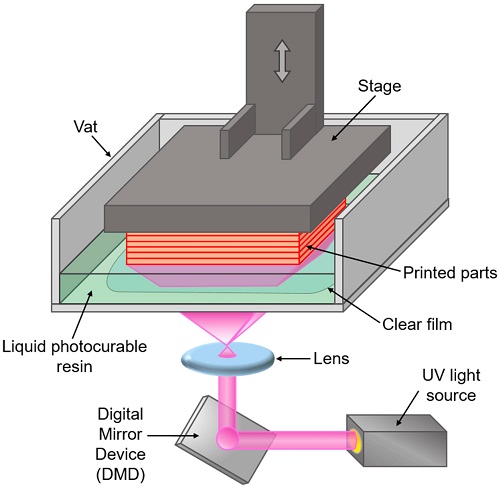
The build chamber contains the material being processed. In powder systems, a recoater spreads thin layers of metal or plastic powder across a platform. The layer thickness typically measures 20 to 100 micrometers, depending on required resolution. In resin systems, a vat holds liquid photopolymer that cures when exposed to laser light.
What happens during each step of printing?
Model design creates the digital blueprint. Engineers use CAD software to design parts with features impossible to machine. Internal cooling channels snake through components. Lattice structures reduce weight while maintaining strength. Organic shapes optimize for fluid flow or stress distribution. The digital model contains every detail the printer will reproduce.
Slicing prepares that model for printing. Specialized software cuts the 3D geometry into hundreds or thousands of thin layers. Each layer becomes a set of instructions telling the laser exactly where to move. Layer thickness choices balance detail against speed. A 0.05 millimeter layer captures fine features but requires many layers. A 0.2 millimeter layer builds faster but shows more visible stepping.
Laser processing builds the part one layer at a time. In powder systems, the laser scans each cross-section, melting particles together into solid material. The platform lowers by one layer thickness, fresh powder spreads, and the next layer begins. In resin systems, the laser cures liquid polymer exactly where it strikes. Layer by layer, the object emerges from the material.
Post-processing transforms the printed part into final form. Support structures get removed carefully. Surfaces may need sanding or polishing. Metal parts almost always require heat treatment to relieve internal stresses and achieve specified mechanical properties. Some applications demand machining of critical surfaces for tighter tolerances.
How Does Laser 3D Printing Compare to Traditional Methods?
The table below compares laser additive manufacturing with conventional production techniques:
| Comparison Aspect | Traditional Manufacturing | Laser 3D Printing |
|---|---|---|
| Equipment cost | High for production machinery | High for industrial printers |
| Tooling cost | Very high for molds and dies | None |
| Material cost | Low at high volumes | High per kilogram |
| Labor cost | Significant for skilled operators | Lower for operation, higher for design |
| Small-batch cost | Prohibitively high | Economical |
| Mass production cost | Very low per part | High per part |
| Design complexity | Limited by tool access | Unlimited |
| Material waste | 50-80% typical | Under 10% |
| Lead time for prototypes | Weeks to months | Days |
When does cost favor laser printing?
Small-batch production shows laser printing's economic advantage most clearly. Producing 50 custom brackets by machining requires programming, setup, and individual attention to each part. Injection molding those same 50 brackets would require a $10,000 to $50,000 mold that gets used only briefly. Laser printing needs neither programming for each part nor expensive tooling. The cost per part stays consistent whether you make one or fifty.
A study comparing 100 plastic parts found injection molding cost $50,000 including mold amortization, while SLS printing cost $10,000. The breakeven point where molding becomes cheaper typically falls between 500 and 2,000 parts depending on complexity.
Material efficiency adds savings. Machining a titanium bracket from solid billet wastes 80 percent of the material as chips. Titanium powder costs more per kilogram than billet, but using only the material that becomes the final part changes the math. For expensive alloys, this efficiency matters enormously.
What about design freedom?
Traditional methods constrain designs to what tools can reach. Drilled holes must be straight. Internal cavities need access from outside. Undercuts require special tooling or multiple operations. Complex assemblies demand multiple parts and joining steps.
Laser printing removes these constraints entirely. Cooling channels follow curved paths optimized for heat transfer. Lattice structures fill spaces with minimal weight. Organic shapes derived from stress analysis print without penalty. One study found that only 30 percent of complex design concepts could be manufactured traditionally, while laser printing handled nearly all of them.
How does production speed compare?
Prototyping favors laser printing overwhelmingly. A design completed Monday can ship as a metal part by Friday. Machining the same part might take two weeks including programming and setup. Injection molding would require four to six weeks for tooling alone.
Small-batch production of 10 to 1,000 units also favors laser printing for speed. No tooling delays mean production starts immediately. A case study in electronics manufacturing showed 500 custom enclosures printed in 5 days versus 15 days for injection molding including mold fabrication.
Mass production still belongs to traditional methods. An automotive production line stamps hundreds of parts per hour. Laser printers take hours per part. The speed gap continues closing but remains significant.
What about material waste?
Traditional subtractive methods waste enormous amounts of material. Machining operations typically discard 50 to 80 percent of the starting block as chips. For expensive aerospace alloys, this waste represents thousands of dollars per part.
Laser additive processes use only the material that becomes the final part. Unfused powder in SLS and SLM systems gets recycled for future builds. Material utilization rates exceed 90 percent in well-managed operations. This efficiency reduces both cost and environmental impact.
What Industries Already Use Laser 3D Printing?
How does aerospace benefit from laser printing?
Weight reduction drives aerospace adoption. Every kilogram saved on an aircraft reduces fuel consumption by about 3,500 liters over its lifetime. Laser printing enables lattice structures and topology-optimized designs that cut weight 30 to 50 percent compared to machined parts.
General Electric produces fuel nozzles for LEAP engines using laser melting. Each nozzle previously required assembly of 20 separate components brazed together. Now they print as one piece with complex internal channels that improve combustion. The nozzles are five times more durable than the original design.
Airbus uses 3D printed titanium brackets and fittings with lattice internal structures. These parts maintain strength while reducing weight significantly. For every kilogram saved across an aircraft fleet, fuel savings mount quickly.
Part consolidation eliminates assembly steps and failure points. Complex assemblies that once required dozens of parts now print as single components. This simplifies supply chains and improves reliability.
What automotive applications make sense?
Prototyping remains the largest automotive use. Ford's rapid technology center prints prototype parts in hours rather than weeks. Designers iterate through multiple concepts before committing to production tooling. This speed reduces development time and improves final designs.
Custom components for luxury and performance vehicles justify the higher cost of printing. Buyers willing to spend six figures on a car appreciate personalized interior details. Laser printing produces unique dashboard elements, door handles, and trim pieces without expensive tooling.
Lightweight design helps electric vehicles extend range. Every kilogram saved means slightly more distance per charge. Research shows that 3D printed lightweight components can improve fuel efficiency by up to 15 percent in some vehicle models.
How does medical manufacturing use laser printing?
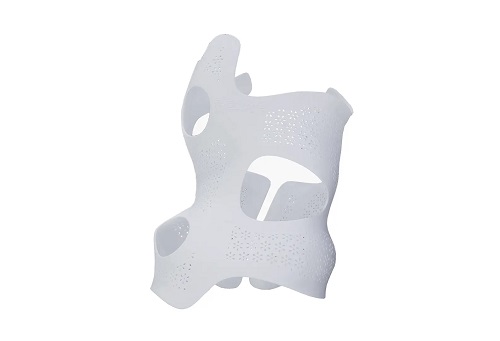
Patient-specific implants match individual anatomy perfectly. Hip stems and knee components printed from titanium alloy integrate with bone better than standard sizes. Porous surface structures encourage bone ingrowth for permanent fixation.
Surgical guides printed from biocompatible materials help surgeons place implants accurately. The guides fit only the intended patient, ensuring procedures follow the preoperative plan. This precision reduces operating time and improves outcomes.
Dental applications include crowns, bridges, and frameworks for removable prosthetics. Laser printing produces the fine detail needed for natural appearance while maintaining strength for function.
What Are the Main Laser Printing Technologies?
How does selective laser sintering work?
SLS uses a laser to fuse polymer powder particles together. The laser scans each layer, melting powder where solid material belongs. Unfused powder remains in place, supporting overhangs and complex geometries. This self-supporting property enables shapes impossible with other methods.
Nylon dominates SLS applications, with PA12 and PA11 providing excellent mechanical properties. TPU produces flexible components. Filled materials offer enhanced stiffness or thermal conductivity.
What about selective laser melting for metals?
SLM fully melts metal powder into dense solid parts. The process mirrors SLS but with higher laser power and different material dynamics. Parts achieve near-wrought material properties after proper heat treatment.
Titanium, stainless steel, aluminum, and cobalt-chrome alloys print successfully. Each requires specific parameters and post-processing.
How does stereolithography differ?
SLA cures liquid resin with UV laser light. The laser traces each layer on the resin surface, hardening it precisely where light hits. The results show exceptional surface finish and detail resolution.
Dental laboratories rely on SLA for surgical guides and models. Jewelry designers print master patterns for investment casting.
How Does Yigu Technology Apply Laser 3D Printing?
Our engineering team selects among laser processes based on each project's requirements. We maintain multiple printer types so recommendations match needs rather than forcing compromises.
A recent aerospace project required titanium brackets with topology-optimized geometry. Traditional machining would waste 80 percent of expensive material and could not create the internal lattice structure. We printed the parts via SLM, achieving 45 percent weight savings while maintaining all load requirements.
For a medical client, we produced surgical guides in biocompatible resin using SLA. The smooth surfaces ensured patient comfort, while the precise fit came directly from patient CT data. Surgeons reported shorter procedures and better outcomes.
Automotive customers receive prototype parts in days rather than weeks. We print intake manifolds, brackets, and housings for fit testing and functional evaluation. Design changes happen overnight rather than waiting for new tooling.
Frequently Asked Questions
How accurate is laser 3D printing?
Industrial systems achieve ±0.1 to 0.3 millimeter tolerances depending on material and geometry. Post-processing can improve critical dimensions.
What materials work with laser printing?
Polymers including nylon, TPU, and composites. Metals including titanium, stainless steel, aluminum, and cobalt-chrome. Resins for SLA with various properties.
How strong are laser printed parts?
Properly processed parts achieve 90-100 percent of traditionally manufactured strength. Heat treatment and density optimization produce structural components.
Is laser printing expensive?
Equipment costs $50,000 to $500,000 for industrial systems. Material costs exceed traditional materials. For appropriate applications, the value justifies the cost.
How long does laser printing take?
Printing time ranges from hours for small parts to days for large complex components. Build time depends on volume and layer thickness.
Conclusion
Laser 3D printing represents the leading edge of additive manufacturing technology. By using focused light to melt or cure materials with precision, these processes achieve results that other methods cannot match. Design freedom enables geometries impossible to machine. Material efficiency reduces waste dramatically. Part consolidation simplifies assemblies and improves reliability. Aerospace, automotive, and medical industries already rely on laser printing for critical applications. The technology continues advancing with faster systems, better materials, and larger build volumes. For projects demanding the best combination of accuracy, complexity, and performance, laser 3D printing delivers.
Contact Yigu Technology for Custom Manufacturing
Ready to explore how laser 3D printing can advance your next project? The engineering team at Yigu Technology brings practical experience across SLS, SLM, and SLA processes. We help you select the right technology, optimize designs for printing, and deliver quality parts on your schedule. Send us your CAD files or concept sketches for a free feasibility review and quotation. Let us show you how our laser printing expertise turns your ideas into precision components. Contact Yigu Technology today and discover what professional additive manufacturing makes possible.