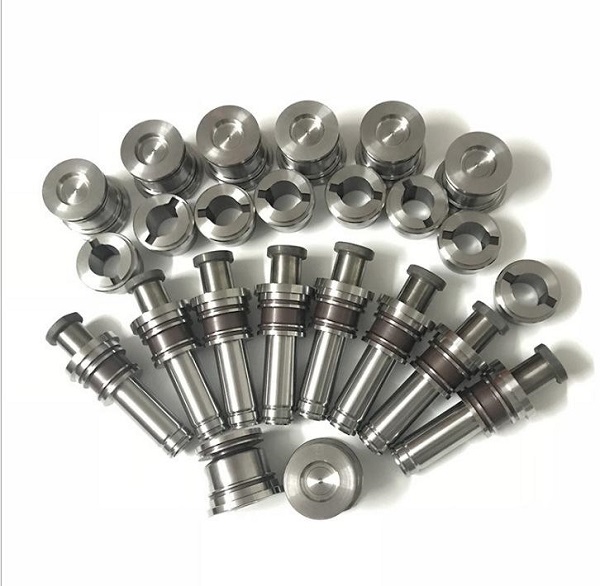
For manufacturers scaling from prototypes or small batches to mass production, the transition to High Volume Production Machining is a pivotal and challenging leap. It's not merely about running machines faster or longer; it's a fundamental shift in philosophy, technology, and process control. The goal moves beyond making individual parts to achieving uninterrupted, predictable, and cost-effective output of thousands or millions of identical components. This guide is designed for manufacturing engineers and decision-makers navigating this shift. We'll dissect the core principles, from selecting battle-hardened machine tools and implementing robust automation to mastering the science of tool life management and statistical quality control. Mastering high volume production machining is the key to unlocking scale, consistency, and superior margins.
What Defines High Volume Production Machining?
High Volume Production Machining is a manufacturing paradigm optimized for the continuous, efficient production of large part quantities, typically ranging from tens of thousands to millions annually. Its defining characteristics are:
- Focus on Unit Cost: The primary KPI becomes cost-per-part, driving decisions toward maximizing Overall Equipment Effectiveness (OEE).
- Dedicated, Hardened Equipment: Machinery and tooling are dedicated to a single part or family for extended periods, designed for 24/7 operational reliability with minimal changeover.
- Process-Oriented, Not Part-Oriented: The system is engineered as a complete, repeatable process flow—encompassing material handling, machining, inspection, and packaging—rather than a series of discrete operations.
- Statistical Process Control (SPC): Quality is managed proactively using data from in-process inspection to predict and prevent deviations, moving beyond reactive "check-and-sort" methods.
Which Machine Tools Best Handle 24/7 Operation?
Not all CNC machines are built for the relentless demand of high-volume work. The required attributes are durability, precision retention, and serviceability.
- Cast Iron Construction & Box-Way Guides: Look for machines with heavy, thermally stable cast iron bases and box-way guide systems (as opposed to linear rails) on critical axes. These absorb vibration and maintain alignment under heavy, continuous cutting loads far better. A leading automotive supplier found that switching to box-way machining centers for a constant-duty valve body operation reduced geometric drift by over 60% between preventative maintenance intervals.
- High-Pressure Coolant Through-Spindle (HPCTS): Essential for chip evacuation in deep cavity or gundrilling operations, preventing recutting and tool failure.
- Siemens, Fanuc, or Heidenhain CNCs: These industrial-grade controls offer superior high-speed processing, reliable shop-floor networking, and robust probing cycle integration for automated setups.
- Pallet Pools or Twin-Spindle Machines: These are not just accessories but core enablers of lights-out machining. Pallet pools allow for offline part loading/unloading, while twin-spindle machines effectively double output on symmetrical parts.
How to Balance Cycle Time vs. Tool Life?
This is the central optimization challenge. Pushing for the absolute fastest cycle can lead to catastrophic tool failure and downtime. The optimal point is the sustainable cycle time that maximizes parts produced per tool.
- The Science of Tool Wear: Understand wear mechanisms (flank wear, crater wear). Use machine monitoring to track spindle load; a steady increase often correlates directly with tool wear.
- Adopt a Tool Life Management (TLM) System: A disciplined TLM program involves:
- Establishing a conservative baseline tool life for each insert or cutter.
- Using the CNC's tool life counter to preemptively signal for change before failure.
- Scheduling tool changes during planned pauses (e.g., pallet change, lunch break) to avoid unscheduled downtime.
- Cost-Per-Part Calculation: The true metric. A more expensive, coated carbide insert running at 80% of max speed may yield a lower cost-per-part than a cheaper insert that fails unpredictably. The formula must account for insert cost, changeover time, and scrap risk.
What Automation Options Maximize Uptime?
Automation is non-negotiable for achieving high equipment utilization (>85%).
- Robotic Loading/Unloading: The most common solution. A 6-axis robot can service multiple machines, handling raw blanks and finished parts. Integration with machine vision for part orientation ensures reliable operation.
- Gantry Systems: Ideal for larger, heavier parts or for serving a line of machines in a linear layout.
- Conveyor & Part Handling Systems: Automates the flow of parts between machining cells, wash stations, and coordinate measuring machines (CMMs).
- Lights-Out Manufacturing: The ultimate goal, enabled by the above systems plus tool breakage detection probes and in-process gaging. A successful lights-out cell for machining aluminum hydraulic fittings runs unattended for over 16 hours, with automated probing compensating for thermal drift and triggering tool changes.
How to Secure Consistent Part Quality at Scale?
Quality control must be predictive and embedded, not reactive and separate.
- First Article Inspection (FAI) & Process Capability (Cp/Cpk): Before volume runs, a full CMM inspection validates the process. Cp/Cpk analysis quantifies how well the process fits within the tolerance band. A Cpk > 1.33 is the industry benchmark for a capable process.
- Statistical Process Control (SPC): Implement real-time SPC by feeding data from in-process probes and sensors into SPC software. Control charts track critical dimensions, alerting operators to trends (e.g., tool wear, thermal growth) before a part goes out of spec.
- Error-Proofing (Poka-Yoke): Use simple mechanical fixtures, sensors, or software interlocks to make defects impossible. Example: A sensor confirms a hole has been drilled before allowing the part to proceed to the tapping station.
How to Optimize Cutting Parameters for Volume?
Forget handbook values. Optimization is an empirical, data-driven process.
- Start with Manufacturer Recommendations: Use tooling supplier data as a baseline.
- Conduct Design of Experiments (DOE): Systematically test combinations of cutting speed (SFM), feed per tooth, and depth of cut. Measure outputs: tool life, surface finish, power consumption, and cycle time.
- Invest in Vibration Analysis: Use accelerometers to identify chatter. The optimal parameter set is often just below the threshold of harmful vibration, maximizing material removal rate (MRR) without sacrificing quality or tool life.
- Standardize & Document: Once optimized, parameters become a locked standard work instruction. Any change requires formal review.
What In-Process Inspection Systems Are Required?
Moving inspection onto the machine is critical for closed-loop control.
- Touch Probes (Part & Tool): A spindle-mounted touch probe is standard. It automates part setup (finding datums), checks for broken tools, and can perform in-cycle dimensional checks on key features.
- Laser Tool Setters: Provide faster, more accurate tool length and diameter measurement than touch probes, crucial after a tool change.
- In-Process Gaging: Non-contact laser micrometers or vision systems can measure diameters, thicknesses, or presence of features as the part is being machined, providing 100% inspection of critical characteristics.
- On-Machine Vision: Can verify part presence, orientation, or even read serial numbers for traceability.
How to Manage Material Flow and Workholding?
The fastest spindle is useless if the part isn't ready to cut.
- High-Density, Quick-Change Workholding: Utilize hydraulic or pneumatic vises, tombstones with modular sub-plates, or customized fixture plates that allow entire batches of parts to be pre-loaded offline. Quick-change systems minimize machine idle time during changeover.
- Material Supply Chain: Establish a reliable, kanban-based system for delivering raw material (blanks, bar stock) to the machine cell. Bar feeders on turning centers are a classic example of seamless material integration.
- Chip Management: High volume means high chip volume. Integrated chip conveyors, central coolant systems with filtration, and scheduled chip removal are essential to prevent process interruption and maintain a safe, clean workspace.
Conclusion
High Volume Production Machining is a discipline that synthesizes mechanical engineering, data science, and systems thinking. Success is not found in any single piece of technology but in the holistic, relentless optimization of the entire production system—from the metallurgy of the cutting tool to the software analyzing dimensional trends. It demands an upfront investment in robust equipment, intelligent automation, and rigorous process design. For manufacturers who master it, the reward is a formidable competitive advantage: the ability to deliver impeccable quality at a relentlessly low unit cost, day in and day out. The journey from job shop to high-volume producer is challenging, but with the right principles as your guide, it is the path to sustainable growth and market leadership.
FAQ on High Volume Production Machining
What is the minimum quantity to be considered "high volume"?
There's no universal threshold, but it typically starts when production runs exceed 50,000 to 100,000 parts annually of a single design. The key indicator is when it becomes economically justifiable to dedicate equipment and design specialized processes for that part.
Is high volume machining only for simple parts?
Absolutely not. While complexity increases the challenge, advanced CNC machines with 5-axis capabilities, multi-function turrets, and sophisticated software are routinely used for high-volume production of complex components like turbocharger housings, orthopedic implants, and aerospace fittings.
How do you manage tooling costs in high volume production?
Through strategic partnerships with tooling suppliers for volume pricing, implementing rigorous tool life management to maximize utilization, and investing in tool reconditioning/regrinding programs where applicable (e.g., for large form cutters or special drills).
Can you switch a high-volume line to a different part?
High-volume lines are typically dedicated or "hard-tooled" for efficiency, making changeovers slow and costly. For product families, manufacturers use flexible manufacturing systems (FMS) with pallet pools and quick-change tooling/fixturing to enable faster transitions between similar parts.
What is the biggest risk in scaling to high volume?
Process instability. A flaw that causes a 1% scrap rate in a 100-part job is a nuisance. That same 1% rate in a 100,000-part order is a financial and logistical disaster. The core risk is failing to implement the statistical process control and predictive maintenance needed to ensure process stability at scale.
Contact Yigu technology for custom manufacturing.
Scaling your production requires a partner who understands the intricate balance between speed, precision, and reliability. At Yigu Technology, we specialize in the design and operation of high-volume production machining cells built for relentless performance. Our expertise encompasses selecting the right machine platforms, engineering fail-safe automation, implementing closed-loop quality systems, and optimizing every parameter for total cost efficiency.
We don't just make parts; we engineer and operate predictable, high-output manufacturing systems. If you are looking to ramp up production with a partner that masters the science of scale, let's talk.
Contact Yigu Technology today to discuss your high-volume project and discover a more efficient path to market.