Introduction
If you’ve ever requested quotes for custom plastic parts, you probably noticed prices can swing wildly from one supplier to another. One quote might feel like a bargain, while another seems shockingly high. The truth is, mold plastic parts costs depend on a mix of factors that go far beyond just the raw material. Understanding these variables helps you make smarter decisions, avoid hidden expenses, and get the best value for your project.
In this guide, we’ll walk through everything that impacts pricing—from material choices and mold design to production volume and finishing touches. By the end, you’ll know exactly what drives costs and how to work with a manufacturing partner to keep your project on budget.
What Makes Material Selection So Important?
How Do Different Plastics Affect Pricing?
The plastic you choose sets the foundation for your entire project cost. Not all plastics are created equal, and their price per kilogram tells only part of the story.
| Material | Typical Price Range (per kg) | Common Applications |
|---|---|---|
| ABS | $1.50 – $3.00 | Auto interiors, electronics housings, toys |
| PP (Polypropylene) | $1.00 – $2.00 | Food containers, packaging, automotive bumpers |
| HDPE | $1.00 – $1.50 | Pipes, buckets, industrial containers |
| LDPE | $0.90 – $1.30 | Plastic bags, flexible films |
ABS is a favorite for parts that need good mechanical strength and a nice surface finish. It costs more but delivers reliable performance. PP, on the other hand, is lighter and more chemical-resistant. It’s often the go-to when keeping costs low matters most.
Does Higher-Quality Material Actually Save Money?
Here’s a counterintuitive truth: cheaper materials can end up costing you more. Let’s look at a real manufacturing scenario.
Imagine you’re producing 1,000 parts. You choose a low-cost plastic at $1.00 per kg, using 100 kg total. But because the material has inconsistent flow properties, your reject rate hits 10%. That means 100 parts fail quality checks.
- Material cost for acceptable parts: $100 ÷ 900 parts ≈ $0.11 per part
- Plus wasted labor, machine time, and disposal costs
Now suppose you spend $1.20 per kg on a premium-grade plastic. The reject rate drops to just 2%.
- Material cost for acceptable parts: $120 ÷ 980 parts ≈ $0.12 per part
- But you saved hours of rework and avoided production delays
In many cases, higher-grade materials lower your true total cost by reducing waste and keeping your production line running smoothly.
How Does Mold Design Impact Cost?
Why Does Geometric Complexity Drive Up Price?
A simple cube-shaped part is easy to mold. But add curves, undercuts, or thin walls, and everything changes.
Take an automotive dashboard component. It might have:
- Deep ribs for structural support
- Undercuts that require side actions
- Varying wall thicknesses that demand precise cooling control
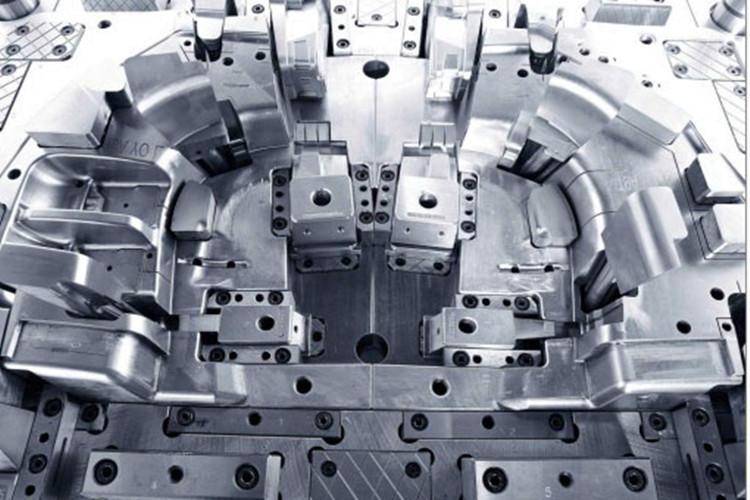
Designing this mold requires advanced software and highly skilled engineers. Manufacturing it may need 5-axis CNC machining and electrical discharge machining (EDM) to create those fine details. Each additional operation adds time and cost.
A straightforward mold might cost $5,000 to $10,000. A complex one for a part like that dashboard can easily exceed $50,000 or even $100,000.
What’s the Trade-Off with Multiple Cavities?
Molds can have one cavity or many. The choice depends on your production volume.
| Mold Type | Best For | Typical Cost Multiplier |
|---|---|---|
| Single cavity | Low volume, large parts | Baseline |
| 2-cavity | Medium volume | 1.5x – 2x |
| 4-cavity | High volume | 2x – 3x |
| 8+ cavities | Very high volume | 3x – 5x+ |
A 4-cavity mold costs more upfront, but it produces four parts per cycle. If you need 100,000 parts, that extra investment pays off quickly through faster production.
However, multi-cavity molds require perfect balance. If the flow of molten plastic isn’t identical across all cavities, some parts will be defective. This precision adds to both design and machining costs.
Why Does Production Volume Matter So Much?
How Do Economies of Scale Work in Plastic Molding?
The math here is straightforward but powerful. Fixed costs—like the mold itself—get spread across every part you make.
Let’s run the numbers:
- Mold cost: $10,000
- Variable cost per part (material, labor, energy): $2.00
For 1,000 parts:
- Total cost = $10,000 + ($2 × 1,000) = $12,000
- Cost per part = $12.00
For 10,000 parts:
- Total cost = $10,000 + ($2 × 10,000) = $30,000
- Cost per part = $3.00
That’s a 75% drop in unit cost just by increasing volume. This is why high-volume projects often achieve per-part prices that seem impossibly low.
What Makes Small-Batch Production So Expensive?
Small runs face the opposite reality. If you only need 100 parts with that same $10,000 mold:
- Total cost = $10,000 + ($2 × 100) = $10,200
- Cost per part = $102.00
Beyond the mold, small batches also mean:
- Longer setup time relative to production time
- Higher material prices (suppliers charge more for small orders)
- Less opportunity to optimize the process
For low volumes, alternative processes like 3D printing or urethane casting may be more cost-effective than hard tooling.
How Does the Manufacturing Process Affect Costs?
What’s Included in Injection Molding Costs?
Injection molding is the industry standard, but its costs break down into several categories:
- Equipment: Small presses cost a few thousand dollars; large industrial machines can exceed $200,000
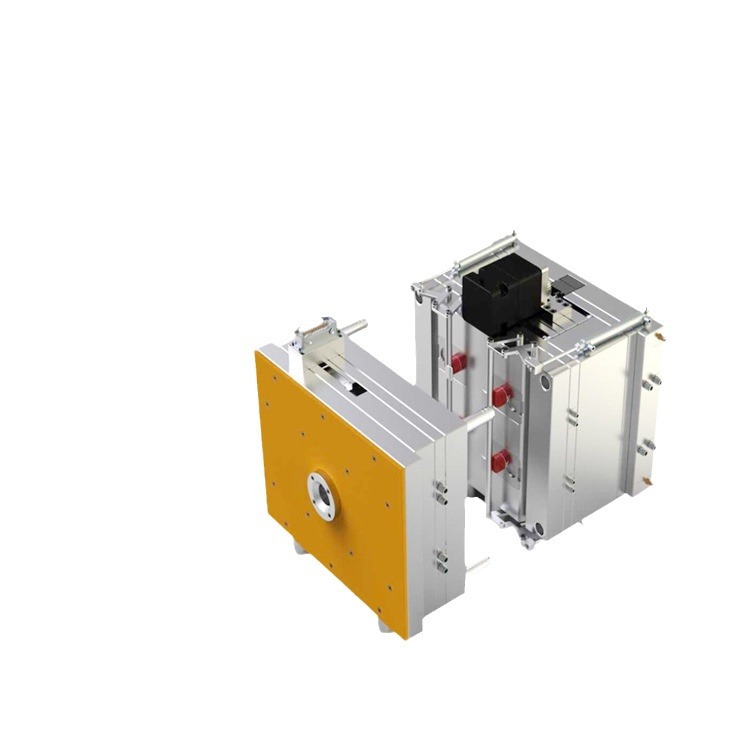
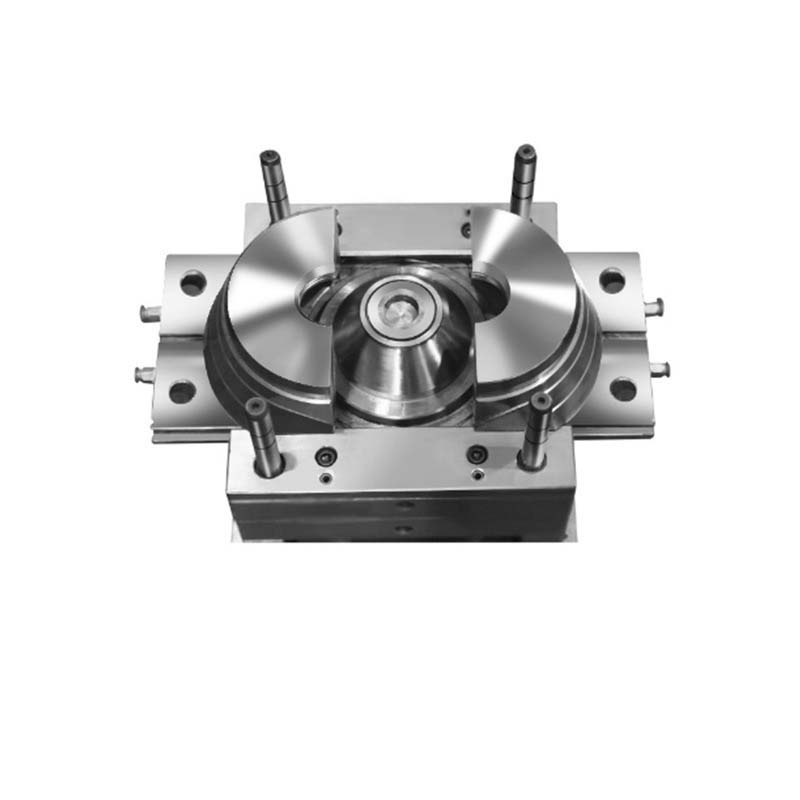
- Mold tooling: From $3,000 for a simple prototype mold to $100,000+ for complex production tooling
- Labor: Skilled operators set parameters, monitor cycles, and ensure quality
- Materials: Raw plastic plus any additives, colorants, or masterbatch
For high volumes, injection molding shines because its cycle times are fast—often 15 to 60 seconds per shot. That speed spreads fixed costs over many parts quickly.
When Do Other Processes Make More Sense?
| Process | Best Use Case | Cost Profile |
|---|---|---|
| Blow molding | Hollow parts like bottles and tanks | Lower equipment cost; molds still significant |
| Rotational molding | Large, hollow parts with uniform walls | Lower tooling cost; longer cycle times |
| Injection molding | Solid or complex parts, high volume | Higher tooling; fastest cycle times |
A client once needed large water tanks—about 500 units per year. Injection molding would have required a massive, expensive tool. Instead, we used rotational molding. The mold cost was about one-third of an injection mold, and the longer cycle time didn’t matter for their volume.
What Hidden Costs Come After Molding?
How Do Assembly and Finishing Add Up?
The part coming out of the mold is rarely the finished product. Post-processing can add 10% to 50% or more to your total cost.
Common post-molding operations include:
- Assembly: Joining multiple components, inserting metal threads, or adding fasteners
- Painting: Requires skilled labor and controlled environments
- Polishing: Time-consuming for high-gloss finishes
- Plating: Complex chemical processes with specialized equipment
One electronics enclosure project we handled required painting and silk-screening. Those finishing steps actually accounted for 35% of the total part cost—more than the material and molding combined.
Why Is Quality Control Worth the Investment?
Inspection and testing add direct costs, but skipping them invites much larger risks.
Typical QC expenses include:
- Dimensional checks with coordinate measuring machines (CMM)
- Mechanical testing (tensile, impact, flexural)
- Visual inspection stations
- Trained quality personnel
A consumer goods company once opted out of rigorous QC to save money. They ended up with a 12% field failure rate, leading to costly recalls and brand damage. Investing 3% to 5% of project cost in quality control would have prevented the problem entirely.
What Are Proven Strategies to Control Costs?
How Does Design for Manufacturability (DFM) Help?
DFM is the practice of designing parts specifically to make manufacturing easier and cheaper. It’s one of the highest-leverage cost-saving tools available.
Key DFM principles:
- Eliminate undercuts when possible—each undercut may require complex side actions
- Maintain uniform wall thickness to prevent warping and reduce cycle time
- Simplify geometry—every complex feature adds machining time
- Add draft angles to help parts release cleanly from the mold
A medical device company came to us with a part design full of sharp internal corners. By rounding those corners and standardizing wall thickness, we reduced mold machining time by 40% and cut per-part cycle time by 25%.
Can Standardization Really Save Money?
Absolutely. Using standard components and design elements reduces the need for custom molds.
For example:
- Standardize fastener bosses across product families
- Use common snap-fit designs instead of custom locking mechanisms
- Share molds across similar parts when possible
One industrial equipment manufacturer saved over $150,000 in tooling costs by consolidating five similar parts into two standardized designs with shared molds.
What Role Does Material Sourcing Play?
Smart material sourcing goes beyond just asking for the lowest price.
Supplier negotiation tactics:
- Commit to annual volumes for better per-unit pricing
- Negotiate payment terms to improve cash flow
- Build long-term relationships—loyal customers often get priority during shortages
Recycling and regrind:
Many manufacturers can blend recycled material (regrind) with virgin resin. This can cut material costs by 15% to 30%. However, quality control is essential—excessive regrind can degrade mechanical properties.
How Do Lean Manufacturing and Automation Reduce Costs?
Lean manufacturing eliminates waste:
- Just-in-time inventory reduces storage costs
- Optimized floor layouts minimize material movement
- Continuous improvement programs catch inefficiencies early
Automation delivers consistency and scale:
- Automated injection molding machines maintain precise parameters
- Robotic part handling reduces labor costs
- Vision inspection systems catch defects instantly
A facility we work with installed automated material handling and robotic part removal. Labor costs dropped by 35%, and production output increased by 22% without adding shifts.
Conclusion
Understanding what drives mold plastic parts costs puts you in control. Material selection, mold complexity, production volume, and post-processing all play critical roles. The lowest upfront price rarely delivers the best long-term value. Instead, consider the total cost—including waste, rework, and quality risks.
By applying Design for Manufacturability principles, choosing the right process for your volume, and working with an experienced partner, you can achieve both quality and cost-efficiency. The goal isn’t just to make parts—it’s to make parts that work reliably while maximizing your investment.
FAQ
What is the biggest factor in mold plastic parts cost?
Mold tooling is often the largest single expense, especially for new projects. A complex mold can cost $50,000 to $100,000 or more. However, for high-volume production, material and labor costs become equally significant over time.
Can I reduce costs by using recycled plastic?
Yes, using regrind can lower material costs by 15–30%. However, you must maintain quality control, as excessive recycled content can affect strength and appearance. Most manufacturers recommend a blend of virgin and recycled material.
How many parts do I need to make injection molding worthwhile?
Generally, injection molding becomes cost-effective above 1,000 to 5,000 parts, depending on part size and complexity. For lower volumes, consider 3D printing, urethane casting, or other prototyping methods.
Why do quotes from different suppliers vary so much?
Suppliers have different equipment, labor costs, quality standards, and overhead structures. A low quote may indicate lower-quality materials, less rigorous QC, or hidden fees for tooling changes or post-processing.
How can I get the most accurate quote for my project?
Provide detailed 3D CAD files, specify your desired material, and state your annual volume expectations. Clear information upfront helps suppliers give accurate pricing and reduces surprises later.
Contact Yigu Technology for Custom Manufacturing
At Yigu Technology, we specialize in non-standard plastic and metal custom manufacturing. Our team brings decades of hands-on experience to every project—from design optimization to final production. We help clients navigate material choices, mold design decisions, and process selection to achieve the best balance of quality and cost.
Whether you’re launching a new product or optimizing an existing one, we’re here to help. [Contact Yigu Technology today] to discuss your project and get a personalized cost analysis.