Introduction
You have a design. You need a physical prototype—fast. But which method should you choose? How accurate will it be? What will it cost? Rapid prototype manufacturing encompasses a range of technologies that turn digital models into physical parts quickly. Understanding the differences between methods—SLA, SLS, FDM, and others—is essential for making informed decisions that balance cost, accuracy, and application. At Yigu Technology, we help clients navigate these choices daily. This article covers what you need to know: definitions, processes, comparisons, and applications across industries.
What Is Rapid Prototype Manufacturing?
Rapid prototype manufacturing (RPM) is an advanced manufacturing technology that produces physical prototypes directly from 3D digital models using additive processes.
Unlike traditional subtractive manufacturing—which removes material from a larger block—rapid prototyping builds parts layer by layer, adding material only where needed. This approach enables:
- Speed: Prototypes in hours or days, not weeks
- Complexity: Geometries impossible with traditional methods
- Flexibility: Easy design changes without tooling
- Cost-effectiveness: Lower upfront investment for low volumes
What Are the Main Process Methods?
Stereolithography (SLA)
SLA is one of the earliest and most precise rapid prototyping technologies. It uses a UV laser to cure liquid photosensitive resin layer by layer.
Process:
- A tank is filled with liquid photosensitive resin
- A UV laser scans the surface, curing resin where it hits
- The build platform descends (0.05–0.2 mm per layer)
- A new layer of resin is coated, and the process repeats
Characteristics:
- Accuracy: ±0.05–0.1 mm
- Surface finish: Smooth, glass-like on top surfaces
- Materials: Photopolymer resins (standard, tough, high-temperature, biocompatible)
Best for: High-precision, complex parts; medical devices; jewelry; dental applications
Selective Laser Sintering (SLS)
SLS uses a high-power laser to sinter powdered materials—metals, ceramics, or plastics—into solid parts layer by layer.
Process:
- Powder is spread evenly on the build platform
- A laser scans the cross-sectional shape, sintering powder particles
- The platform descends, new powder is spread, and the process repeats
Characteristics:
- Accuracy: ±0.1–0.3 mm
- Surface finish: Grainy texture; post-processing required for smooth surfaces
- Materials: Nylon, metal powders (aluminum, titanium, stainless steel), ceramics
Best for: Functional metal parts, high-strength components, complex geometries without supports
Fused Deposition Modeling (FDM)
FDM extrudes thermoplastic filament through a heated nozzle, building parts layer by layer. It is the most accessible and cost-effective rapid prototyping technology.
Process:
- Filament is fed into a heated nozzle
- Molten plastic is extruded in precise patterns
- Material cools and solidifies, bonding to previous layers
Characteristics:
- Accuracy: ±0.1–0.5 mm (depends on printer quality)
- Surface finish: Visible layer lines; can be sanded or smoothed
- Materials: PLA, ABS, PETG, TPU, nylon, polycarbonate
Best for: Concept models, functional prototypes, low-cost parts, educational projects
Laminated Object Manufacturing (LOM)
LOM builds parts by cutting and bonding layers of foil material—paper, plastic film, or metal foil.
Process:
- A layer of foil is placed on the build platform
- A laser or knife cuts the cross-sectional shape
- The layer is bonded to the previous layer
- Excess material is removed, and the process repeats
Characteristics:
- Accuracy: ±0.2–0.5 mm
- Surface finish: Stepped texture; requires post-processing
- Materials: Paper-based foils (most common), plastic film, metal foil
Best for: Large-scale prototypes, architectural models, packaging prototypes
How Do These Methods Compare?
Cost Comparison
| Method | Equipment Cost | Material Cost | Manufacturing Cost |
|---|---|---|---|
| SLA | High ($10,000–$100,000+) | High ($100–$500/L) | Moderate (post-processing) |
| SLS | Very high ($100,000–$500,000+) | High ($100–$1,000+/kg) | High (controlled atmosphere, heating cycles) |
| FDM | Low ($200–$10,000) | Low ($20–$100/kg) | Low (simple operation) |
| LOM | Moderate ($5,000–$50,000) | Low ($5–$20/m²) | Low (fast cutting, simple bonding) |
Takeaway: FDM is the most cost-effective for low-budget projects. SLA and SLS are investments for high-precision or functional parts. LOM offers a balance for large-scale models.
Accuracy and Surface Quality
| Method | Accuracy | Surface Quality |
|---|---|---|
| SLA | High (±0.05–0.1 mm) | Smooth, glass-like finish |
| SLS | General (±0.1–0.3 mm) | Grainy; requires post-processing |
| FDM | General (±0.1–0.5 mm) | Visible layer lines; can be improved |
| LOM | Low (±0.2–0.5 mm) | Stepped texture; rough |
Takeaway: SLA delivers the highest precision and best surface finish—ideal for medical devices, jewelry, and detailed prototypes. FDM and LOM are suitable when appearance is less critical.
Applicability Comparison
| Method | Applicable Materials | Best For | Key Industries |
|---|---|---|---|
| SLA | Photosensitive resins | High-precision, complex parts | Medical, jewelry, aerospace, automotive |
| SLS | Metal powders, nylon, ceramics | Functional metal parts, high-strength components | Aerospace, automotive, tooling |
| FDM | Thermoplastics (PLA, ABS, PC, TPU) | Concept models, simple functional parts | Consumer electronics, education, small-scale manufacturing |
| LOM | Paper, plastic film, metal foil | Large-scale prototypes | Architecture, packaging, large product shells |
Where Is Rapid Prototype Manufacturing Applied?
Automotive Industry
Rapid prototype manufacturing is essential for vehicle design and testing.
Applications:
- Prototype vehicles: Physical models for performance and safety testing before mass production
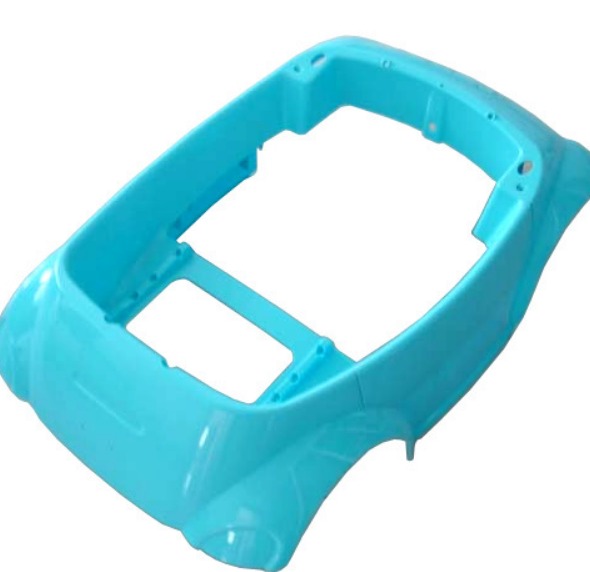
- Aerodynamic testing: 3D-printed front fascia prototypes tested in wind tunnels
- Cost reduction: Low-volume prototypes without expensive tooling
Example: A small automotive startup 3D-printed several versions of a new front fascia design in days, tested them in a wind tunnel, and selected the best-performing design—saving months and thousands compared to traditional methods.
Aerospace Industry
Aerospace demands high-performance, reliable components. Rapid prototyping accelerates development.
Applications:
- Engine parts: Turbine blades, combustion chambers
- Structural components: Brackets, housings
- Design verification: Testing structural integrity, aerodynamics, fatigue resistance
Example: Boeing used 3D printing to create prototypes of complex structural components for the 787 Dreamliner. Rapid iteration reduced development time and increased reliability.
Medical Field
Rapid prototyping enables personalized medicine.
Applications:
- Custom prosthetics: Patient-specific fit from 3D scans
- Surgical guides: Accurate placement for implants
- Implants: Customized hip, knee, and dental implants
Example: A hospital used 3D scanning to capture a patient's residual limb, designed a custom prosthetic, and printed it in biocompatible material—all in days. The patient reported significantly better fit and functionality than off-the-shelf options.
Consumer Electronics
Speed to market is critical in consumer electronics.
Applications:
- Appearance design: Prototyping form factor, ergonomics, and aesthetics
- Functionality verification: Testing button placement, user interface, assembly
Example: Apple uses rapid prototyping during iPhone development. Physical prototypes test ergonomics, button accessibility, and display usability—enabling refinement before mass production.
Yigu Technology's Perspective
As a custom manufacturer of non-standard plastic and metal products, Yigu Technology uses rapid prototype manufacturing daily.
What we have learned:
- Match method to application: SLA for precision and surface finish. SLS for functional metal parts. FDM for cost-effective concept models. LOM for large-scale prototypes.
- Cost is not the only factor: A cheaper prototype that does not meet your testing requirements is false economy.
- Accuracy matters for fit: If your prototype will assemble with other parts, SLA or SLS may be necessary.
- Material properties matter: For functional testing, use materials that mimic production properties.
We help clients choose the right method based on their specific needs—balancing cost, accuracy, surface finish, and application.
Conclusion
Rapid prototype manufacturing offers multiple paths from digital design to physical part. Each method has distinct advantages:
- SLA: High precision, smooth surface finish—ideal for medical, jewelry, and detailed prototypes
- SLS: Functional metal parts, high-strength components—essential for aerospace and automotive
- FDM: Low cost, easy to use—perfect for concept models, education, and small-scale projects
- LOM: Large-scale prototypes—suited for architecture and packaging
Understanding these differences allows you to choose the right method for your project—balancing cost, accuracy, surface quality, and application. When selected appropriately, rapid prototype manufacturing accelerates development, reduces risk, and brings better products to market faster.
Frequently Asked Questions
What is the difference between SLA, SLS, and FDM?
SLA uses a laser to cure liquid resin, delivering high precision and smooth surfaces. SLS uses a laser to sinter powdered material, producing strong, functional parts—especially in metal. FDM extrudes molten plastic, offering low cost and ease of use for concept models.
Which rapid prototyping method is the most cost-effective?
FDM is the most cost-effective for equipment, materials, and operation. Desktop FDM printers start at $200, and filament costs $20–$100/kg. For single prototypes or concept models, FDM is the best value.
Which method offers the highest accuracy?
SLA offers the highest accuracy, typically ±0.05–0.1 mm, with smooth surface finishes. SLS and FDM are less precise but suitable for many applications. LOM has the lowest accuracy.
Can rapid prototype manufacturing produce metal parts?
Yes. SLS can sinter metal powders (aluminum, titanium, stainless steel) to produce functional metal parts. These are used in aerospace, automotive, and medical applications where strength and heat resistance are critical.
What industries use rapid prototype manufacturing most?
Automotive (prototype vehicles, aerodynamic testing), aerospace (engine parts, structural components), medical (custom prosthetics, surgical guides, implants), and consumer electronics (form factor testing, appearance design). Any industry developing physical products can benefit.
Contact Yigu Technology for Custom Manufacturing
At Yigu Technology, we specialize in rapid prototype manufacturing and custom production. Our capabilities include SLA, SLS, FDM, CNC machining, and injection molding. We serve automotive, aerospace, medical, and consumer goods industries.
If you are developing a new product and need guidance on choosing the right rapid prototyping method, contact our engineering team. Let us help you balance cost, accuracy, and speed to bring your ideas to life.