Introduction
Milling engineering is a core technology in mechanical manufacturing. It drives a rotating milling cutter while coordinating workpiece feed movement to remove material—achieving the required shape, size, and surface quality. This is not a single machining operation but a systematic technology covering tool selection, parameter setting, and quality control. It is one of the most important processing methods in discrete manufacturing, widely used in part forming. This guide explores how milling engineering impacts manufacturing processes—from basic principles to production efficiency, cost reduction, quality improvement, and technological advancements. Whether you are a manufacturing manager or a technical practitioner, you will gain targeted insights into the core value of milling in modern industry.
What Are the Basic Principles of Milling Engineering?
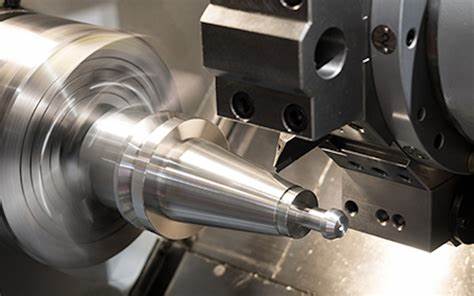
The Milling Process: Rotational Cutting + Feed Movement
The core of the milling process is the synergy of rotational cutting and feed movement :
- Main movement: High-speed rotation of the milling cutter, responsible for cutting and separating material.
- Feed movement: Straight or curved movement of the workpiece, ensuring continuous cutting progress.
Compared to other cutting methods, milling’s core advantage is that the milling cutter has multiple cutting edges working alternately. This reduces the load on each cutting edge, improves machining efficiency, and enables integrated processing of various features—planes, grooves, curved surfaces, and gears—with strong adaptability.
Types of Milling Tools and Equipment
| Category | Specific Type | Core Features | Best For |
|---|---|---|---|
| Milling equipment | Ordinary milling machine (vertical/horizontal) | Manual control; simple operation; low cost | Small batches; simple parts |
| Milling equipment | CNC milling machine | Program control; high automation; stable accuracy | Medium volume; complex parts |
| Milling equipment | Machining centers | Multi-process integration; automatic tool change; extremely high efficiency | Large volume; high-precision complex parts |
| Milling tools | High-speed steel cutters | Good toughness; impact resistance; low cost | Mild steel; cast iron; common materials |
| Milling tools | Carbide cutters | High hardness; high temperature resistance; long life | High-strength steel; aluminum alloy; precision machining |
How Milling Parameters Affect Machining Quality
| Parameter | Too Low | Too High | Optimal Impact |
|---|---|---|---|
| Cutting speed | Built-up edge; poor surface finish | Accelerated tool wear; affects dimensional accuracy | Balanced speed ensures quality and tool life |
| Feed rate | Reduced production efficiency | Increased cutting force; workpiece deformation | Optimized feed balances efficiency and quality |
| Depth of cut | Increased number of passes | Chatter; instability | Appropriate depth minimizes passes while maintaining stability |
Real-world example: A precision mold factory machining a cavity experienced rapid tool wear and dimensional errors exceeding 0.02 mm due to excessive cutting speed (1200 m/min). After adjusting cutting speed to 800 m/min, dimensional error stabilized within ±0.005 mm .
How Does Milling Engineering Impact Manufacturing Processes?
Improving Production Efficiency
Milling engineering continuously optimizes manufacturing efficiency through technological upgrades:
| Advancement | Impact |
|---|---|
| CNC milling + machining centers | Multi-process integration; reduces clamping and process switching time |
| High-speed milling technology | Cutting speeds 3–5× traditional milling; greatly reduces single-piece machining time |
| Coated tools | Extends tool life; reduces tool change downtime |
Case study: An auto parts factory used a machining center to process engine blocks, integrating 8 original processes into 3 —increasing production efficiency by over 60% .
Reducing Production Costs
Milling engineering reduces total manufacturing costs across three dimensions:
| Dimension | Impact |
|---|---|
| Efficiency improvement | Reduced processing time per unit product; lowers labor costs |
| High-precision milling | Scrap rate reduced from 5–8% (traditional) to <1%; minimizes material waste |
| Automation + tool management | Reduces tool loss and manual intervention costs |
Case study: An electronic component factory introduced a CNC milling production line. Processing cost per unit product was reduced by 25% , with an investment payback period of only 8 months .
Improving Product Quality and Accuracy
| Advancement | Impact |
|---|---|
| Modern CNC milling | Positioning accuracy up to ±0.001 mm—meeting high-end manufacturing requirements |
| Five-axis CNC milling | Improved form and position tolerance consistency by 80% for aviation blades; reduced assembly difficulty |
| Complex surface processing | Expanded product design space; improved product performance |
What Technological Advancements Are Shaping Milling Engineering?
Development of CNC Milling Technology
| Evolution | Capability |
|---|---|
| Traditional 3-axis CNC | Basic 3D machining |
| 5-axis linkage CNC | All-round machining of complex shaped parts; adapts to aerospace, high-end equipment needs |
| Intelligent CNC systems (Fanuc 31i, Siemens 840D) | Adaptive parameter adjustment; real-time tool wear monitoring; improved stability and accuracy |
Data: Five-axis CNC milling improves complex part machining accuracy by over 50% and machining efficiency by over 40% .
Integration of Automation and Intelligent Manufacturing
| Technology | Impact |
|---|---|
| Robots + milling equipment | Unmanned production; 24-hour continuous operation; greatly increased production capacity |
| IoT + data analytics | Data collection and analysis; optimizes machining parameters and production plans through big data |
Case study: An intelligent manufacturing factory used data-driven parameter optimization on a milling production line. Production efficiency increased by an additional 15% , with product qualification rate stabilized at over 99.8% .
Application of New Materials and Processes
| Innovation | Application |
|---|---|
| Superhard tool materials (PCD, PCBN) | Efficient milling of difficult-to-machine materials—ceramics, composites |
| Green milling technology | Environmentally friendly cutting fluids; dry milling; reduces pollution and treatment costs |
| Micro-milling technology | Processing of micron-level micro parts; adapts to electronics, medical, and high-end fields |
What Is Yigu Technology’s Perspective?
Milling engineering is a key entry point for digital transformation in manufacturing. Its optimization value for manufacturing processes is irreplaceable. At Yigu Technology, we believe the future of milling engineering lies in intelligent collaboration —integrating data collection, AI optimization, and automated control. We are developing intelligent monitoring equipment for milling processes, enabling accurate tool wear monitoring and real-time machining accuracy feedback. This helps enterprises achieve intelligent upgrades—reducing costs, increasing efficiency, and enhancing core competitiveness.
Conclusion
Milling engineering deeply reshapes manufacturing processes by improving production efficiency, reducing costs, and enhancing product quality. CNC milling and machining centers integrate multiple processes—reducing clamping and switching time; one auto parts factory achieved 60% efficiency gain . High-precision CNC milling achieves ±0.001 mm positioning accuracy , reducing scrap rates from 5–8% to under 1%—cutting processing costs by 25% with an 8-month payback period. Five-axis CNC milling improves complex part accuracy by 50% and efficiency by 40% . Intelligent upgrades—IoT data analytics, AI parameter optimization—further boost efficiency by 15% and stabilize qualification rates above 99.8%. From basic ordinary milling to intelligent five-axis machining, milling engineering has always advanced alongside manufacturing industry needs. With automation and intelligent technology penetrating further, milling engineering will play an even more critical role in high-end and green manufacturing.
FAQs
How does milling engineering adapt to the development needs of intelligent manufacturing?
Adaptation happens through data, automation, and collaboration : real-time collection and analysis of milling process parameters, combined with AI algorithms to optimize machining parameters; integration with industrial robots and IoT systems to build unmanned milling production lines; and data link integration between milling and upstream/downstream processes to enable intelligent scheduling across manufacturing.
What are the core criteria for selecting milling equipment in different manufacturing industries?
Select based on industry needs: Mass production —prioritize machining centers (high efficiency, high integration). Precision parts —prioritize five-axis CNC milling (high precision, complex processing). Small batch simple parts —ordinary milling machines (low cost, flexible operation). Difficult-to-machine materials —superhard tools and high-performance CNC equipment.
What are the key points for milling engineering to reduce production costs?
Three key points: Efficiency improvement —shorten single-piece processing time through technological upgrades. Parameter and tool optimization —reduce scrap rate and material waste. Automation transformation —reduce manual intervention; lower labor and management costs.
What are the new requirements for operators with milling engineering advancements?
Three core competencies: CNC programming ability —master G/M code and mainstream CNC systems. Intelligent equipment operation and maintenance —understand automation and monitoring system basics; troubleshoot issues. Data interpretation ability —optimize parameter settings through processing data; improve machining results.
Contact Yigu Technology for Custom Manufacturing
At Yigu Technology, we combine advanced milling engineering with intelligent manufacturing to deliver high-precision components. Our 3-axis, 4-axis, and 5-axis CNC milling machines achieve positioning accuracy up to ±0.001 mm . We integrate automated tool monitoring, IoT data analytics, and AI parameter optimization to ensure consistent quality and efficiency. From aerospace blades to automotive engine blocks, we deliver precision components that meet the most demanding specifications. We provide DFM feedback to optimize your designs for manufacturability.
Ready to optimize your manufacturing processes with advanced milling engineering? Contact Yigu Technology today for a free consultation and quote. Let us help you achieve precision, efficiency, and quality in every component.