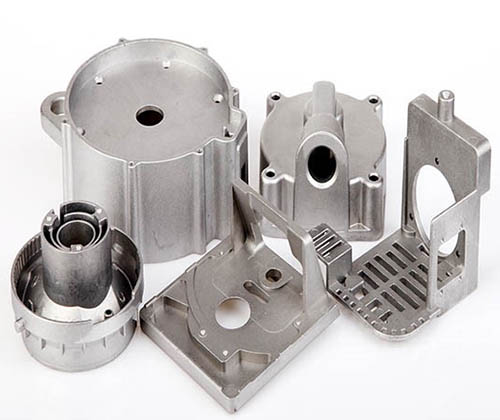
In the world of manufacturing, the creation of a reliable, high-performance component or assembly rarely relies on a single process. Machining and fitting represent the fundamental partnership between shaping raw material and the critical art of assembly. While machining carves parts to specification, fitting ensures they come together seamlessly, defining the ultimate quality, function, and durability of a product. This synergy is the bedrock of industries from aerospace to medical devices. This article will demystify the relationship between machining and fitting, exploring how they interact, the precision they achieve, essential tools, material selection, and troubleshooting, providing a comprehensive guide for engineers, machinists, and manufacturing enthusiasts.
What Defines Machining and Fitting?
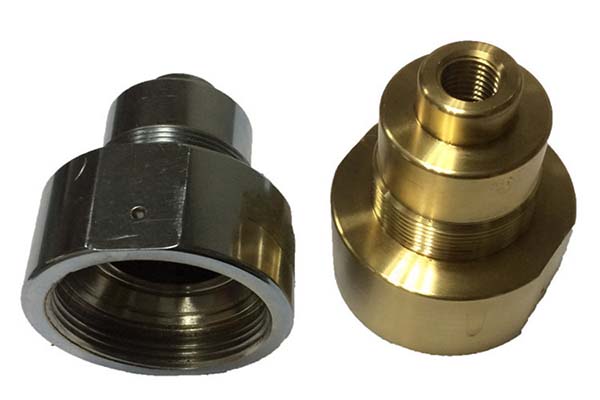
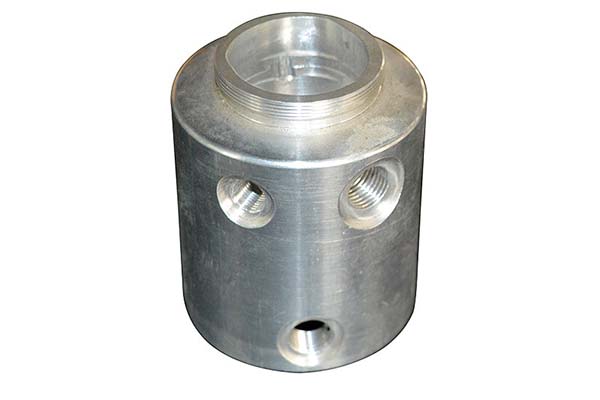
At its core, machining is a subtractive manufacturing process. It involves using machine tools like CNC mills, lathes, and grinders to selectively remove material from a stock piece—metal, plastic, or composite—to achieve a desired shape, size, and surface finish. Think of it as a sculptor carefully carving a block of marble.
Fitting, on the other hand, is the complementary assembly process. It involves joining machined components, often through techniques like press-fitting, bolting, riveting, or adhesive bonding, to create a functional assembly. A fitter's role is to interpret engineering drawings, ensure parts mate correctly, and achieve the specified clearances or interferences. The quality of the machining directly dictates the ease and success of the fitting process.
How Do Machining and Fitting Complement Each Other?
They operate in a continuous feedback loop. Precision machining provides the accurate parts necessary for predictable fitting. For instance, a CNC-machined bearing housing with a tight diameter tolerance allows for a perfect press-fit with a bearing, ensuring optimal load distribution and longevity.
Conversely, the requirements of the final fit dictate the machining strategy. An engineer designing a sliding fit for a pneumatic cylinder will specify much looser tolerances on the piston rod diameter than for a locational interference fit used to permanently join a gear to a shaft. The fitter's experience also feeds back to the machinist; recurring difficulty assembling parts may indicate a consistent machining error, such as a slightly out-of-round bore.
Table 1: The Machining-Fitting Symbiosis
| Machining Provides | Fitting Achieves | Resulting Benefit |
|---|---|---|
| Dimensional Accuracy | Predictable Assembly | Reduced Re-work & Scrap |
| Specified Surface Finish | Proper Seal or Bearing Contact | Enhanced Performance & Life |
| Geometric Precision (Flatness, Roundness) | Uniform Load Distribution | Structural Integrity |
What Precision Levels Can Machining and Fitting Achieve?
The achievable precision is astonishing and is categorized by International Tolerance (IT) grades. Standard CNC machining routinely holds tolerances of ±0.025 mm (±0.001"), corresponding to around IT grade 7-8. High-precision processes like jig grinding or honing can achieve microns (±0.0025 mm or 0.0001"), reaching IT grades 5-6.
In fitting, this translates to the quality of the joint. A clearance fit for easy assembly might have a gap of 0.04 mm, while a high-precision interference fit for a machine tool spindle might require an interference of just 0.01 mm, demanding exceptional control from both machining and fitting processes.
Which Tools Are Essential for Machining and Fitting?
Each discipline requires a specialized toolkit.
For Machining:
- CNC Machines: The backbone for complex, repeatable parts (e.g., 5-axis mills, turning centers).
- Cutting Tools: End mills, drills, inserts, and taps—their material (carbide, ceramic) and geometry are critical.
- Measuring Instruments: Digital calipers, micrometers, and dial indicators for in-process checks. For the highest precision, Coordinate Measuring Machines (CMM) are used.
For Fitting:
- Assembly Tools: Torque wrenches for controlled bolting, hydraulic presses for press-fitting, and heating/cooling equipment for shrink-fitting.
- Verification Tools: Feelergauges to check clearances, dial bore gauges to measure internal diameters, and optical comparators for complex profiles.
- Finishing Tools: Hand scrapers, lapping plates, and honing stones for achieving final surface finishes and perfect mating surfaces.
How to Select Materials for Machining and Fitting Projects?
Material choice is a triage between machinability, functional properties, and fit behavior.
- Machinability: Aluminum 6061 is a favorite for its excellent machinability and good strength-to-weight ratio. Free-machining steels (e.g., 12L14) contain additives for better chip breaking. Conversely, stainless steels or titanium alloys offer superior strength and corrosion resistance but are tougher to machine, requiring slower speeds and specialized tools.
- Fit Considerations: The material's coefficient of thermal expansion is crucial for shrink or expansion fits. For example, fitting a brass bushing into a steel housing involves heating the housing so it expands more than the bushing. Material hardness also matters; a hardened steel shaft can be press-fit into a softer aluminum housing, but not vice versa without damaging the part.
What Tolerances Matter Most in Machining and Fitting?
Not all tolerances are created equal. The most critical ones are those that control the fit and function of mating parts.
- Size Tolerances (Hole and Shaft Systems): Governed by the ISO system of limits and fits. A designation like "H7/g6" defines the tolerance zones for the hole (H7) and shaft (g6), resulting in a specific clearance.
- Geometric Tolerances: Often more important than size. True position controls the location of holes for bolting. Flatness and parallelism ensure surfaces mate properly. Cylindricity ensures a shaft is perfectly round and straight for a smooth bearing fit.
- Surface Finish (Ra): A rough surface can wear quickly or prevent a proper seal, even if dimensional tolerances are met. A hydraulic seal surface may require an Ra < 0.8 µm, while a non-critical structural face may only need Ra 3.2 µm.
How to Troubleshoot Common Machining and Fitting Errors?
Here is a pragmatic guide to diagnosing issues:
- Problem: Parts Won't Assemble.
- Check: Verify the actual measured dimensions of both parts against the drawing. Use a bore gauge and micrometer. Likely a machining error—the hole is undersized or the shaft is oversized.
- Problem: Assembly is Too Loose.
- Check: Confirm the specified fit type (clearance, transition, interference). Were the correct tolerances machined? Could be tool wear during machining leading to out-of-spec sizes.
- Problem: Press-Fitted Component is Loose After Assembly.
- Check: Material deformation. The housing may have yielded under pressure if the interference was too high for the material strength. Recalculate the required interference based on the materials' Young's modulus and Poisson's ratio.
- Problem: Misalignment After Bolting.
- Check: Geometric tolerances, especially true position of bolt holes or flatness of mating flanges. This is a classic case where hitting the size tolerance on individual holes doesn't guarantee assembly if their locations are off.
Conclusion
Machining and fitting are not sequential tasks but an integrated engineering discipline. Mastering this partnership means understanding that a drawing is not just a set of dimensions but a blueprint for interaction. From selecting the right material and toolpath to applying the correct assembly force, every decision impacts the final product's integrity. By appreciating their interdependence, investing in the right measurement tools, and rigorously applying tolerance principles, manufacturers can consistently produce reliable, high-performance assemblies that stand the test of time and stress.
FAQ on Machining and Fitting
- What is the main difference between machining and fitting?
Machining is the process of cutting and shaping raw material into a precise part. Fitting is the process of assembling and joining those machined parts together to create a functional whole. - Can CNC machining eliminate the need for skilled fitting?
While high-precision CNC machining drastically reduces fitting challenges by producing incredibly accurate parts, skilled fitting remains essential for complex assemblies, verifying fits, applying specialized joining techniques, and performing final hand-finishing for optimal performance. - How do I choose between a clearance fit and an interference fit?
Use a clearance fit (shaft smaller than hole) for parts that need to move freely, like gears on a shaft. Use an interference fit (shaft larger than hole) for permanent assemblies where no movement is desired, like a bearing in a housing, relying on friction to hold parts together. - What is the most common mistake in designing for machining and fitting?
Specifying unnecessarily tight tolerances. Every decimal place adds cost. Work with your manufacturing partner to apply functional tolerances—tight only where needed for the fit, and looser elsewhere to reduce machining time and cost.
Contact Yigu Technology for Custom Manufacturing
At Yigu Technology, we view machining and fitting not as separate departments, but as a unified craftsmanship. Our expertise lies in managing this continuum—from advanced multi-axis CNC machining that produces components with exceptional accuracy and surface integrity, to a dedicated assembly team equipped with precision fitting tools and protocols. We understand that a perfectly machined part is only as good as the assembly it integrates into.
We specialize in advising clients on Design for Manufacturing (DFM), helping optimize part designs and tolerance stacks for both machinability and foolproof assembly. Whether your project requires a high-tolerance interference fit for a robotic drive system or a complex modular assembly with multiple sliding interfaces, our engineering team ensures the seamless transition from digital model to physical, reliable product. Let us be your partner in precision, from the first cut to the final click of a perfect fit.