Introduction
3D printing for industrial parts—also called additive manufacturing—is transforming how products are designed, prototyped, and produced. Unlike traditional methods that cut away material, it builds parts layer by layer from digital models.
This fundamental difference unlocks possibilities that were previously impossible:
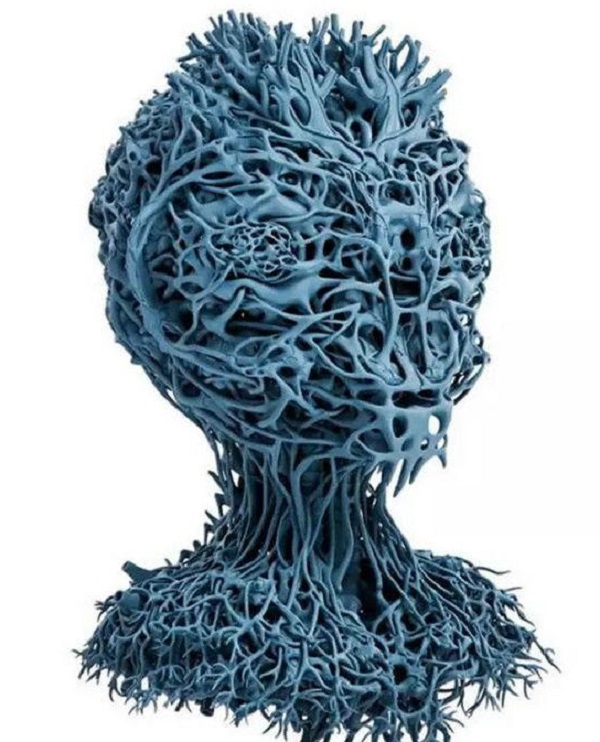
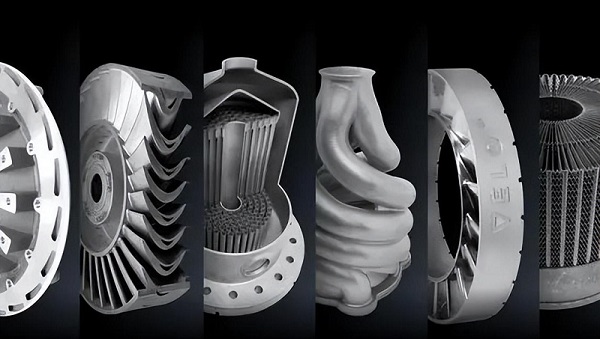
- Complex internal geometries that machining can't reach
- Lightweight lattice structures that save material and weight
- Customization without cost penalties
- Rapid iteration that compresses development cycles
From aerospace components that must withstand extreme conditions to medical implants tailored to individual patients, 3D printed manufacturing is proving its value.
At Yigu technology, we've helped countless clients integrate 3D printing into their industrial parts production. This guide covers how it works, how it compares to traditional methods, and what you need to know to get started.
What Is 3D Printing for Industrial Parts?
Definition and Basic Concept
3D printing for industrial parts constructs three-dimensional objects by layering materials one by one, based on digital models created in CAD software.
This additive approach contrasts sharply with traditional subtractive manufacturing:
- Subtractive: Start with a block of material, remove excess through cutting, milling, drilling. Much of the original material becomes waste.
- Additive: Start with nothing, add material only where needed. Minimal waste, maximum efficiency.
For a metal bracket, traditional machining might start with a large block and carve away 80-90% of the material. 3D printing builds the bracket directly from metal powder, using only what becomes the part.
The Process at a Glance
- Create a 3D model in CAD software
- Slice the model into thin layers using specialized software
- Print layer by layer using the appropriate technology
- Post-process as needed—support removal, heat treatment, finishing
How Does 3D Printing Work for Industrial Parts?
Step 1: Modeling
Everything starts with a 3D model created in CAD software. Designers must consider:
- Intended function: High-stress parts need designs accounting for strength, fatigue, load distribution
- Material properties: Different materials behave differently—plastics for complex geometries, metals for strength
- Surface finish requirements: Smooth surfaces for aesthetics or friction require different design considerations
Step 2: Slicing
Slicing software breaks the 3D model into thin, two-dimensional layers—typically 0.05 mm to 0.3 mm thick.
The software generates G-code—instructions the printer follows:
- Path for nozzle or laser
- Extrusion or sintering speed
- Pauses and retractions
Step 3: Printing
Different technologies build parts in different ways:
| Technology | How It Works | Best For |
|---|---|---|
| FDM | Melts and extrudes thermoplastic filament | Prototypes, large parts, low cost |
| SLA | UV laser cures liquid resin | High detail, smooth surfaces |
| SLS | Laser sinters powdered material | Strong functional parts, complex geometries |
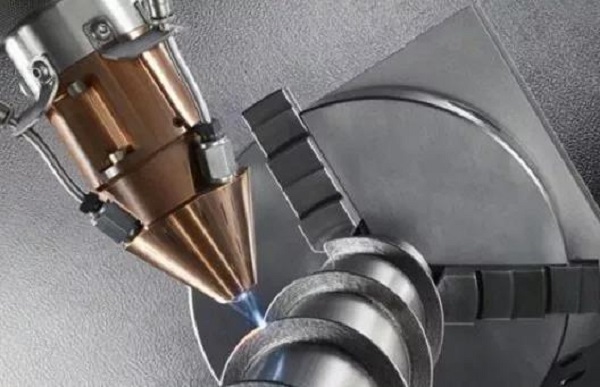
| Metal printing | Laser or electron beam melts metal powder | High-strength industrial components |
FDM: Filament fed into heated extruder, melted, deposited layer by layer. Accessible, cost-effective.
SLA: Laser traces each layer on liquid resin surface, curing it solid. Exceptional detail.
SLS: Laser sinters powder particles together. Unfused powder supports the part—no supports needed.
Metal printing: Similar to SLS but with full melting. Produces dense, strong metal parts.
Step 4: Post-Processing
After printing, parts often need finishing:
- Support removal: Breaking or cutting away temporary structures
- Sanding: Smoothing surfaces for better finish
- Heat treatment: Improving mechanical properties (especially for metals)
- Inspection: Verifying dimensions and quality
How Does 3D Printing Compare to Traditional Manufacturing?
| Aspect | Traditional Manufacturing | 3D Printing |
|---|---|---|
| Design limitations | Constrained by tool access. Complex internal structures difficult or impossible. | High design freedom. Intricate geometries, lattice structures, internal channels—all possible. |
| Production cost (small batch) | High initial tooling. Cost per part high due to amortized fixed costs. | Low initial investment. Cost per part stable regardless of batch size. |
| Production cost (large batch) | Low per-part cost—economies of scale. | Higher per-part cost—material cost may make it less competitive. |
| Production cycle | Long—tooling design, machining, assembly. Design changes require re-tooling. | Short—especially for small batches. Design changes easy—update digital model, print. |
| Customization | Possible but costly—unique tooling or machining for each variation. | Highly suitable—each part can be customized simply by changing the digital model. |
| Material utilization | Low—significant waste in subtractive processes. | High—additive process uses only material needed. |
When Traditional Manufacturing Wins
- High-volume production of simple, standardized parts
- Very large components exceeding printer build volumes
- Applications requiring specific material properties not yet available in printable form
When 3D Printing Wins
- Small batches—1 to 1,000 parts
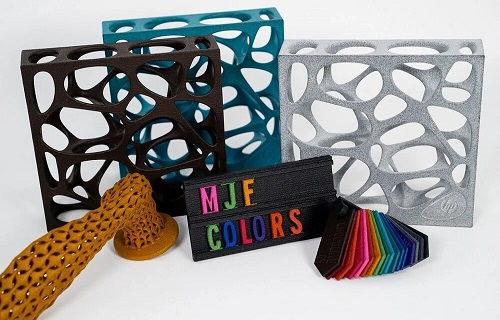
- Complex geometries—internal channels, lattice structures
- Customization—each part unique
- Rapid prototyping—iterate quickly
- Legacy parts—no tooling required
Real example: In automotive, traditional methods excel at mass-producing engine blocks for high-volume models. But for custom concept cars or small-batch racing components, 3D printing offers faster production and more design flexibility at reasonable cost.
What Materials Are Used for 3D Printed Industrial Parts?
Thermoplastics
| Material | Properties | Applications |
|---|---|---|
| PLA | Biodegradable, low melting point, easy to print | Consumer-facing industrial products, prototypes |
| ABS | Durable, heat-resistant, good mechanical strength | Functional prototypes, parts under mechanical stress |
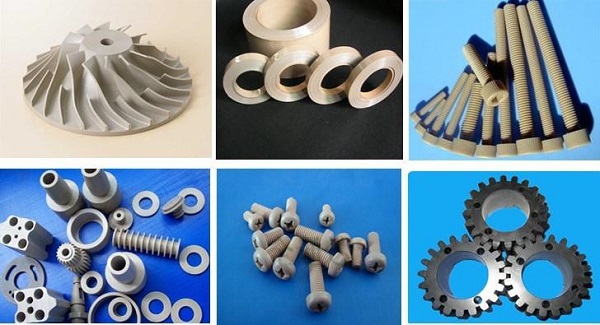
| Nylon | Strong, wear-resistant, flexible | Gears, bearings, industrial components |
| PETG | Strong, chemical-resistant, slightly flexible | Containers, mechanical parts |
Photopolymer Resins
Used in SLA printing:
- High precision
- Smooth surface finishes
- Ideal for intricate details
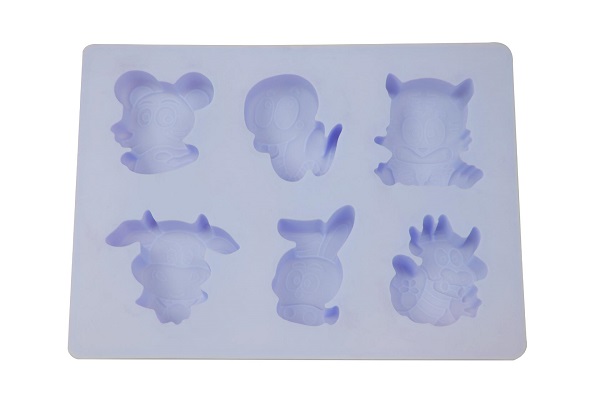
Applications: Jewelry molds, dental models, detailed prototypes
Metal Powders
| Material | Properties | Applications |
|---|---|---|
| Aluminum | Lightweight, corrosion-resistant | Aerospace, automotive—weight reduction crucial |
| Titanium | High strength-to-weight, biocompatible | Medical implants, high-performance industrial |
| Stainless steel | Strong, corrosion-resistant | Valves, fittings, chemical processing |
Material Selection Guide
Consider:
- Strength requirements: Metals for high strength, nylon for toughness
- Weight constraints: Aluminum for lightweight, titanium for strength-to-weight
- Environmental exposure: Stainless steel for corrosion resistance
- Detail needed: Resins for intricate features
- Cost: Plastics cheapest, metals cost more
What Are the Advantages for Industrial Parts?
Design Freedom
Traditional manufacturing limits what's possible. 3D printing removes those limits:
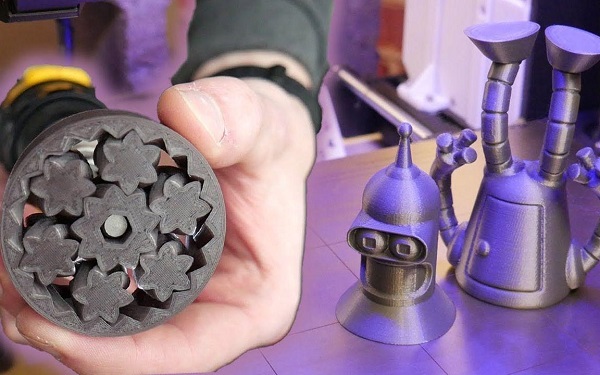
- Internal channels: Cooling passages, fluid paths—impossible to machine
- Lattice structures: Lightweight, strong, optimized for load paths
- Organic shapes: Designed for function, not manufacturability
Cost-Effectiveness for Small Batches
No tooling costs make small runs economical:
- Prototypes: 1-10 parts at reasonable cost
- Small-batch production: 10-1,000 parts without six-figure mold investments
- Custom parts: Each unique, no cost penalty
Rapid Iteration
From design to physical part in hours:
- Test concepts quickly
- Identify issues early
- Refine based on feedback
- Accelerate development cycles
Material Efficiency
Additive manufacturing uses only material that becomes the part:
- Waste as low as 5-10% vs. 80-90% for machining
- Unused powder can be recycled
- Less environmental impact
Customization
Each part can be different at no extra cost:
- Patient-specific medical implants
- Custom automotive components
- Tailored industrial tools
What Are the Challenges?
Equipment Cost
Industrial 3D printers are expensive:
- Desktop FDM: $500-5,000
- Industrial SLS: $50,000-500,000
- Metal printers: $500,000-1.5 million
For many companies, using service bureaus makes more sense than buying.
Material Limitations
While expanding, printable materials don't yet match all traditional options. Not every alloy or grade is available.
Speed for High Volumes
3D printing is fast for one part, slow for a thousand. For high-volume production, traditional methods remain faster.
Build Size
Most printers have build volumes under 400 x 400 x 400 mm. Large parts must be printed in sections and joined.
Post-Processing
Most parts need finishing—support removal, surface treatment, heat treatment. This adds time and cost.
Quality Certification
For regulated industries (aerospace, medical), certification can be complex. Standards are still evolving.
Yigu Technology's Perspective
At Yigu technology, we've seen 3D printing transform industrial parts manufacturing:
Customization is our sweet spot. Clients with unique requirements—non-standard sizes, complex geometries, custom features—benefit enormously.
Design freedom enables innovation. Parts that can't be made any other way become possible. Internal channels, lattice structures, organic shapes.
Cost-effectiveness for small batches is real. Production that would be prohibitive with traditional methods becomes economical.
Technology choice matters. We guide clients to the right process:
- FDM for prototypes, large parts
- SLA for high detail, smooth surfaces
- SLS for functional nylon parts
- Metal printing for high-strength components
Applications we serve:
- Aerospace components with complex internal features
- Medical implants customized to patient anatomy
- Automotive parts for prototyping and small batches
- Industrial tooling optimized for specific processes
3D printing isn't the answer for everything. But for the right applications, it's transformative.
Conclusion
3D printed manufacturing for industrial parts offers:
- Design freedom: Complex geometries impossible with traditional methods
- Cost-effectiveness for small batches: No tooling costs
- Rapid iteration: From design to part in hours
- Material efficiency: Waste reduced to 5-10%
- Customization: Each part unique at no extra cost
Applications across aerospace, automotive, medical, and industrial sectors prove the value.
Compared to traditional manufacturing:
- Wins for small batches, complexity, customization
- Challenges for high volumes, material options, build size
3D printing isn't replacing traditional manufacturing. It's taking its place alongside it—doing what it does best, enabling what was impossible before.
For industrial parts, the choice isn't one or the other. It's using the right tool for each job.
FAQ
What are the most common materials used for 3D printing industrial parts?
- Thermoplastics: PLA, ABS, nylon, PETG—for prototypes and functional parts
- Photopolymer resins: For high-detail parts, jewelry molds, dental models
- Metal powders: Aluminum, titanium, stainless steel—for high-strength components
Choose based on strength requirements, weight constraints, environmental exposure, and detail needed.
Can 3D printed industrial parts meet the same quality standards as traditionally manufactured parts?
Yes. With proper process control and post-processing, 3D printed parts can match traditionally manufactured ones. Metal parts achieve comparable strength through heat treatment. Accuracy reaches ±0.05 mm in high-end printers. Parts undergo strict quality control—X-ray inspection, dimensional verification, ISO certification.
How much does it cost to start using 3D printing for industrial parts production?
Costs vary widely:
- Small-scale plastic prototyping: $5,000-20,000 (mid-range desktop printer, software, materials)
- Advanced metal printing setup: $500,000+ (industrial printer, materials, post-processing equipment)
For most companies, using service bureaus makes sense—access to technology without capital investment.
Is 3D printing cost-effective for large-scale production?
Generally, no. For high-volume production of simple parts, traditional methods (injection molding, casting) remain more cost-effective. 3D printing wins for small batches, complex geometries, and customized parts. The sweet spot is low-to-medium volumes where tooling costs can't be justified.
How accurate are 3D printed industrial parts?
Accuracy depends on technology:
- FDM: ±0.1-0.5 mm
- SLA: ±0.05-0.1 mm
- SLS: ±0.1-0.3 mm
- Metal printing: ±0.1-0.2 mm
High-end industrial printers achieve tighter tolerances. Post-processing machining can achieve even higher accuracy for critical dimensions.
What industries benefit most from 3D printed industrial parts?
- Aerospace: Lightweight components, complex geometries
- Automotive: Prototypes, custom parts, small-batch production
- Medical: Patient-specific implants, surgical guides
- Industrial: Tooling, fixtures, replacement parts
- Consumer goods: Custom products, rapid iteration
Any industry needing complex, customized, or low-volume parts benefits.
Contact Yigu Technology for Custom Manufacturing
Ready to explore 3D printed manufacturing for your industrial parts? Yigu technology specializes in custom manufacturing with all major 3D printing technologies.
We offer:
- Free quotes within 24 hours—just send your CAD file
- Technology selection—matching process to requirements
- Material expertise—choosing the right option
- Printing—on industrial equipment with strict quality control
- Post-processing—finishing to your specifications
- Production runs—from prototypes to small batches
Contact us to discuss your project. Tell us what you're making and what it needs to do. We'll help bring your design to life.